
Palestinian foreign ministry: Israel treating Gaza as ‘real estate’ reflects plans of genocide

Palestinian foreign ministry: Israel treating Gaza as ‘real estate’ reflects plans of genocide
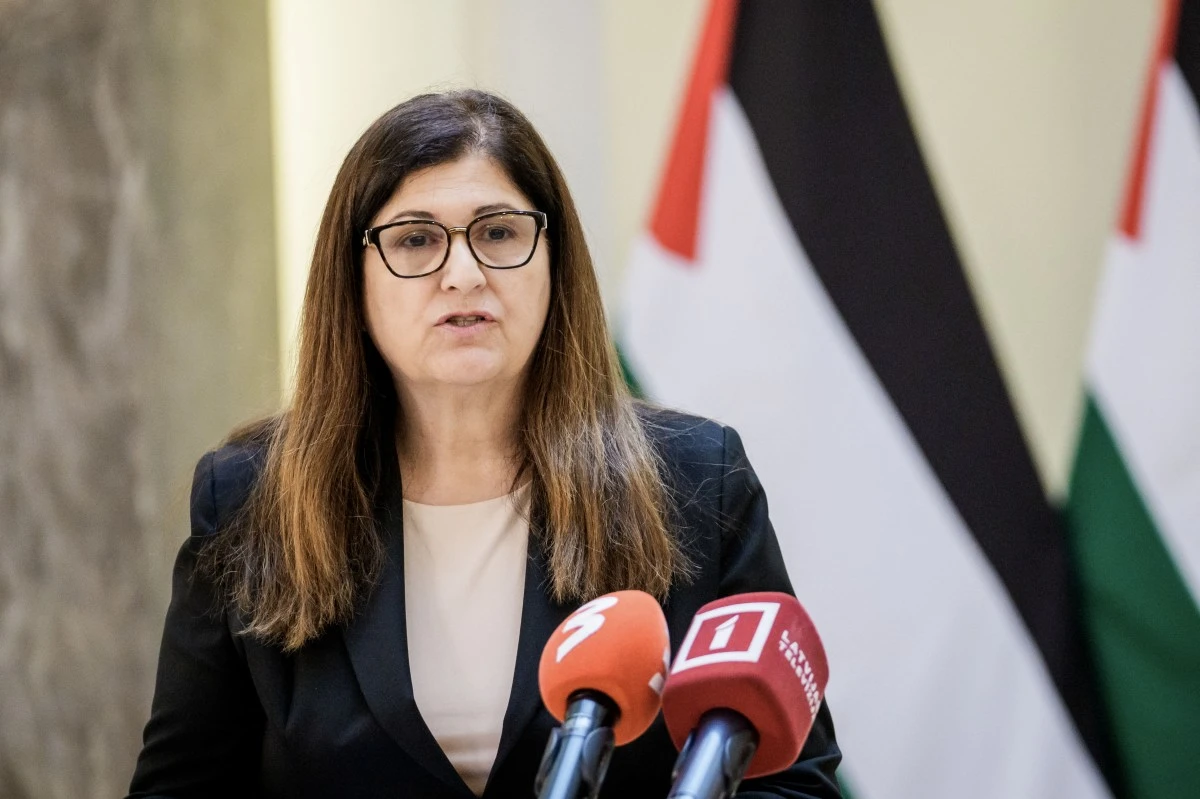
Palestinian Authority’s Foreign Affairs Minister Varsen Aghabekian attends a press conference on August 28, 2025 in Riga, Latvia. (File/AFP)
Short Url
Updated 18 September 2025
Follow

Palestinian foreign ministry: Israel treating Gaza as ‘real estate’ reflects plans of genocide

Palestinian foreign ministry: Israel treating Gaza as ‘real estate’ reflects plans of genocide
  • Palestine, Jordan also condemn Fiji’s decision to open an embassy in Jerusalem
  • Call move a violation of international law and a blow to the two-state solution

DUBAI: The Palestinian Foreign Ministry on Thursday accused Israel of pursuing policies aimed at genocide and displacement in Gaza, and condemned as inflammatory the comments of an Israeli minister who said the devastation in Gaza could be turned into a lucrative real estate project.
Israel’s finance minister Bezalel Smotrich described the Gaza Strip as “a real estate bonanza” and said a plan outlining its division had been shared with the United States, Israeli media reported on Wednesday.
US President Donald Trump once floated the idea of turning Gaza into a “Riviera of the Middle East.”
The ministry, in a statement, said that such rhetoric amounted to “official admissions” of Israeli intentions to destroy Gaza and displace its population, warning that the situation represented a deliberate escalation of crimes against Palestinians. 
It reaffirmed that Gaza is “an inseparable part of the land of the State of Palestine under international law,” and urged swift international intervention to stop Israeli actions and protect civilians.
The ministry also criticized Fiji’s decision to open an embassy in Jerusalem, calling it “an aggression against the Palestinian people and their legitimate rights.” It said the move violated international law and undermined prospects for peace.
Jordan’s Ministry of Foreign Affairs also issued a similar condemnation, describing Fiji’s decision as “a blatant violation of international law and UN resolutions” and “a direct threat” to a two-state solution. 
Ministry spokesperson Sufian Qudah stressed that any attempts to alter Jerusalem’s legal or political status are “null and void.”
Jordan reaffirmed its position that the only path to lasting peace and stability in the region lies in the establishment of an independent Palestinian state along the June 4, 1967, borders with East Jerusalem as its capital.
Iraq PM Al-Sudani seen as election frontrunner, seeks a second term

Iraq PM Al-Sudani seen as election frontrunner, seeks a second term
Updated 5 sec ago
Follow

Iraq PM Al-Sudani seen as election frontrunner, seeks a second term

Iraq PM Al-Sudani seen as election frontrunner, seeks a second term
  • Runs against ruling coalition members, seeks to make Iraq a success after decades of instability

BAGHDAD: Iraqi Prime Minister Mohammed Shia Al-Sudani has cast himself as the leader who can finally make the country a success after years of instability, and has moved against established parties that brought him to power as he seeks a second term.

Buoyed by signs of rising public support ahead of a November 11 parliamentary election, an increasingly confident Al-Sudani is running against key members of a grouping of parties and armed groups that originally tapped him for the job.

Campaigning on improving basic services and presenting himself as the man who can successfully balance ties with both Washington and Tehran, he says he expects to get the single-largest share of seats. Many analysts agree that Al-Sudani, in power since 2022 and leader of the Construction and Development Coalition, is the frontrunner.

However, no party is able to form a government on its own in Iraq’s 329-member legislature, and so parties have to build alliances with other groups to become an administration, a fraught process that often takes many months.

Al-Sudani, 55, has done many key jobs in Iraq’s volatile political system and is the only post-2003 premier who never left the country, unlike others who went into exile and returned, often with new citizenships, after the US-led invasion that toppled Saddam Hussein.

He has the tricky task of balancing Iraq’s unusual role as an ally of both Washington and Tehran, while trying to satisfy Iraqis desperate for jobs and services and protect himself in a world of cut-throat politics.

In 2024, allegations that staff in the premier’s office had spied on senior officials caused uproar. A political adviser to Sudani denied the claims.

Born on March 4, 1970 in Baghdad to a family originally from rural southern Maysan province, Al-Sudani worked as an agricultural supervisor under Saddam’s government, even though his father and other relatives were killed for political activism. Since the 2003 US-led invasion he has been a mayor, a member of a provincial council, a regional governor, twice a Cabinet minister and then prime minister. “When we speak of someone who stayed in Iraq all these decades, it means they understand Iraqis as people and the Iraqi system,” Al-Sudani said in 2023.

Iraq is navigating a politically sensitive effort to disarm the country’s militias amid pressure from the US, while at the same time negotiating with Washington to implement an agreement on a phased withdrawal of US troops.

But Al-Sudani said ahead of next week’s vote that any effort to bring all weapons under state control would not work as long as there is a US-led coalition in the country that some Iraqi factions view as an occupying force.