- In interview with Arab News, Hajar El-Haddaoui hails Saudi Arabia as a ‘leading country’ in field of digital transformation
- Organization has grown from 5 member states to 16, representing 800m people, with a support ‘ecosystem’ boasting world-leading firms such as Nvidia, TikTok, Deloitte
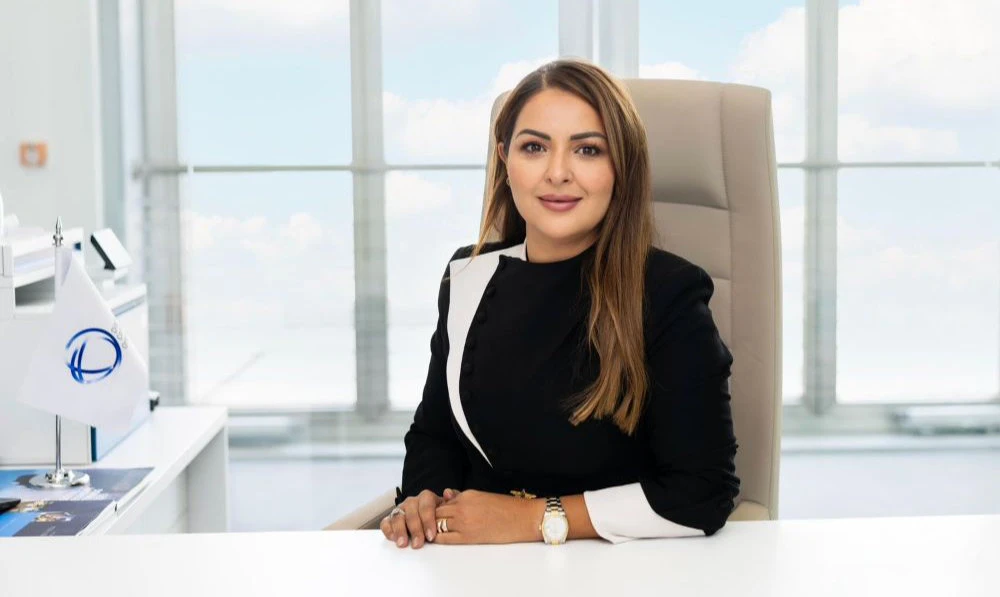
NEW YORK CITY: Saudi Arabia serves as a leading example to the world for digital transformation, the director-general of the multilateral Digital Cooperation Organization said on Monday.
It came as the organization announced a slew of new measures to help lift developing countries out of so-called “digital poverty.”
Hajar El-Haddaoui was speaking in New York City, a day after her Riyadh-headquartered global institution signed a landmark memorandum of understanding with the Future Investment Initiative Institute.
Launched in 2020 during Saudi Arabia’s presidency of the G20, the DCO began with five members: the Kingdom, Bahrain, Jordan, Kuwait and Pakistan. Over the past five years, membership has grown to 16 states from the Arab world, Africa, Europe and Asia, with a combined population of about 800 million people and total gross domestic product of $3.5 trillion.
During a briefing held alongside the 80th UN General Assembly, El-Haddaoui outlined the DCO’s newest initiatives, including: “WE-Elevate,” a scheme designed to empower female entrepreneurs in the digital economy; a landmark treaty on the use of artificial intelligence; partnerships with prominent organizations such as the World Economic Forum and UN Women; collaborations with tech giants such as Microsoft, Nvidia and TikTok; and the launch of a comprehensive data analysis tool to help countries address digital deficiencies.
At its core, the DCO is committed to providing a multilateral platform, or “ecosystem,” involving public and private partners, to help solve digital issues, El-Haddaoui said.
“For example, for the disinformation initiative, governments are working to really tackle this important point, which is misinformation,” she added.
“But what we do is to bring them all sides; we bring social media companies, the government and the youth together at the same table.
“That’s the power of the DCO: convening all those key stakeholders to (provide) a solution and be more action-oriented than just declaration-oriented.”
A number of world-leading companies have joined the DCO as observers, providing the organization and its member states with support for efforts to bridge the digital divide. They include Deloitte, IBM, Oracle, Visa and KPMG.
During an interview with Arab News, El-Haddaoui was asked for the key message from her organization this year.
“The main message that we are bringing is the coordination of multilateralism, and to have less fragmentation in what we do through the digital economy,” she said.
“The importance of digital, in one layer and across industries and sectors, is today one of the priorities that the global economy has, and it’s important to play a role and collaborate with other organizations, like the UN, to empower countries through their digital transformation.”
Combining efforts with other multilateral organizations will help to “overcome the challenge” of the global digital divide, El-Haddaoui said.
In addition to private partners, the organization has signed landmark agreements with major international organizations to help bolster its ecosystem and provide member states with access to critical financing for digital development. It has also organized foreign direct investment in places such as in Pakistan, which this year received more than $700 million in funding commitments for digital upgrades.
“What we do is to connect the supply with the demand in the country, and tackle the competitive advantage of each and every country,” El-Haddaoui said.
The effectiveness of the DCO ecosystem is evident in member state Rwanda, she added, where efforts to empower local female entrepreneurs are bearing fruit.
“Mobilizing the global financing for digital development is really important,” El-Haddaoui said. “Here, our consortium of funding institutes help us to elevate and scale our initiatives in the member states.
“We’ve seen that women are very active in growing GDP and that’s what we boost: GDP and job creation. We’ve done a pilot in Rwanda by moving women from offline businesses to e-commerce, not only serving them with a platform but enhancing their skills capacity. They are financially savvy, trade savvy, e-commerce savvy.
“We provided them with the platform, through our partners and observers, … that has helped us through this pilot to elevate more than 150 businesses, creating 30,000 jobs.”
The DCO now plans to take its WE-Elevate Rwanda pilot scheme global and it is expected to create 250,000 jobs, El-Haddaoui added, “helping to create GDP and job creation for each and every nation.”
In an era of rapid technological progress and what has been termed the “AI age,” however, governments are struggling to appropriately prioritize the roll-out of the best technologies for the job, she said. As an illustration of this, she highlighted the example of an African country that had focused on upgrading the use of AI while only 20 percent of its population was connected to the internet.
To help governments “navigate the gap,” the DCO is about to roll out DEN 2.0, an update to its comprehensive Digital Economy Navigator. The tool, the new version of which will be launched in November, analyzes the state of digital economies in 80 countries using a vast array of data indicators, with the aim of gaining insights needed to “propose actions for policymakers, investors and innovators.”
By pooling their national digital policy efforts, DCO member states can follow leading examples from each other on a “plug and play” basis, El-Haddaoui said.
Projects implemented by Saudi Arabia have been borrowed by African countries, for example, resulting in “high speed, more efficiency and less investment because it’s a successful model,” she added. Similarly, other countries in the Arab world have also adopted technologies pioneered by Saudi Arabia, particularly in terms of government e-services.
The Kingdom is “one of the leading countries that we have in the digital transformation,” El-Haddaoui said.
This is due to Saudi Arabia’s “appetite for partnership, collaboration (and) cooperation,” she added, “and not only the way they collaborate with other nations or other member states” but also the way in which they “replicate and ‘plug and play’ the best practices, and I think it’s one of the best examples we have.”
El-Haddaoui gave the example of Absher, a digital app developed by the Saudi Ministry of Interior that provides access to a range of government services.
“What we do is provide the other countries with a solution that Saudi put in place, like Absher; it’s click, click and enter: you have everything,” she said.
Jordan is in the process of implementing a similar e-government platform based on this Saudi model, she added.
“The complete change that is happening today in Saudi is also very remarkable,” El-Haddaoui said, adding that the Arab world as a whole offers ample opportunities for cutting-edge digital transformation, as well as improvements to essential connectivity in less digitally advanced countries.
“We have, for example, very advanced (digital) countries like Saudi Arabia, Qatar and Kuwait, but also others that are emerging, like Morocco,” she said.
“The technology is starting really to accelerate the digital transformation. However, it’s a very interesting market with a massive youth population and also rapid technology adoption.”
One of the centerpieces of the latest DCO initiatives is a prospective treaty on AI, which is due to be launched early next year during the organization’s general assembly. It will provide guidance for all member states on an agreed code of conduct for the use of AI, with the potential for this to expand worldwide.
“What we want is really to have it in our member states, and then to replicate it in other countries with the collaboration and cooperation of other international organizations … plug and play in other regions,” El-Haddaoui said.
The enhancement of national resilience through an inclusive digital economy is a crucial aim of the DCO, she added, pointing out that 2.8 billion people worldwide lack internet access.
“It’s important. We cannot talk about luxury (development) when we don’t have the foundations. How to close this gap is really what we stand for today,” she said.
“Let us be the generation that chooses to have a digital economy that is more prosperous, more inclusive, but also with peace. And that’s my message and the message of this year.”