RIYADH: Saudi Arabia advanced its industrial and investment partnerships with China and Japan through two separate high-level ministerial visits aimed at expanding strategic cooperation, technology transfer, and private-sector investment.
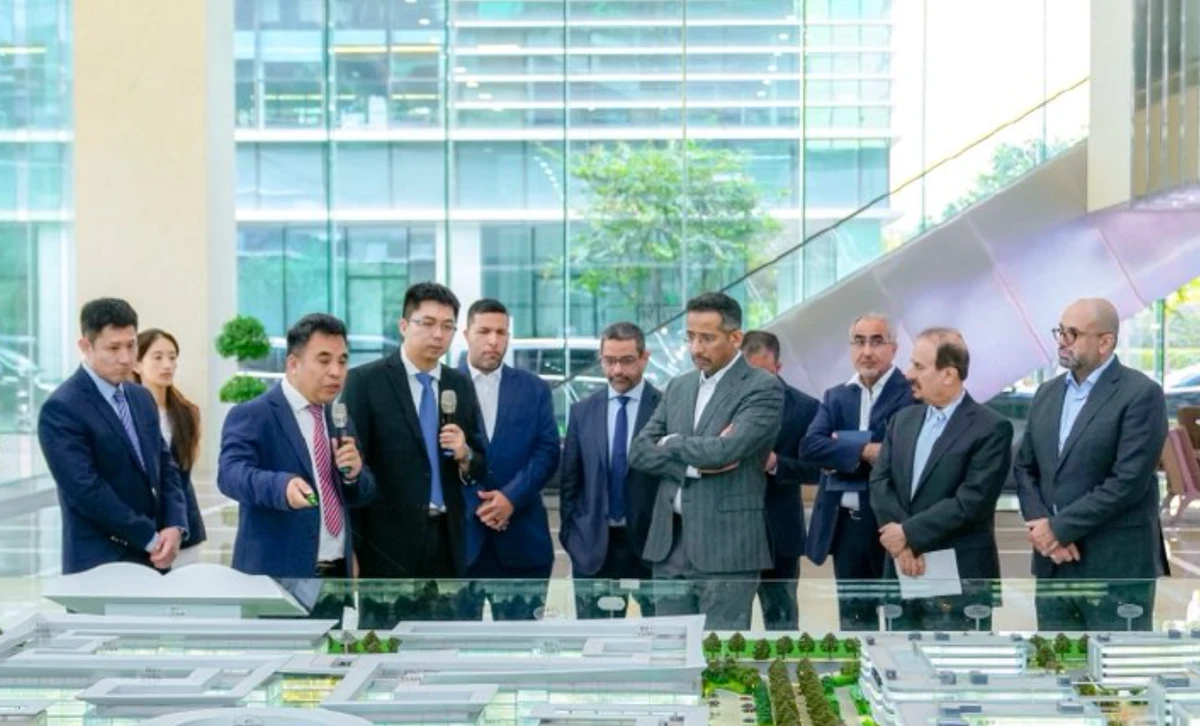
In Beijing, Minister of Industry and Mineral Resources Bandar Alkhorayef met with leaders of ZGC Group, a government-backed innovation platform, to explore collaborations including advanced manufacturing, renewable energy, smart mobility, and aerospace technologies.
These discussions included plans for ZGC to establish operations in Riyadh in partnership with the National Industrial Development and Logistics Program.
These initiatives build on the growing depth of Saudi–China economic ties. China is Saudi Arabia’s largest trading partner, accounting for 14 percent of the Kingdom’s exports and 28.9 percent of its imports in May, according to official statistics.
Alkhorayef’s official visit to China, which runs from Sept, 22 to 26, includes a series of high-level meetings with senior Chinese government officials such as the minister of natural resources, the minister of industry and information technology, the chairman of the National Development and Reform Commission, and the chairman of the State-owned Assets Supervision and Administration Commission.
He is also scheduled to meet with executives from leading industrial and mining companies including BOE, Kyland, and TBEA, as well as Ganfeng Lithium, China Minmetals Corporation, and Gotion Hi-tech, with discussions focused on technology transfer, advanced manufacturing, and investment opportunities in Saudi Arabia.
As part of the program, the Ministry of Industry and Mineral Resources will sign a work plan with the China Mining Association to strengthen cooperation in the mining sector.
The initiative is expected to cover knowledge exchange, identification of mineral opportunities, and new efforts to support the growth of Saudi Arabia’s mining industry, a central component of Vision 2030.
The Kingdom will also participate as guest of honor at the China International Industrial Fair in Shanghai in November, where it will present its industrial transformation agenda and highlight opportunities for collaboration with Chinese partners.
ZGC also presented a detailed showcase of its key factories and future plans for establishing a presence in Riyadh.
In a press statement published on its official X handle, the ministry stated: “The visit aims to broaden economic partnerships between the two countries, attract high-quality investments, and transfer the latest technologies in the industrial and mining sectors.”
The minister's tour included visits to several ZGC subsidiaries. These included FlightWin, a company specializing in the manufacturing of helicopters and drones; UISEE, which develops autonomous vehicles used in airports and logistics operations; and China Power Energy Storage Energy, known for its innovations in energy storage and integrated renewable power systems.
ZGC Group’s potential entry into Riyadh through NIDLP highlights the relevance of its role as Beijing’s innovation platform.
The group supports companies across the “Idea–IP–Industry–IPO” chain, making it a strategic partner for localizing advanced manufacturing and research and development in Saudi Arabia.
Subsidiaries such as FlightWin and UISEE align directly with Vision 2030 goals.
FlightWin’s expertise in helicopters and unmanned aerial vehicles supports the Kingdom’s objective to localize 50 percent of defense procurement and expand aerospace services, while UISEE’s autonomous mobility solutions match efforts to digitize logistics and advance smart-city operations.
The focus on energy storage technology reflects Saudi Arabia’s broader renewable energy transition.
The Kingdom aims to generate 50 percent of its electricity from renewables by 2030. This has already created demand for large-scale storage.
Alkhorayef was joined by Saleh Al-Solami, CEO of the National Industrial Development Center, Jamil Al-Ghamdi, acting CEO of NIDLP, and other senior officials from the Saudi industrial and mining ecosystem.
Saudi-Japan ties strengthen with investment minister visit
In Japan, Minister of Investment Khalid Al-Falih chaired the 8th Saudi-Japan Vision 2030 Committee alongside Japan’s Minister of Economy, Trade and Industry Yoji Muto and State Minister for Foreign Affairs Hisayuki Fujii. The meeting reviewed bilateral progress and concluded with the signing of official minutes to reaffirm commitments under Vision 2030.
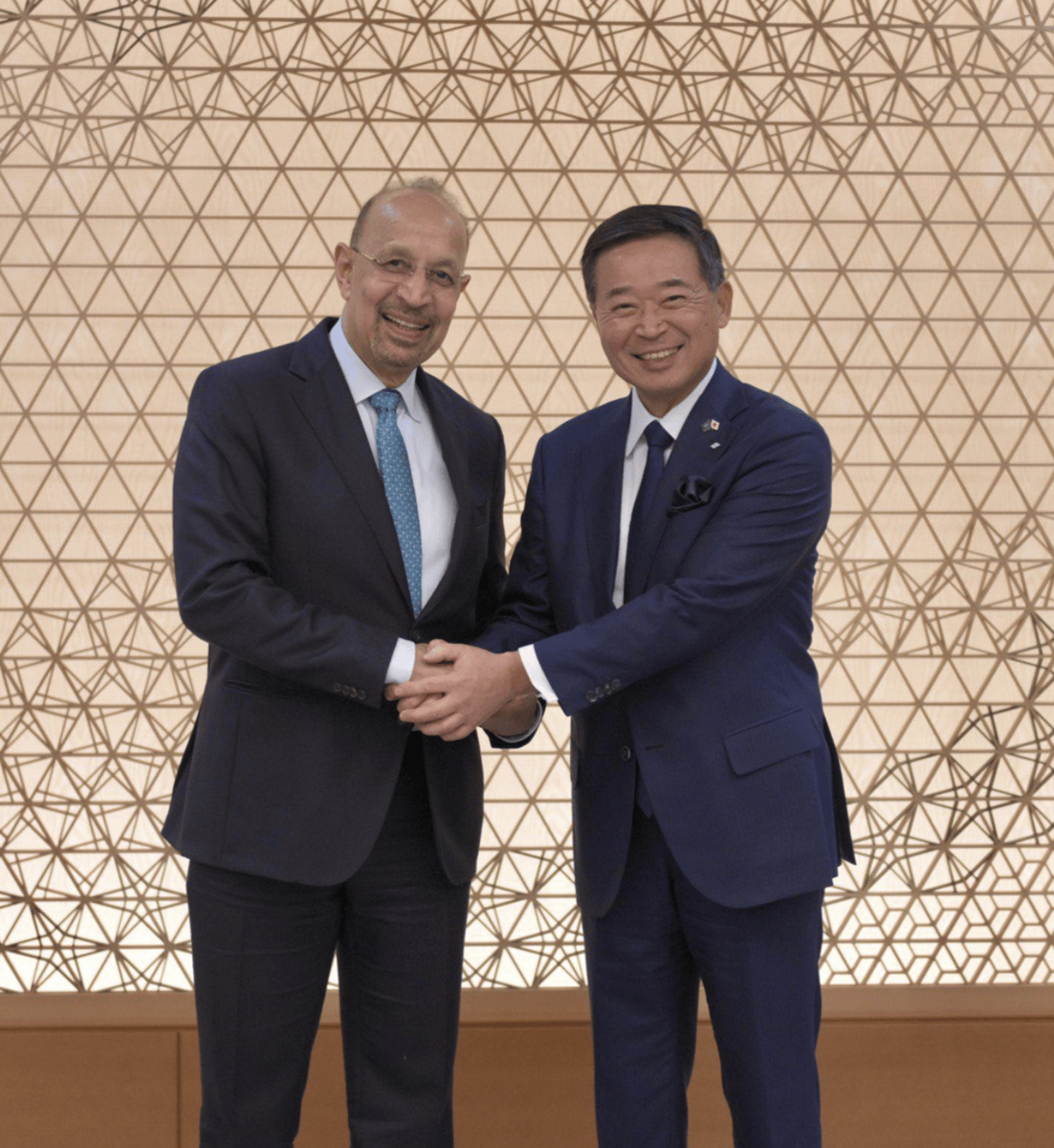
The high-level visit by Al-Falih highlights Saudi-Japanese collaboration, with trade between the two countries reaching $138.2 billion in 2024, making Japan Saudi Arabia’s third-largest trading partner, while Japanese investment in the Kingdom totaled $23.1 billion, focused on energy, water and waste management, transport and logistics, and manufacturing.
On its official X handle, the ministry stated: “The Minister of Investment Khalid Al-Falih met leading financiers at the Saudi-Japan Financial Roundtable to explore sectoral opportunities, financial complementarities, and global challenges, while advancing cooperation between peers in the Kingdom and Japan.”
It added: “Held under the Saudi–Japan Vision 2030 framework, the roundtable congregated 40 senior leaders of Japan’s major industrial firms. The Ministry of Investment–Keidanren Strategic Investment Platform was launched to foster quality investments and private-sector initiatives.”
Prince Faisal bin Bandar bin Sultan, chairman of the Saudi Esports Federation, and Masayuki Hyodo, vice chair of Keidanren, also took part in the roundtable discussions.