WASHINGTON: To hear party leaders talk, the seventh day of the government shutdown sounded a lot like the first. Democrats are seeking negotiations on expiring health care subsidies while Republicans say they won’t discuss it, or any other policy, until the government reopens.
The two sides are also offering starkly different visions of the Affordable Care Act and how to deal with the expanded premium assistance that will soon expire for millions of people — Democrats want the aid extended, while Republicans insist the subsidized health care system is broken and must be cut back.
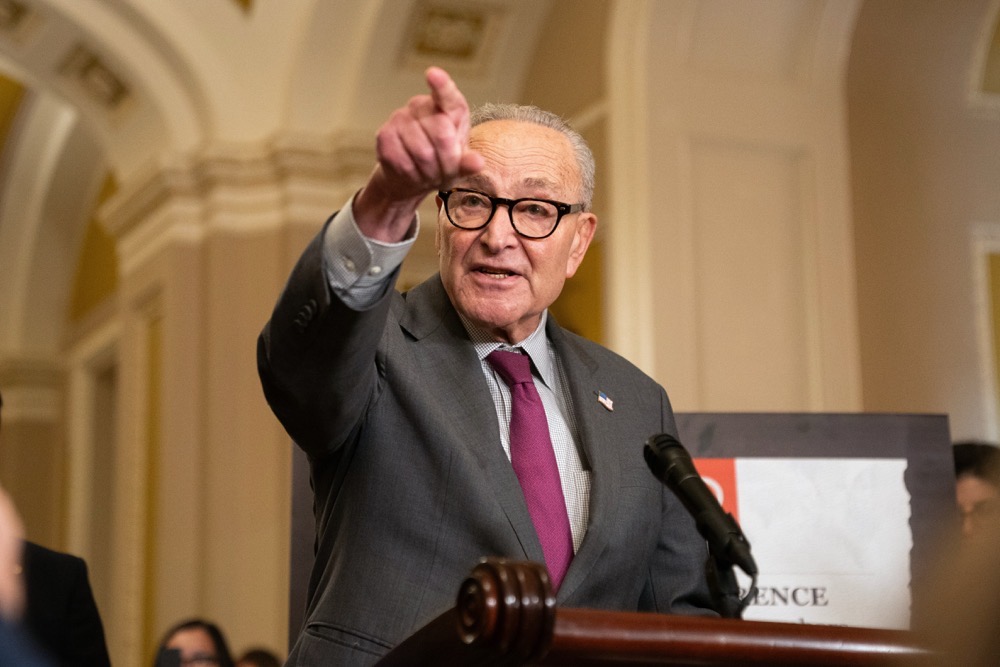
“Democrats’ position has not changed,” said Senate Democratic Leader Chuck Schumer. “We want the same thing that a majority, an overwhelming majority, of Americans want, which is to end this shutdown and halt the health care crisis that will send premiums spiking for tens of millions of people.”
House Speaker Mike Johnson, R-Louisiana, met with Senate Republicans on Tuesday and said the party is “100 percent united,” which he said is “a good place to be in.”
It’s unclear how the impasse will end, even as hundreds of thousands of federal workers are going unpaid and many government services are slowed or suspended. Democrats believe the public is on their side as they fight to keep the COVID-era subsidies, but health care is also one of the most intractable issues in Congress — and a real compromise is unlikely to be easy, or quick.
There are some Republicans in Congress who want to extend the aid as millions of people who receive their insurance through the ACA marketplaces are set to receive notices that their premiums will increase at the beginning of the year. But many GOP lawmakers are strongly opposed to any extension — and see the debate as a new opportunity to try to reform the program.
“If Republicans govern by poll and fail to grab this moment, they will own it,” wrote Texas Rep. Chip Roy, a Republican, in a letter published in The Wall Street Journal over the weekend. He encouraged senators not to go “wobbly” on the issue.
“The jig is up, the pandemic is over and my colleagues shouldn’t blink in any other direction,” Roy wrote.
A long history of health care fights
Republicans have been railing against the Affordable Care Act, former President Barack Obama’s signature health care law, since it was enacted 15 years ago. But while they have been able to chip away at it, they have not been able to substantially alter it as a record 24 million people are now signed up for insurance coverage through the ACA, in large part because billions of dollars in subsidies have made the plans more affordable for many people.
Now, some of them see the Democrats’ fight as their chance to revisit the issue — putting Republican congressional leaders and President Donald Trump in a complicated position.
“I am happy to work with Democrats on their Failed Healthcare Policies, or anything else, but first they must allow our Government to reopen,” Trump wrote on social media Monday night, walking back earlier comments saying there were ongoing negotiations with Democrats.
Senate Majority Leader John Thune, R-S.D., told reporters Monday that “there may be a path forward” on ACA subsidies, but stressed, “I think a lot of it would come down to where the White House lands on that.”
Some GOP senators argue, though, that the only path forward is to overhaul the law. “The whole problem with all of this is Obamacare,” said Florida Sen. Rick Scott.
Johnson said there were ongoing talks about “pretty dramatic changes” to the law that Congress might consider once the government reopens.
Bipartisan talks face difficulties
The Senate has now rejected a House-passed bill to extend government funding until mid-November five times, with Democrats denying Republicans the votes to pass it unless they win concessions on health care.
With leaders at odds, some rank-and-file senators in both parties have been in private talks to try to find a way out of the shutdown. Republican Sen. Mike Rounds of South Dakota has suggested extending the subsidies for a year and then phasing them out. Senate Appropriations Committee Chairwoman Susan Collins, R-Maine, has suggested pushing ahead with a group of bipartisan spending bills that are pending and then securing a commitment to discuss the health care issue.
But many Democrats say a commitment isn’t good enough, and Republicans say they need deeper reforms — leaving the talks, and the US government, at a standstill.
Maine Sen. Angus King, an Independent who caucuses with Democrats, voted with Republicans to keep the government open. But he said Monday that he might switch his vote to “no” if Republicans do not “offer some real solid evidence that they are going to help us with this crisis” on health care.
Republican Sen. Markwayne Mullin of Oklahoma said his party is “not budging,” however.
“First and foremost, before we can talk about anything, they need to reopen the government,” Mullin said.
Some Republicans urge action on health care
Still, some Republicans say they are open to extending the subsidies — even if they don’t like them — as it becomes clear that their constituents will face rising costs.
“I’m willing to consider various reforms, but I think we have to do something,” said Republican Sen. Josh Hawley of Missouri. He said Congress should address the issue “sooner rather than later” before open enrollment begins Nov. 1.
Rep. Marjorie Taylor Greene, R-Ga., said she is “not a fan” of Obamacare but indicated she might vote to extend it.
“I’m going to go against everyone on this issue because when the tax credits expire this year my own adult children’s insurance premiums for 2026 are going to DOUBLE, along with all the wonderful families and hard-working people in my district,” she posted on social media Monday evening.
High stakes for federal workers
With both sides digging in, the shutdown could go on for some time, leaving federal workers without their regular paychecks. And the White House is now suggesting that Trump may block back pay if the government reopens.
Trump signed legislation into law in 2019 that ensures back pay for federal workers during any government funding lapse. But a White House memo with the rationale for no back pay is under consideration.
Johnson told reporters Tuesday that he doesn’t know the details of the memo, but “if that is true, that should turn up the urgency and the necessity of the Democrats doing the right thing here.”
Democrats pushed back on the White House rationale. “Federal workers, including furloughed workers, are entitled to their back pay following a shutdown,” said Washington Sen. Patty Murray, the top Democrat on the Senate Appropriations Committee.
The White House also said Tuesday that it will use tariff revenue to bolster the Special Supplemental Nutrition Program for Women, Infants and Children, which is facing funding shortages because of the shutdown.
Press secretary Karoline Leavitt said in a post on X that Trump has “identified a creative solution to transfer resources” from tariffs the administration has imposed on US trading partners. She did not provide details of how such funding transfers might work.
Government shutdown drags on as health care compromise remains elusive