- Tells Arab News flagship program decision to open talks with Israel should not be portrayed as an act of betrayal
- Blames Hezbollah for taking Lebanon to war without consent, urges diplomacy, reform and stronger Arab support
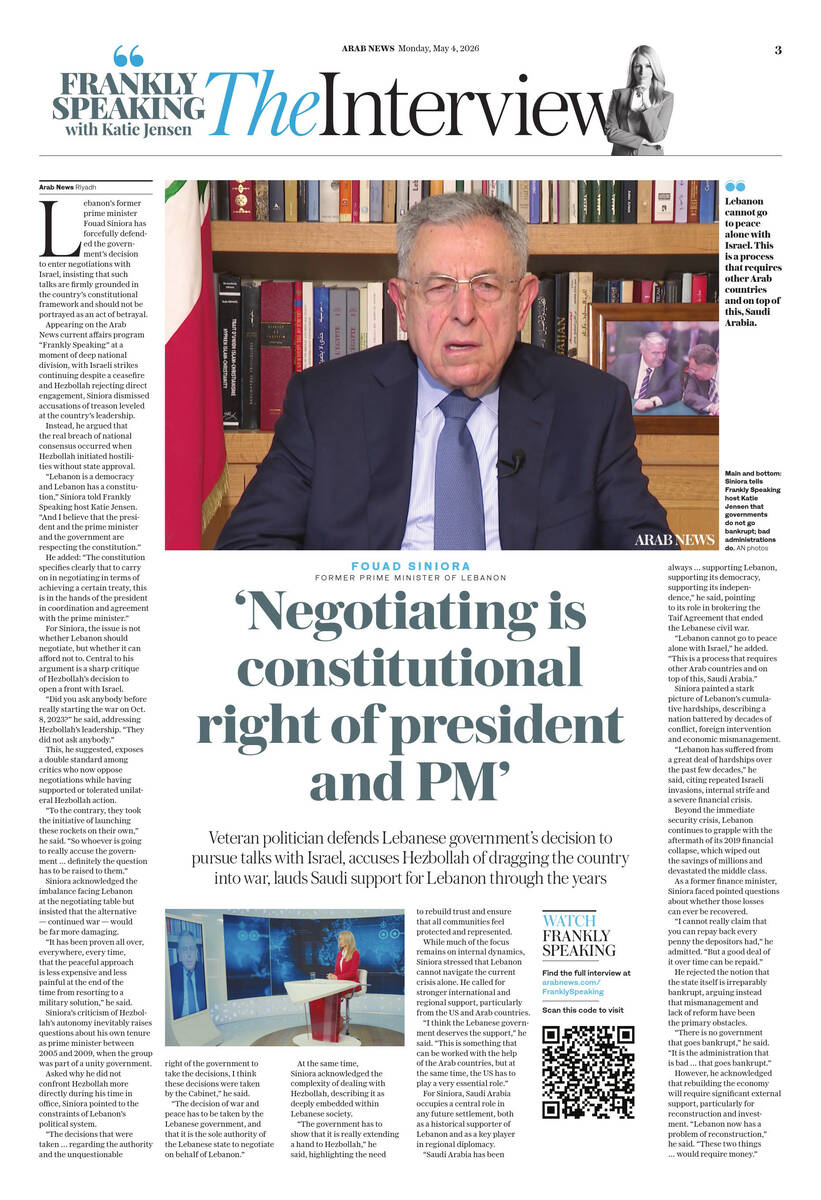
RIYADH: Lebanon’s former prime minister Fouad Siniora has forcefully defended the government’s decision to enter negotiations with Israel, insisting that such talks are firmly grounded in the country’s constitutional framework and should not be portrayed as an act of betrayal.
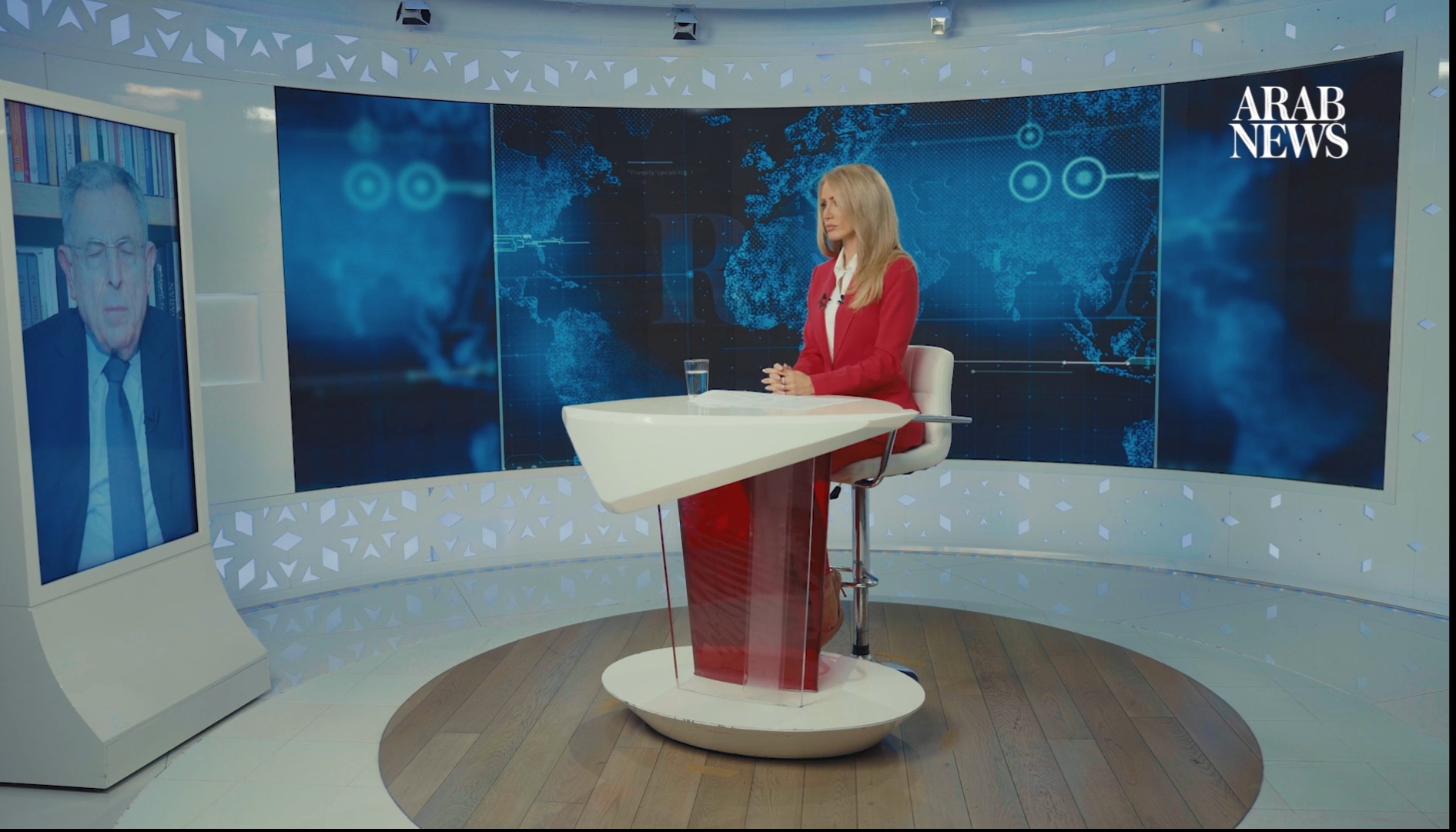
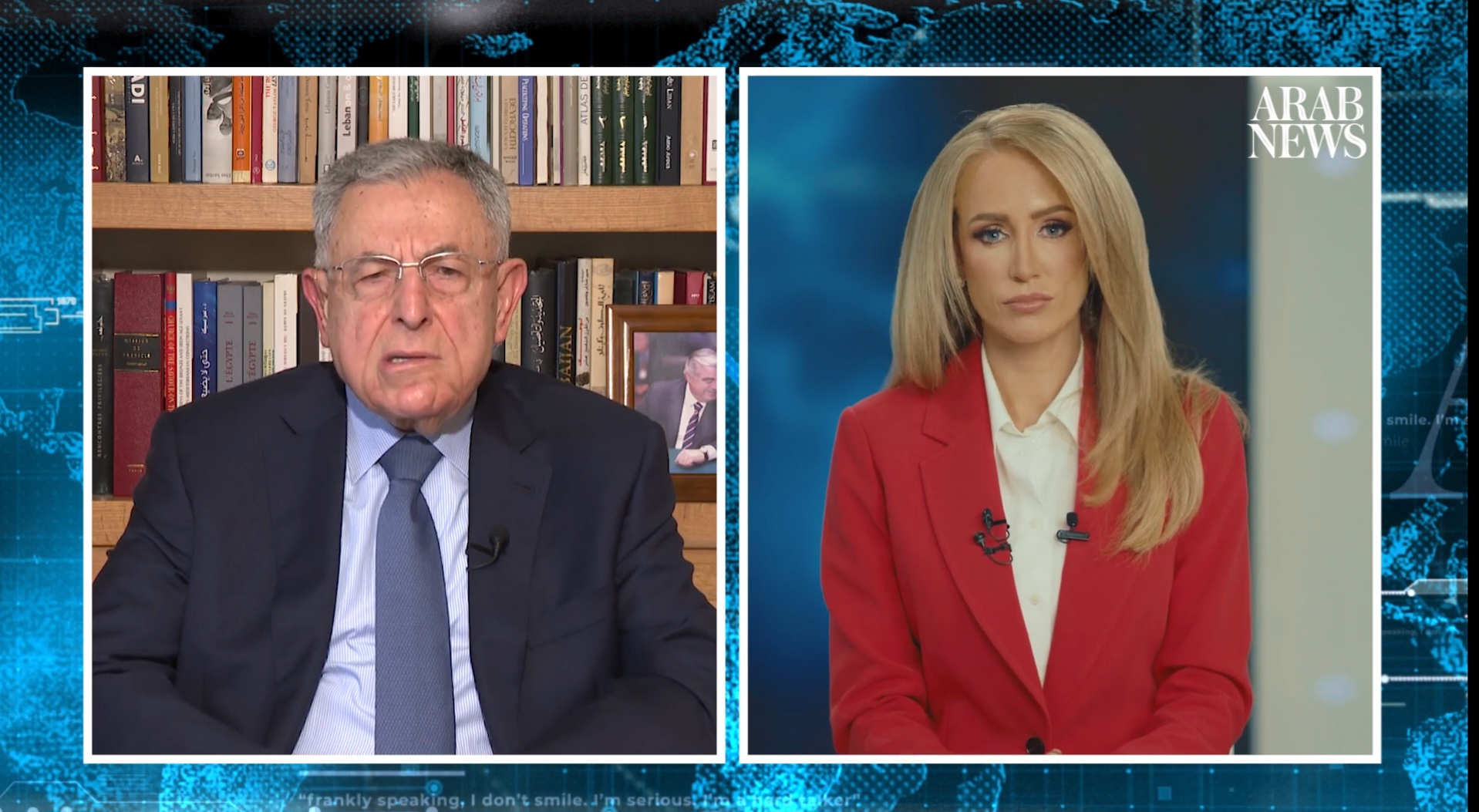
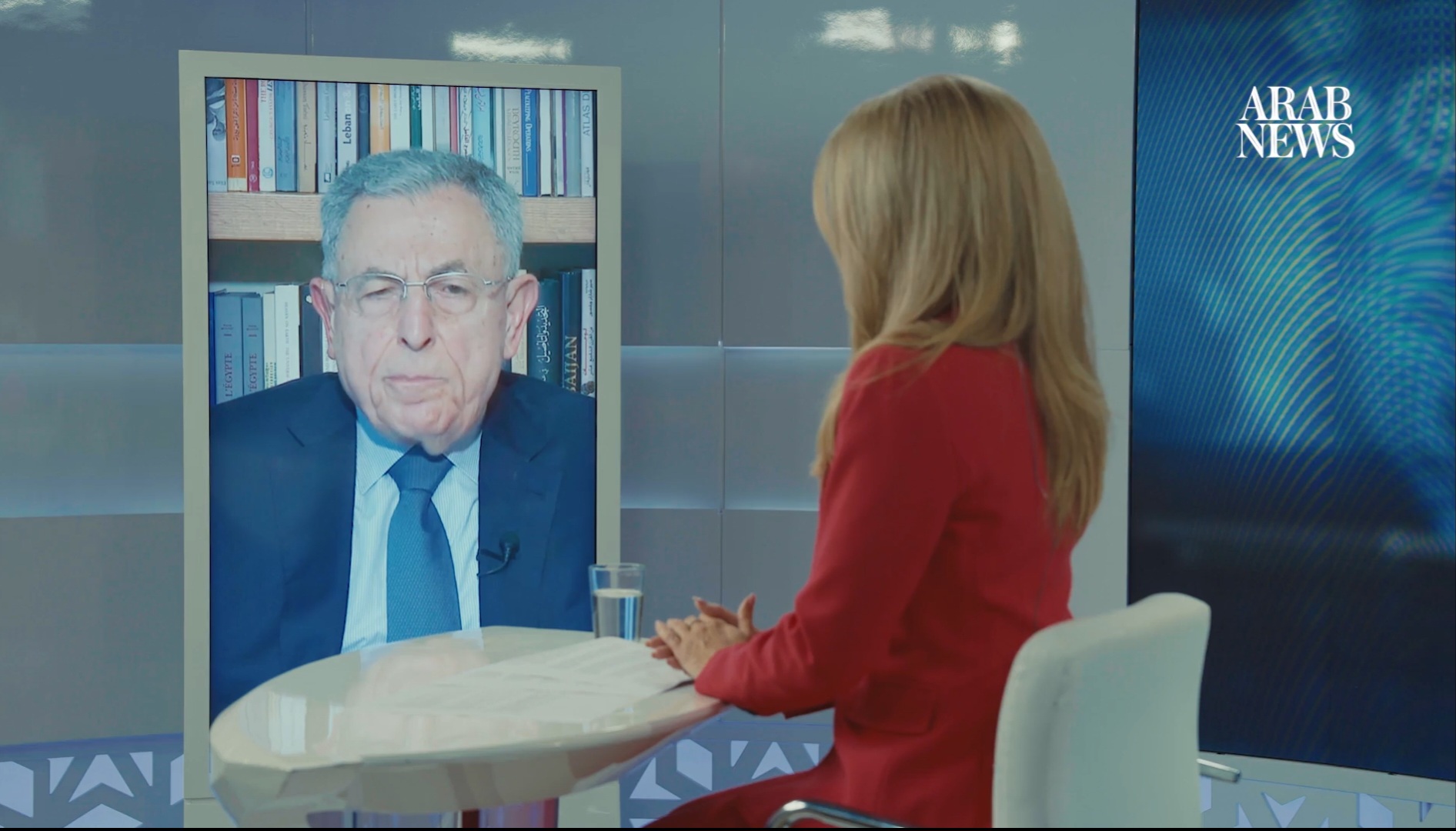
Appearing on the Arab News current affairs program “Frankly Speaking” at a moment of deep national division, with Israeli strikes continuing despite a ceasefire and Hezbollah rejecting direct engagement, Siniora dismissed accusations of treason leveled at the country’s leadership.
Instead, he argued that the real breach of national consensus occurred when Hezbollah initiated hostilities without state approval.
“Lebanon is a democracy and Lebanon has a constitution,” Siniora told Frankly Speaking host Katie Jensen. “And I believe that the president and the prime minister and the government are respecting the constitution.”
He added: “The constitution specifies clearly that to carry on in negotiating in terms of achieving a certain treaty, this is in the hands of the president in coordination and agreement with the prime minister.”
For Siniora, the issue is not whether Lebanon should negotiate, but whether it can afford not to. With large parts of the country still under bombardment and around a fifth of the population displaced, he framed diplomacy as both a constitutional duty and a national necessity.
Central to Siniora’s argument is a sharp critique of Hezbollah’s decision to open a front with Israel — a move that has brought devastating consequences to Lebanon’s civilian population.
“Did you ask anybody before really starting the war on Oct. 8, 2023?” he said, addressing Hezbollah’s leadership. “Did you ask anybody or got the approval of anybody … they did not ask anybody. They did not get the approval of anybody.”
This, he suggested, exposes a double standard among critics who now oppose negotiations while having supported or tolerated unilateral Hezbollah action.
“To the contrary, they took the initiative of launching these rockets on their own,” he said. “So whoever is going to really accuse the government … definitely the question has to be raised to them.”
His remarks echo a broader frustration within parts of Lebanon’s political establishment, where officials argue that decisions of war and peace have long been removed from state control.
The current crisis was triggered after Hezbollah drew Lebanon into the wider regional conflict in March, prompting a sustained Israeli military response that has included airstrikes, ground incursions and the creation of a so-called “Yellow Line” buffer zone inside Lebanese territory.
Despite a US-brokered ceasefire announced in April, Israeli attacks and Hezbollah counterattacks have continued, with Lebanese officials reporting civilian casualties and the widespread destruction of southern villages.
Siniora acknowledged the imbalance facing Lebanon at the negotiating table but insisted that the alternative — continued war — would be far more damaging.
“It has been proven all over, everywhere, every time, that the peaceful approach is less expensive and less painful at the end of the time from resorting to a military solution,” he said.
Siniora’s criticism of Hezbollah’s autonomy inevitably raises questions about his own tenure as prime minister between 2005 and 2009, when the group was part of a unity government and retained its armed wing.
Asked why he did not confront Hezbollah more directly during his time in office, Siniora pointed to the constraints of Lebanon’s political system and the decisions taken collectively by the cabinet.
“The decisions that were taken … regarding the authority and the unquestionable right of the government to take the decisions, I think these decisions were taken by the cabinet,” he said.
He emphasized that recent government positions — particularly those asserting the state’s sole authority over war, peace and negotiations — are consistent with constitutional principles that have long existed but were difficult to enforce in practice.
“The decision of war and peace has to be taken by the Lebanese government, and that it is the sole authority of the Lebanese state to negotiate on behalf of Lebanon,” he said.
At the same time, Siniora acknowledged the complexity of dealing with Hezbollah, describing it as deeply embedded within Lebanese society, particularly among Shiites.
“Hezbollah is well rooted within the Shiite community,” he said, noting that tens of thousands of people depend on the group for salaries and social services.
Rather than advocating confrontation, he argued for a gradual, inclusive approach that would bring Hezbollah’s constituency back under the authority of the state.
“The government has to show that it is really extending a hand to Hezbollah,” he said, highlighting the need to rebuild trust and ensure that all communities feel protected and represented.
While much of the focus remains on internal dynamics, Siniora stressed that Lebanon cannot navigate the current crisis alone. He repeatedly called for stronger international and regional support, particularly from the US and Arab countries.
“I think the Lebanese government deserves the support,” he said. “This is something that can be worked with the help of the Arab countries, but at the same time, the US has to play a very essential role.”
He linked Lebanon’s situation to broader diplomatic efforts in the region, arguing that negotiation — rather than military escalation — is increasingly recognized as the only viable path forward.
“What (US) President (Donald) Trump is doing now … he’s trying to negotiate,” Siniora said. “(We are doing) the same thing actually in Lebanon.”
For Siniora, Saudi Arabia occupies a central role in any future settlement, both as a historical supporter of Lebanon and as a key player in regional diplomacy.
“Saudi Arabia has been always … supporting Lebanon, supporting its democracy, supporting its independence,” he said, pointing to its role in brokering the Taif Agreement that ended the Lebanese civil war.
He suggested that Lebanon’s path to peace with Israel must be part of a broader regional framework rather than a standalone bilateral deal.
“Lebanon cannot go to peace alone with Israel,” he said. “This is a process that requires other Arab countries and on top of this, Saudi Arabia.”
Despite the ongoing violence, Siniora described the current moment as a rare opportunity to revive diplomacy after years of stagnation.
“This hasn’t taken place … between Lebanon and Israel since 1983,” he said of the recent talks. “So definitely … now we have a situation of direct talks and we have to build on it.”
However, he warned that negotiations cannot succeed without tangible improvements on the ground, particularly a genuine ceasefire and Israeli withdrawal from occupied areas.
“If the people in Lebanon are not sure they are going to go back to their villages … this is not helpful at all,” he said.
He also cautioned against attempts to impose a settlement through force, arguing that any durable peace must be negotiated and mutually accepted.
“I personally don’t believe anymore in using force in order to achieve peace,” he said. “I think we have to resort to diplomacy.”
Siniora painted a stark picture of Lebanon’s cumulative hardships, describing a nation battered by decades of conflict, foreign intervention and economic mismanagement.
“Lebanon has suffered from a great deal of hardships over the past few decades,” he said, citing repeated Israeli invasions, internal strife and a severe financial crisis.
Yet he also highlighted multiconfessional Lebanon’s unique social fabric as a source of resilience.
“This is a country that deserves, actually, saving,” he said. “What it really presents in the region … is an example of convivence and the living together among different communities.”
For Siniora, preserving this model requires urgent action to stabilize the country and restore state authority — a task he believes is in the interest not only of Lebanon but of the wider region.
“Instability … it flies from one region into another,” he warned. “It is something that one has to attend to.”
Beyond the immediate security crisis, Lebanon continues to grapple with the aftermath of its 2019 financial collapse, which wiped out the savings of millions and devastated the middle class.
As a former finance minister, Siniora faced pointed questions about whether those losses can ever be recovered.
“I cannot really claim that you can repay back every penny the depositors had,” he admitted. “But a good deal of it over time can be repaid.”
He rejected the notion that the state itself is irreparably bankrupt, arguing instead that mismanagement and lack of reform have been the primary obstacles.
“There is no government that goes bankrupt,” he said. “It is the administration that is bad … that goes bankrupt.”
Siniora pointed to earlier periods of economic growth during his time in office as evidence that recovery is possible, provided that political stability is restored and reforms are implemented.
“There is a way, actually, of doing so,” he said. “The Lebanese … they have proven that they can do it if they want.”
However, he acknowledged that rebuilding the economy will require significant external support, particularly for reconstruction and investment. “Lebanon now has a problem of reconstruction,” he said. “These two things … would require money.”
Ultimately, he argued that investing in Lebanon’s recovery is not just a moral imperative but a strategic one, given the risks of regional spillover.
As Lebanon stands at a crossroads, Siniora’s message is one of cautious determination. He sees negotiation not as a concession but as a constitutional right — and a necessary step toward ending a cycle of conflict that has defined the country for decades.
“I think what we have in Lebanon is determination,” he said.
Whether that determination can translate into tangible progress remains uncertain. The obstacles are formidable — ongoing violence, internal divisions, and a deeply entrenched armed actor operating outside state control.
Yet for Siniora, the alternative — continued war and economic collapse — is far more dangerous.
“There is a way of drawing this opportunity from this crisis,” he said. “I think it can be done.”