UN rapporteur says deadly Israel strikes on vehicles in Lebanon could be war crimes

UN rapporteur says deadly Israel strikes on vehicles in Lebanon could be war crimes
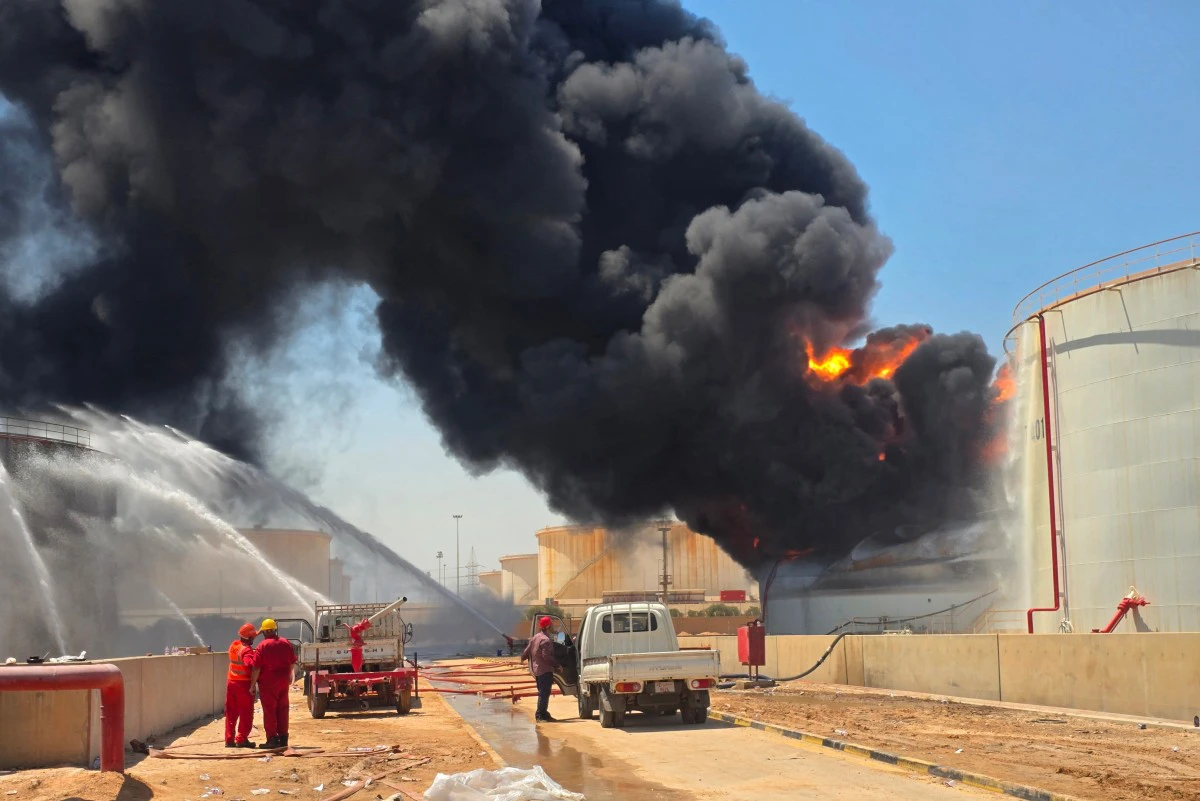
A firefighter douses the flames of a fire that took over a cement manufacturing complex following a series of Israeli airstrikes, in the village of Ansar, near Doueir, southern Lebanon, on Oct. 16, 2025. (AFP)
Short Url
Updated 17 October 2025
Follow

UN rapporteur says deadly Israel strikes on vehicles in Lebanon could be war crimes

UN rapporteur says deadly Israel strikes on vehicles in Lebanon could be war crimes
  • “Unless there is compelling evidence that those civilian objects have dual (military) objectives... the strikes are illegal,” said Tidball-Binz
  • “The killings resulting from the attacks violate the right to life “

BEIRUT: A United Nations special rapporteur told AFP on Friday that deadly Israeli strikes on ostensibly civilian vehicles in Lebanon since last year’s ceasefire could amount to war crimes, despite Israel’s assertion they targeted Hezbollah members.
Israel has repeatedly bombed Lebanon in spite of the November 2024 truce, which sought to end more than a year of hostilities with the Iran-backed militant group that culminated in two months of open war.
The Israeli military usually says it targeted Hezbollah operatives or infrastructure with its strikes, dozens of which have killed people traveling on Lebanese roads in cars and on motorbikes, or occasionally using excavators.
“Unless there is compelling evidence that those civilian objects have dual (military) objectives... the strikes are illegal,” said Morris Tidball-Binz, UN special rapporteur on extrajudicial, summary or arbitrary executions.
“The killings resulting from the attacks violate the right to life and also the principles of precaution and proportionality and, in my opinion, also amount to war crimes,” he told AFP in a written statement.
Lebanon’s official National News Agency on Friday reported unspecified casualties in an Israeli strike targeting a car in the country’s south.
And on Thursday, some of the heaviest Israeli raids since the ceasefire hit south Lebanon, with the health ministry saying one person was killed and seven others wounded.
The Israeli military said it targeted Hezbollah infrastructure and facilities used by an NGO under US sanctions that Israel considers a cover for the militant group.
Lebanese President Joseph Aoun said the strikes targeted civilian facilities, condemning a ceasefire violation and “a systematic policy aimed at destroying productive infrastructure” and hindering the country’s recovery.
The south Lebanon water establishment said Friday the raids had completely destroyed its strategic fuel depot.
The stricken facility “contained half a million liters of fuel oil” used to operate electricity generators for water stations and wells, it said in a statement.
At a heavily damaged cement factory, sales manager Ali Khalifeh told AFP that “we are a 100 percent civilian complex.”
He said more than a dozen air strikes hit the site, which “produces asphalt and concrete. It’s one of the biggest asphalt mixers in Lebanon.”
An AFP correspondent overnight saw firefighters battling a huge blaze at the factory.
“We had a huge quantity of liquid tar,” Khalifeh said, adding: “That’s what blew up, in addition to the fuel oil and the diesel” and other fuel.
Last week, Israeli strikes targeted bulldozer and excavator yards in south Lebanon’s Al-Msayleh area, destroying more than 300 pieces of machinery.
What lies ahead in Iraq: the hard task of forming a government

What lies ahead in Iraq: the hard task of forming a government
Updated 58 min 42 sec ago
Follow

What lies ahead in Iraq: the hard task of forming a government

What lies ahead in Iraq: the hard task of forming a government
  • With no single bloc dominating the next parliament, key parties could spend weeks or even months negotiating alliances to build the largest bloc and nominate the next premier

BAGHDAD: Following Iraq’s parliamentary election this week, the complex and often lengthy task of choosing the country’s next leader is set to begin.
Incumbent Prime Minister Mohammed Shia Al-Sudani claimed victory for his coalition after preliminary results showed it was the largest bloc — though it still falls short of the majority needed to form a government.
Sudani now faces the tough quest of securing support from other parties, mostly from the Shiite majority, in his bid for a second term.
With no single bloc dominating the next parliament, key parties could spend weeks or even months negotiating alliances to build the largest bloc and nominate the next premier.
Sudani was brought to power in 2022 by the Coordination Framework, an alliance of Shiite factions with varying links to Iran.
While preliminary vote counts for each list by province were released, seat allocations in parliament will not be announced until later.
By convention in Iraq, a Shiite Muslim holds the post of prime minister and a Sunni that of parliament speaker, while the largely ceremonial presidency goes to a Kurd.

- How is the government formed? -

Naming a premier and forming a government has often proven to be an arduous task involving protracted political wrangling.
In previous parliaments, Shiite majority parties have struck compromises to work together and form a government, and the main contenders often find themselves sidelined.
Seats are used as bargaining chips, and newly-elected lawmakers can switch sides.
With an outright majority almost impossible to achieve by any single list — as was the case in this week’s vote — the next premier will be selected by whichever coalition can gather enough allies to become the biggest bloc.
Since voting began two years after the 2003 US-led invasion that toppled Saddam Hussein, only one premier, Nuri Al-Maliki, has served for two terms (2006-2014).

- What are the possible outcomes? -

Currently, no serious candidates have emerged except for Sudani — though he himself was a relative unknown prior to his nomination.
A senior politician told AFP last month that the Coordination Framework is divided over supporting Sudani, with Al-Maliki seemingly poised to oppose a second term for the incumbent.
Long-term powerbrokers, including from the Coordination Framework, worry that Sudani has amassed too much power during his first term, making some reluctant to allow him to keep his seat.
Sudani has also faced allegations that members of his office were responsible for wiretapping the phones of politicians.
A source within a main party in the Coordination Framework told AFP that the alliance had previously agreed to reunite and create the largest bloc.
“They will name the next premier and participate in choosing the parliament speaker, his deputies and the president,” the source said.

- What happened after previous votes? -

In the 2010 election, former premier Iyad Allawi’s bloc won most seats, 91, closely followed by Maliki’s alliance, which won 89.
After months of bickering, political leaders stuck a deal and Al-Maliki was reappointed for another term despite coming second in the ballot.
In 2021, influential Shiite cleric Moqtada Sadr’s bloc emerged as the biggest winner, with 73 seats, but still fell far short of a majority.
His bloc withdrew from parliament following a dispute with other Shiite parties that culminated in deadly fighting in Baghdad.
In the aftermath, influential parties instead came together under the Coordination Framework to form a larger bloc, and brought Sudani to power.

- What role do Tehran and Washington play? -

For decades, Iraq has been a proxy battleground between the US and Iran, and forming a government has always been influenced by the two foes.
The next premier will have to maintain the delicate balance between their interests.
Since the US-led invasion, Iran has not only wielded significant influence in Iraqi politics, but also backs armed groups in the country, whose power has grown both politically and financially.
As Iran’s regional influence wanes, it aims to preserve its power in Iraq and keep the market open to products from its crippled economy.
Washington meanwhile wants to cripple Tehran’s influence, pressuring Baghdad to disarm Iran-backed factions, many of which have been designated as terrorist groups.
Some of those groups will nonetheless have seats in the parliament and maybe the government.
Last week, Foreign Minister Fuad Hussein told the Saudi-funded Al-Hadath channel that six pro-Iran factions are on a US blacklist — a key factor the government must consider.