
Saudi Arabia’s first ultra-luxury train ‘Dream of the Desert’ unveiled at FII9

Saudi Arabia’s first ultra-luxury train ‘Dream of the Desert’ unveiled at FII9
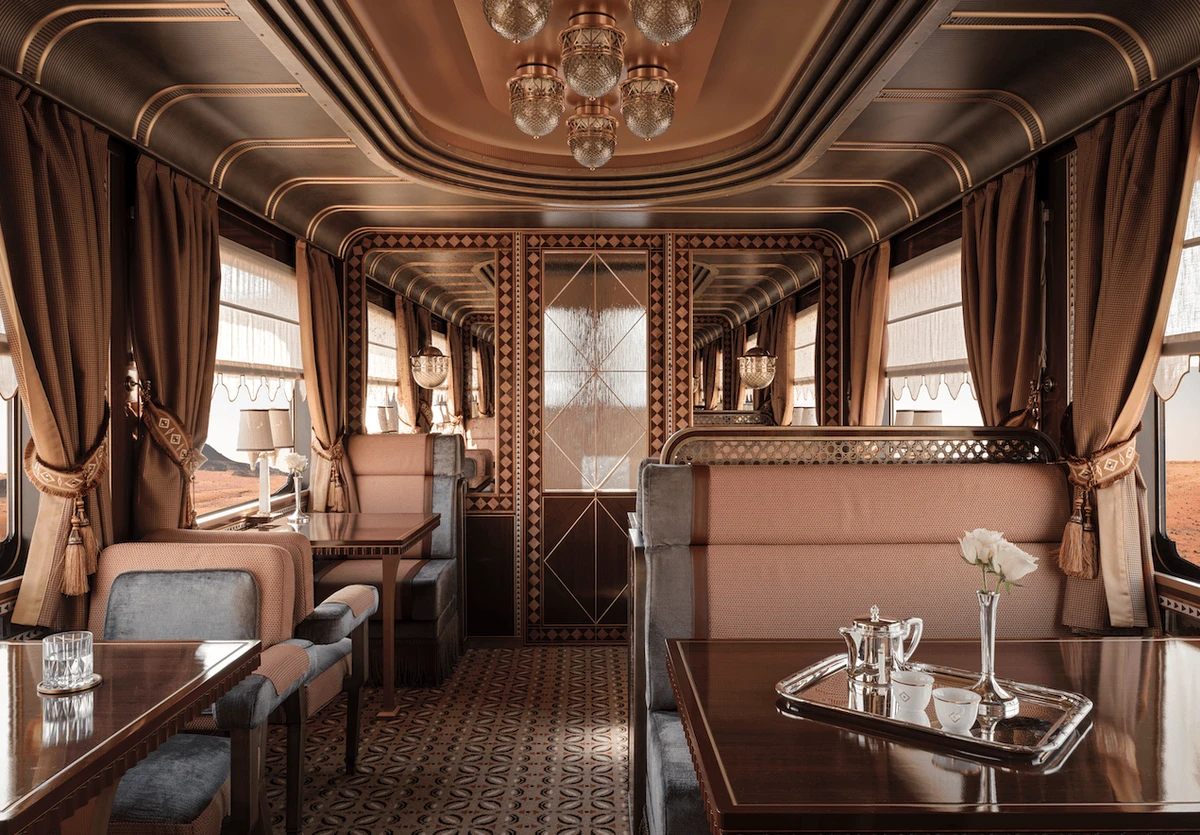
The train will feature 31 private suites, two presidential suites, and two restaurant cars. Supplied
Short Url
Updated 27 October 2025
Follow

Saudi Arabia’s first ultra-luxury train ‘Dream of the Desert’ unveiled at FII9

Saudi Arabia’s first ultra-luxury train ‘Dream of the Desert’ unveiled at FII9

RIYADH: Luxury train tourism in Saudi Arabia took another step forward as the Kingdom unveiled the design mock-up of its first ultra-luxury rail service, Dream of the Desert, at the Future Investment Initiative in Riyadh. 

The showcase marks a new milestone for the project, previously announced by Italy’s Arsenale Group in collaboration with Saudi Arabia Railways. The Ministry of Transport and Logistic Services, and the Transport General Authority, are also part of the project, as well as the Ministry of Culture, and the Saudi Tourism Authority, according to a press release. 

The service, slated to launch in late 2026, is part of the Kingdom’s broader push to expand high-end tourism offerings under Vision 2030.   

Paolo Barletta, CEO of Arsenale, said: “Dream of the Desert is a moving masterpiece born from the dialogue between Italian craftsmanship and Saudi vision.”

He added: “It marks the beginning of a new global platform redefining ultra-luxury travel – one that celebrates heritage, creativity, and a deep respect for local identity while carrying the world’s most discerning travellers through the heart of Saudi Arabia’s landscapes and traditions.” 

The train will feature 31 private suites and two presidential suites, accommodating a maximum of 66 guests. The train’s interiors will draw inspiration from the Saudi landscape, featuring desert-inspired hues, rich wood carvings, and custom Murano glass lighting that evokes traditional oriental lanterns. 

Guests will have access to two restaurant cars offering a choice between authentic local cuisine and international menus with Italian fusion influences, all curated to a Michelin-level standard. A central Majlis lounge will provide a space for socializing and relaxation. 

Saleh bin Nasser Al-Jasser, Saudi Arabia’s minister of transport and logistics services and chairman of Saudi Arabia Railways, said the unveiling of the luxury train underscores the remarkable transformation of the Kingdom’s railway sector and its progress toward offering world-class travel experiences. 

He added that the project stems from the National Transport and Logistics Strategy, which aims to introduce modern, tourism-focused transport options that enhance quality of life.  

Al-Jasser also noted that the initiative reflects rising foreign investment in the Kingdom’s transport and logistics ecosystem, supported by leading international partners. 

The inaugural journeys, lasting one to two nights, will depart from Riyadh and traverse approximately 1,300 km of existing railway lines.
Saudi Arabia’s non-oil sector posts strong growth as PMI hits 60.2 

Saudi Arabia’s non-oil sector posts strong growth as PMI hits 60.2 
Updated 8 sec ago
Follow

Saudi Arabia’s non-oil sector posts strong growth as PMI hits 60.2 

Saudi Arabia’s non-oil sector posts strong growth as PMI hits 60.2 

RIYADH: Saudi Arabia’s non-oil economy accelerated in October, with the Purchasing Managers’ Index climbing to 60.2, its second-highest level in more than a decade, signaling strong business growth momentum. 

The latest survey by Riyad Bank and S&P Global showed a sharp improvement in operating conditions across the Kingdom’s private sector, underpinned by solid demand, rising employment, and robust output growth.  

The October reading, up from 57.8 in September, highlights the sustained momentum of the non-oil economy as Vision 2030 reforms continue to drive diversification away from crude revenues. 

Speaking at the Future Investment Initiative in October, Saudi Arabia’s Minister of Economy and Planning Faisal Alibrahim said the Kingdom’s gross domestic product is expected to expand by 5.1 percent in 2025, supported by continued growth in non-oil activities. 

Commenting on the latest report, Naif Al-Ghaith, chief economist at Riyad Bank, said: “Saudi Arabia’s non-oil private sector recorded a solid improvement in business conditions in October, with the PMI rising to 60.2, marking one of the strongest readings in over a decade.”  

He added: “The acceleration was driven by broad-based gains in output, new orders, and employment, reflecting sustained demand momentum and continued strength in the non-oil economy.”  

Al-Ghaith noted that the latest survey results also indicate a strong start to the final quarter of the year, supported by both domestic and external demand. 

According to the report, the pace of growth in new orders received by non-oil companies accelerated for the third consecutive month in October, with 48 percent of surveyed firms reporting higher sales. 

Participating companies attributed the sales growth to improving economic conditions, a growing client base, and increased foreign investment. 

Output and employment also expanded sharply during the month, with job creation rising at the fastest pace in nearly 16 years.

Al-Ghaith said the persistent rise in new export orders highlights the growing competitiveness of Saudi firms and the progress achieved under ongoing diversification initiatives. 

“The rise in demand encouraged firms to expand production and workforce capacity at the fastest rate since 2009, as businesses expanded capacity to meet new workloads. Purchasing activity and inventories also increased, while suppliers’ delivery times continued to improve, reflecting efficient coordination and resilient supply chains,” he added.  

October data indicated a sharp rise in input costs for non-oil firms, driven mainly by wage increases from salary revisions and bonuses. 

On the outlook, companies remained optimistic, citing strong market demand, ongoing project work, and government investment initiatives. 

“Optimism is underpinned by solid domestic demand and the momentum of ongoing projects. Although some concerns persist around costs and competition, sentiment overall remains strongly positive, reflecting confidence in the economy’s continued expansion and the strength of the non-oil private sector,” concluded Al-Ghaith.