- WHO says 460 patients and companions were reportedly killed at Saudi Maternity Hospital in the Sudanese city
- Witnesses who fled the violence describe scenes 'like a killing field'
CAIRO: Sudan’s paramilitary forces killed hundreds of people including patients in a hospital after they seized El-Fasher city in the western Darfur region over the weekend, according to the UN, displaced residents and aid workers, who described harrowing details of atrocities.
Tedros Adhanom Ghebreyesus, director general of the World Health Organization, said in a statement the 460 patients and companions were reportedly killed at Saudi Maternity Hospital in El-Fasher, the provincial capital of North Darfur. He said the WHO was “appalled and deeply shocked” by the reports.
The Sudan Doctors Network, a medical group tracking the war, said fighters from the Rapid Support Forces on Tuesday “cold-bloodedly killed everyone they found inside the Saudi Hospital, including patients, their companions, and anyone else present in the wards.”
Sudanese residents and aid workers described some of the atrocities carried out by the RSF, fighting since 2023 to take over Africa’s third largest nation, after they seized the army’s last stronghold in Darfur after over 500 days of siege.
“The Janjaweed showed no mercy for anyone,” said Umm Amena, a mother of four children who fled the city on Monday after two days, using a Sudanese term for the RSF.
RSF commander Gen. Mohammed Hamdan Dagalo on Wednesday acknowledged what he called “abuses” by his forces. In his first comments since the fall of El-Fasher, posted on the Telegram messaging app, he said an investigation was opened. He did not elaborate.
The RSF has been accused by the UN and rights groups of atrocities throughout the war, including a 2023 attack on another Darfur city, Geneina, where hundreds of people were killed.
“It was a like a killing field”
Amena was among three dozen people, mostly women and children, who were detained for a day by RSF fighters in an abandoned house close to the Saudi Hospital in El-Fasher.
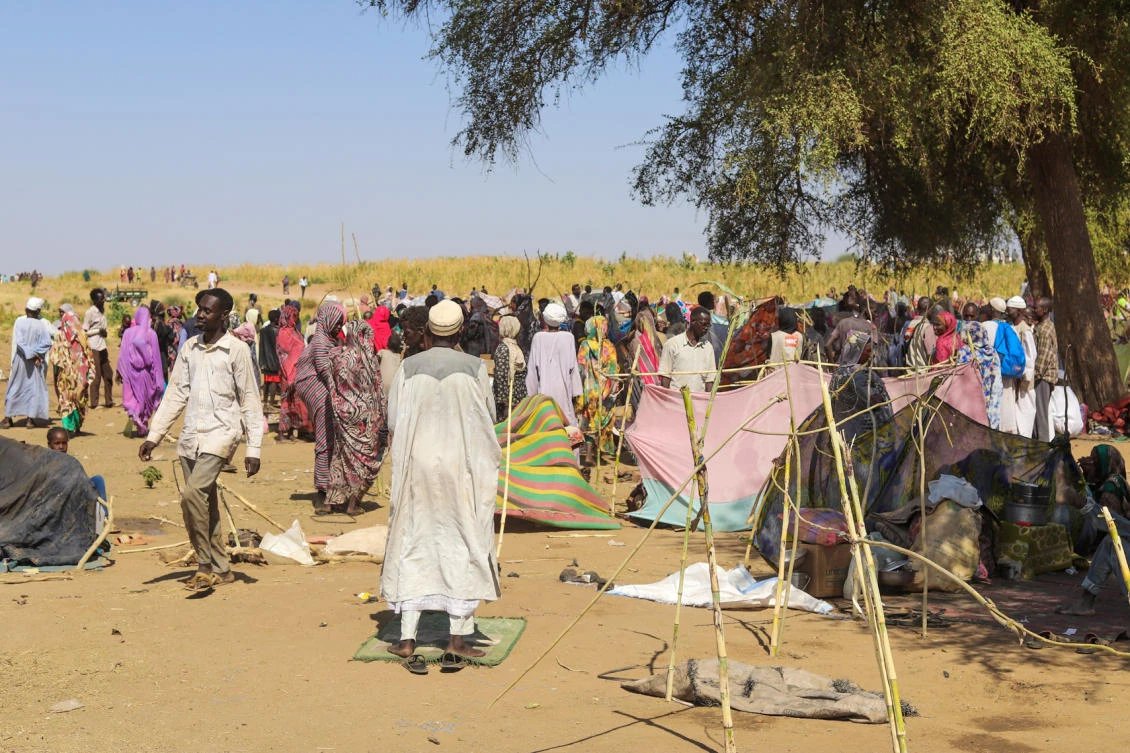
The Associated Press spoke with Amena and four others who managed to flee El-Fasher and arrived exhausted and dehydrated early Tuesday in the nearby town of Tawila, around 60 kilometers (37 miles) west of el-Fasher, which already hosts over 650,000 displaced.
The UN migration agency said about 35,000 people have fled El-Fasher, mostly to rural areas around it, since Sunday.
UN refugee agency official Jacqueline Wilma Parlevliet said that the new arrivals told stories of widespread ethnic and politically motivated killings, including reports of people with disabilities shot dead because they were unable to flee, and others shot as they tried to escape.
Witnesses told the AP that RSF fighters — on foot, riding on camels, or in vehicles — went from house to house, beating and shooting at people, including women and children. Many died of gunshot wounds in the streets, some while trying to flee to safety, the witnesses said.
“It was a like a killing field,” Tajal-Rahman, a man in his late 50s, said over the phone from the outskirts of Tawila. “Bodies everywhere and people bleeding and no one to help them.”
Both Amena and Tajal-Rahman said that RSF fighters tortured and beat the detainees and shot at least four people on Monday who later died of wounds. They also sexually assaulted women and girls, they said.
Giulia Chiopris, a pediatrician at a hospital run by the Doctors Without Borders medical group in Tawila, said they received many patients since Oct. 18, suffering from injuries related to bombing or gunshots.
She said that the hospital also received a high number of malnourished children — many of them unaccompanied or orphaned — who were also severely dehydrated during the road journey from El-Fasher.
“They arrive here they are really exhausted,” she told the AP. “We are seeing a lot a lot of cases of trauma related to the last bombing and a huge number of orphans.”
She recalled receiving three siblings — the younger 40 days old and the older 4 years — on Monday night, whose family were killed in the city. They were brought to the hospital by strangers, she said.
Satellite imagery shows mass killings
In a report late Tuesday, the Yale School of Public Health’s Humanitarian Research Lab (HRL) said that RSF fighters continued to carry out mass killings since they took over El-Fasher.
The report, which relied on satellite imagery from Airbus, said it corroborated alleged executions and mass killing by the RSF around the Saudi Hospital, and at a detention center at the former Children’s Hospital in the eastern part of the city.
It also said that “systematic killings” took place in the vicinity of the eastern wall, which the RSF built outside the city earlier this year.
The HRL also reported what it said were targeted attacks by the RSF on health facilities, health workers, patients and humanitarian aid workers, which it said amount to war crimes.
“An unfathomable horror,” Simon Mane, a national director for the World Vision aid group, said. “Children are not just dying; they are being brutally robbed of their very existence, their hopes and futures cruelly wiped away. Their fate is a devastating moral failure.”
He warned of a catastrophe as mounting reports of atrocities were “now echoing the darkest chapters of this protracted crisis.”
Aid groups said hundreds were killed and hundreds detained since the RSF overran the city, but a death toll has been difficult to determine given a near communication blackout.
HRL said satellite imagery can’t show the true scale of the mass killings, and that “it is highly likely that any estimates of the total number of people who RSF has killed are undercounted.”
Before the latest bout of violence, some 1,850 civilians were killed in North Darfur, including 1,350 in El-Fasher, between Jan. 1 and Oct. 20 this year, according to UN spokesperson Farhan Aziz Haq.
Global outrage
Footage of the attacks triggered a wave of outrage around the world. France, Germany, the UK and the European Union all condemned the atrocities.
Mohamed Osman, Sudan researcher with Human Rights Watch, said that footage coming out of El-Fasher “reveals a horrifying truth: the Rapid Support Forces feel free to carry out mass atrocities with little fear of consequences.”
“The world needs to act to protect civilians from more heinous crimes,” he said.
Sen. Jim Risch, chairman of the US Senate Foreign Relations Committee, on Tuesday denounced the RSF attacks on the city, and called for it to be designated as a foreign terrorist organization.
“The RSF has waged terror and committed unspeakable atrocities, genocide among them, against the Sudanese people,” he wrote on X.