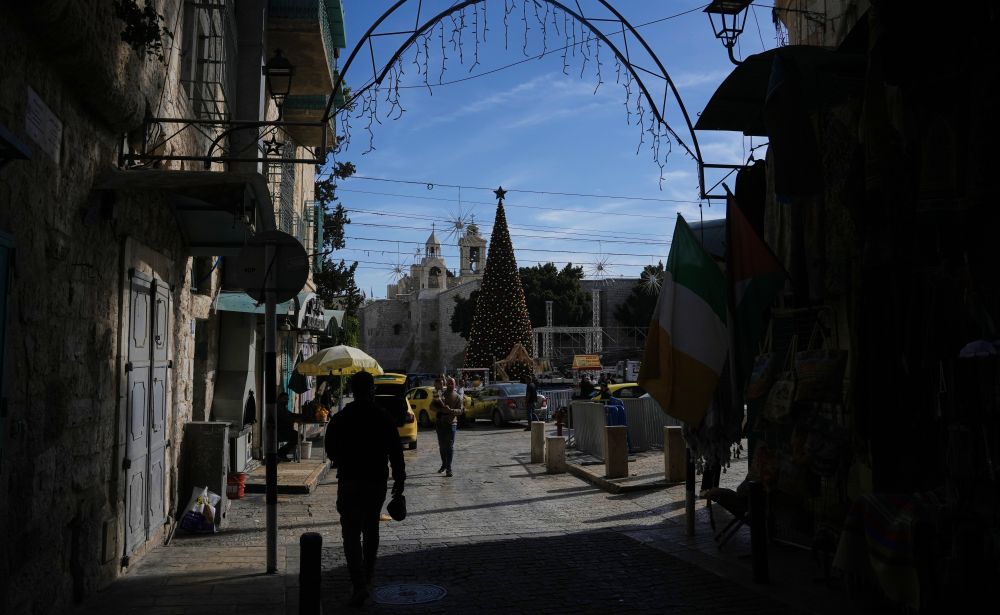

This Christmas, the streets and squares of the Palestinian city of Bethlehem, are preparing to shine once again. After two years of mourning and celebration abstention in solidarity with their Gazan brothers and sisters due to the devastation of Israel’s war on the Strip, the city is reclaiming its festive spirit.
On Saturday, the traditional Christmas tree in Manger Square will be lit, signaling the start of the festive season. This is not just a celebration of the season, it is also a powerful symbol of resilience, hope and Palestinian determination to celebrate life in the face of relentless adversity. Various activities, music and celebrations will be added to the tree-lighting ceremony with the hope of returning people’s smiles after years of sadness.
Bethlehem is more than a city, it is a symbol of humanity’s shared heritage. Revered by Christians worldwide as the birthplace of Jesus, it has long been a spiritual and cultural destination for pilgrims and tourists. Manger Square and the Church of the Nativity are not only sacred sites but touchstones of history, community and identity. For centuries, Christians have gathered here to pray, sing carols and reflect on the values of peace and love. Yet, today, this heritage exists under the shadow of occupation, conflict and the daily realities of life under Israeli military control.
Palestinian towns and cities, from Beit Jala and Ramallah to Nablus and Zababdeh, are decorating streets, churches and homes, striving to restore a sense of normalcy and spiritual reflection. For Bethlehem Mayor Maher Canawati the tree-lighting ceremony represents a reaffirmation of community, unity and faith. “Christmas in Palestine is not merely a cultural display,” he says. “It is a deeply spiritual act — a time for peace, solidarity and compassion for those who continue to suffer.”
Annual events include processions welcoming church patriarchs, caroling, musical celebrations and midnight Mass. Former Mayor Anton Salman adds that the lighting of the Christmas tree expresses Palestinians’ determination to live and maintain hope amid ongoing adversity.
Religious leaders echo this message of resilience. Orthodox Archbishop of Sebastia Atallah Hanna highlights the continuing suffering in Gaza and the West Bank, noting that the end of active conflict has not ended grief or oppression. “Yet hope endures,” he said. “Christmas embodies the values of peace, love and brotherhood.”
Dr. Samir Hazboun, head of the Bethlehem Arab Rehabilitation Society, emphasized that celebrations such as the Dec. 6 tree lighting unite Muslims and Christians, reaffirming national solidarity in a city that has long served as a microcosm of Palestinian life.
Yet, beneath the lights and prayers, Bethlehem faces harsh realities. Unemployment has risen to 31 percent and tourism, the city’s economic lifeline, has been losing about $2.5 million of revenue daily since Oct. 7, 2023. Hotels, restaurants and factories operate far below capacity and workers struggle to maintain their livelihoods. Before Israel’s military campaign on Gaza, the city welcomed about 1.5 million visitors a year; now, the tourism industry teeters on the brink of collapse, a casualty of both war and the pandemic-era lockdowns.
The last two years have not only witnessed the total absence of tourism and denial of work permits, but they have also seen aggressive Israeli settlement expansionism.
Bethlehem Gov. Mohammed Taha Abu Aliya has issued a stark warning about Israeli actions. In a press conference last week, he said the city and its surrounding areas face escalating attacks by Israeli settlers and military forces. Settler violence, land confiscations and settlement expansion continue unabated as international attention focuses elsewhere.
Abu Aliya called on Pope Leo, global church leaders and governments to act immediately, criticizing muted international responses and urging American churches to intervene to protect this historic city. “Bethlehem is a window to Palestine,” he said, praising local journalists for documenting occupation and resistance while countering attempts to erase Palestinian narratives.
The Christmas tree, in this context, is far more than a festive decoration. It is a beacon of life, resistance and national identity. Its lighting signals that, despite decades of occupation, destruction and grief, Palestinian families continue to hope and celebrate. Children will marvel at the lights, choirs will sing carols in multiple languages and pilgrims will walk the same streets that generations have traversed to reach the birthplace of Christ. This act, simple yet profound, is a testament to the Palestinian people’s refusal to surrender their dignity and joy, even under immense pressure.
Manger Square and the Church of the Nativity are not only sacred sites but touchstones of history, community and identity.
Daoud Kuttab
Bethlehem’s story is also a call to the world. It reminds us that the Christian tradition of peace and love cannot be separated from the realities of justice and human rights. While the lights of Manger Square shine brightly, they illuminate a city under siege — a people living under constant threat, yet determined to nurture hope, faith and resilience. The world cannot simply observe; it must respond, amplify Palestinian voices and act to protect the city’s heritage and its residents, along with their right to live in dignity.
This Christmas, as the tree is lit and the first carols echo across Manger Square, Bethlehem sends a universal message: hope and joy can persist even in the darkest of times.
The celebration of life, unity and faith continues despite adversity. Palestinians — Christians and Muslims alike — demonstrate that light will always shine through suffering. Bethlehem remains a beacon, reminding the world that the values Jesus preached — peace, justice and love — remain as urgent today as they were two millennia ago.
- Daoud Kuttab is an award-winning Palestinian journalist and former Ferris Professor of Journalism at Princeton University. He is the author of “State of Palestine Now: Practical and Logical Arguments for the Best Way to Bring Peace to the Middle East.” X: @daoudkuttab