- The army said it “affirms that all officers and members of the military institution are performing their national duties”
- “The loyalty of military personnel is solely to the military institution and the nation”
BEIRUT: The new US sanctions imposed by Washington on Thursday against Lebanese political and military figures cannot be separated from the broader context of political pressure being exerted on Lebanon through its official and military institutions.
The sanctions targeted Hezbollah MPs Hassan Fadlallah, Ibrahim Al-Moussawi, Hussein Hajj Hassan and head of Hezbollah’s Executive Council Mohammad Fneish, as well as two officers from the Lebanese army and security apparatus and two security officials from the Hezbollah-allied Amal Movement. They come ahead of a May 29 meeting at the Pentagon to launch the security track of the direct Lebanese-Israeli negotiations under Washington’s sponsorship, which are strongly opposed by Hezbollah and its ally, Parliament Speaker Nabih Berri.
The US Department of the Treasury clarified the charges under which these individuals were added to the sanctions list, stating they were “obstructing the peace process in Lebanon and impeding the disarmament of Hezbollah.”
It added that “these Hezbollah-aligned officials include individuals embedded across Lebanon’s parliament, military, and security sectors, where they seek to preserve the Iran-backed group’s influence over key Lebanese state institutions” and said: “Hezbollah’s continued militant activity and coercive influence over the Lebanese state undermine the Lebanese government’s ability to assert its authority over state institutions and disarm the group.”
The sanctions decision prompted condemnation from Hezbollah and the Amal Movement, while other political figures likened it to “previous US sanctions imposed on Lebanese MPs and officials, which had no impact on parliamentary work and were limited to preventing the payment of these MPs’ salaries through bank transfers.”
In a statement issued on Friday, Hezbollah’s parliamentary bloc described the decision as “an assault by the US administration on our country’s sovereignty through its unjust decision.”
The bloc stated that Hezbollah MPs “represent a broad segment of the Lebanese people and carry out their national duty by serving citizens, defending their interests, and enacting legislation in accordance with the Constitution to strengthen the rule of law and oversee the performance of the executive authority. They are an example of active lawmakers working to safeguard their nation’s sovereignty, reform state institutions, combat corruption, and promote dialogue among the Lebanese to reach an understanding on saving their country, preserving civil peace and coexistence, and rejecting all forms of strife.”
While calling on the Lebanese authorities to “protect their institutions from this blatant US interference,” Hezbollah MPs confirmed they would “continue to carry out their legislative and oversight roles.”
Hezbollah, which is backed by Iran, enjoys the support of the majority of Lebanon’s Shiite community. It maintains an armed wing and a political wing, both of which include elected members of parliament.
The US Department of the Treasury stated that “Hezbollah relies on a network of political representatives, including members of parliament, to advance the group’s interests and defy the government’s legitimate calls for Hezbollah to disarm and respect the sovereignty of the state. These actors, who are either senior Hezbollah officials or closely coordinate with them, advance Hezbollah’s agenda at the expense of the rightful government and the Lebanese people of all regions and faiths.”
Amal Movement MP Kassem Hashem told Arab News: “In form, these sanctions resemble previous sanctions imposed on Lebanese MPs. However, under the current circumstances, these new sanctions constitute a message not to one specific party, but to Lebanon as a whole — both its official institutions and its people — especially as those targeted by the sanctions entered parliament through the will of the people.”
Hashem further argued that “the next step is for Lebanon to deal with these sanctions in a manner consistent with its political will and the preservation of its sovereignty, without yielding to pressure. The sanctions came only days before the anticipated negotiations on the security track and also targeted military figures. I believe this is an attempt to intimidate the Lebanese position, whereas what is required is for Lebanon’s stance to be firmer and for the upcoming negotiations not to veer toward taking Lebanon down a different path. The priority must remain ending the Israeli aggression against Lebanon and securing Israel’s withdrawal from Lebanese territory. These are fundamental principles.”
The American sanctions also struck Ahmad Asaad Baalbaki and Ali Ahmad Safawi, two officials in the Amal Movement which has long been considered a political ally of Hezbollah.
Yet the most serious measures for Lebanon, branded “the cruelest blow the Lebanese state has yet absorbed, and at a lethal moment”, were those on two serving officers in the Lebanese Army and General Security. Never before had these institutions faced such action.
The sanctions named Col. Samer Hamadeh, who heads the Southern Suburb branch of Army Intelligence, and Brigadier General Khattar Nasr Al-Din, head of the National Security Department within General Security, accusing both of “sharing information with Hezbollah.”
Army command rose to its officers’ defense in a blunt statement, insisting that “all officers and personnel of the military institution discharge their national duties with the utmost professionalism, responsibility and discipline, in line with the decisions and directives issued by the Army command.”
The loyalty of military personnel, it added, “belongs to the military institution and the nation alone,” and they “remain committed to carrying out their national duties, untouched by any other considerations or pressures.”
The Directorate General of General Security struck a similar note, voicing “complete confidence in its officers and personnel, their strict observance of the laws and regulations, and their devotion to discharging their national duties with the highest standards of professionalism and responsibility.” The loyalty of its members, it added, “lies with the state and its legitimate institutions, and nothing else.”
The directorate continued that should it be established that any soldier or General Security employee had leaked information outside the institution or that any other individual was proven guilty, that person would face “fair legal and judicial accountability, as required by the military laws and regulations in force,” in keeping with its commitment to the principle of accountability.
Speaking to Arab News, MP Ghada Ayoub, a lecturer in international human rights law, placed the sanctions in the context of recent Lebanese government decisions condemning Hezbollah’s military wing, rejecting its weapons and demanding they be handed over to the state. Under those decisions, she said, Hezbollah’s military wing now stands outside the state altogether. The latest sanctions were no mere saber-rattling, she added; for the first time they have caught serving officers within the military and security apparatus and appear to make no distinction between the political and the security domains. With Hezbollah politicians now in their sights, she asked, can the party’s military and political wings still be told apart at all?
The accusation directed at Hezbollah’s politicians — “obstructing peace and impeding Hezbollah’s disarmament” — amounts in practice to obstructing the negotiations, Ayoub argued, and signals that the party’s activity and influence are throttling the government’s work and authority. Sanctions on members of the government itself may follow, she warned; Hezbollah’s political figures now sit in the dock of American accusation, charged with blocking the implementation of cabinet decisions.
Ayoub added she expected the Army command and General Security to launch serious investigations into the American allegations embedded in the sanctions order — chiefly, the leaking of information to Hezbollah.
“These sanctions are, in effect, an invitation to Hezbollah to rethink its position,” she said. “Either to fall in line with the government’s decisions, or to cast its lot with Iran and face the fallout. Playing both ends against the middle no longer works.”
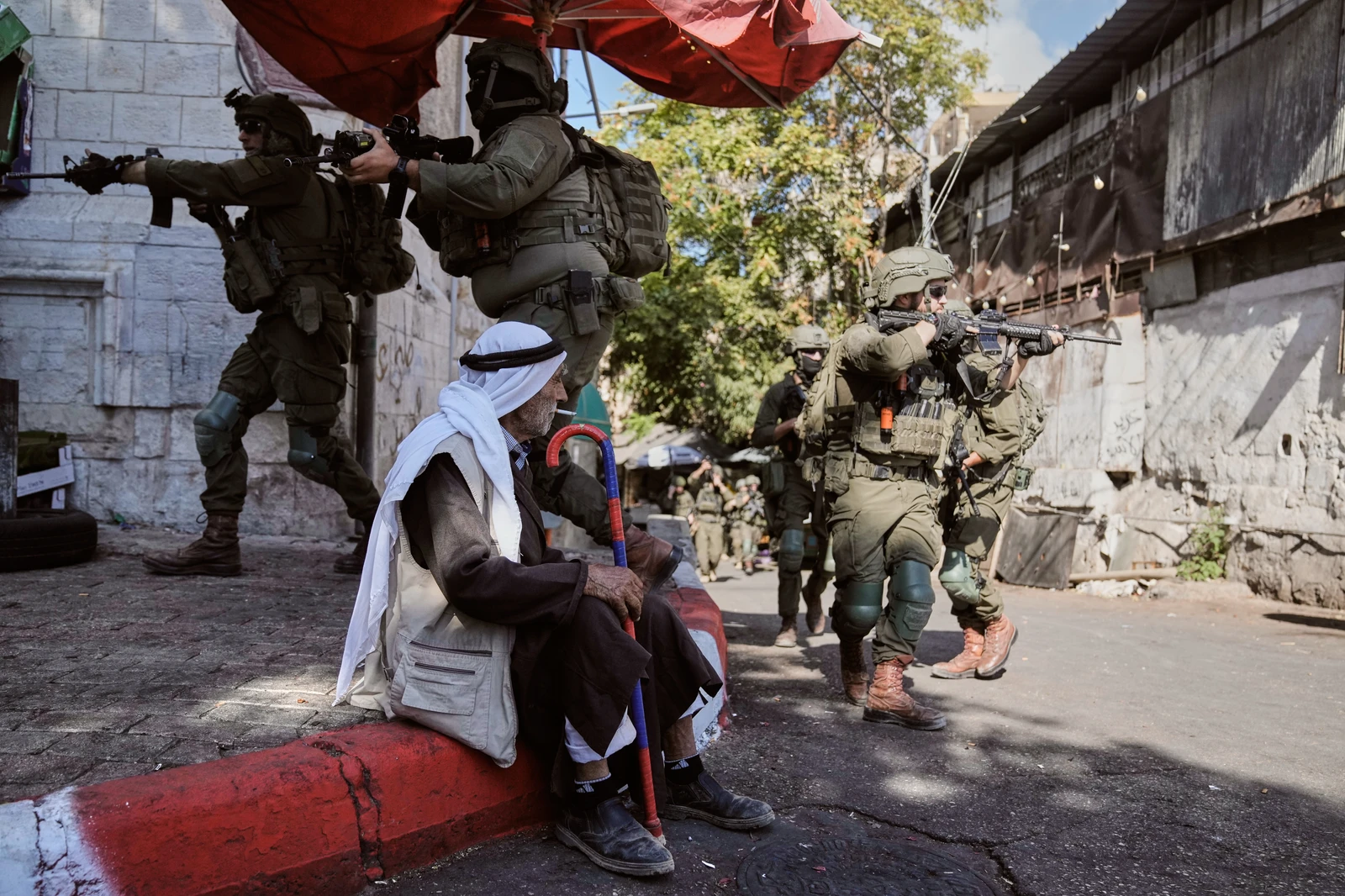
Since the American-Israeli war on Iran erupted and Hezbollah was drawn into the fighting, Israeli forces have pressed into Lebanese territory — at times more than 10 kilometers north of the border.
And though Washington announced a 45-day extension of the truce after the third round of preliminary talks last week, more than 400 people have been killed since the ceasefire came into force, according to figures from Lebanon’s Ministry of Health.
More than 3,111 have been left dead across the country since Israeli strikes on southern Lebanon began on March 2.