
 Conversations beyond the borders of cultural stereotype
Decades ago, in my first year at university in London, I entered a classroom of 7-year-olds during a teacher-training placement and saw a sentence on the board: “Arabs live in tents.”
It was simple but inaccurate, and it showed how stereotypes can appear where they do not belong. After the class, I spoke to the teacher privately and corrected it. A small moment, but one that stayed with me.
As the UK-Saudi Year of Culture 2029 approaches, a program designed to deepen understanding and honor a long-standing friendship, I often think back to that moment and how quickly impressions can form.
Years later, in 2022, I was standing at my art exhibition in Notting Hill when a man walked in, looked at me, and asked why I was not wearing a veil. He meant no harm. We spoke, and his question revealed how far understanding of Saudi women and men, and their country, can lag behind reality.
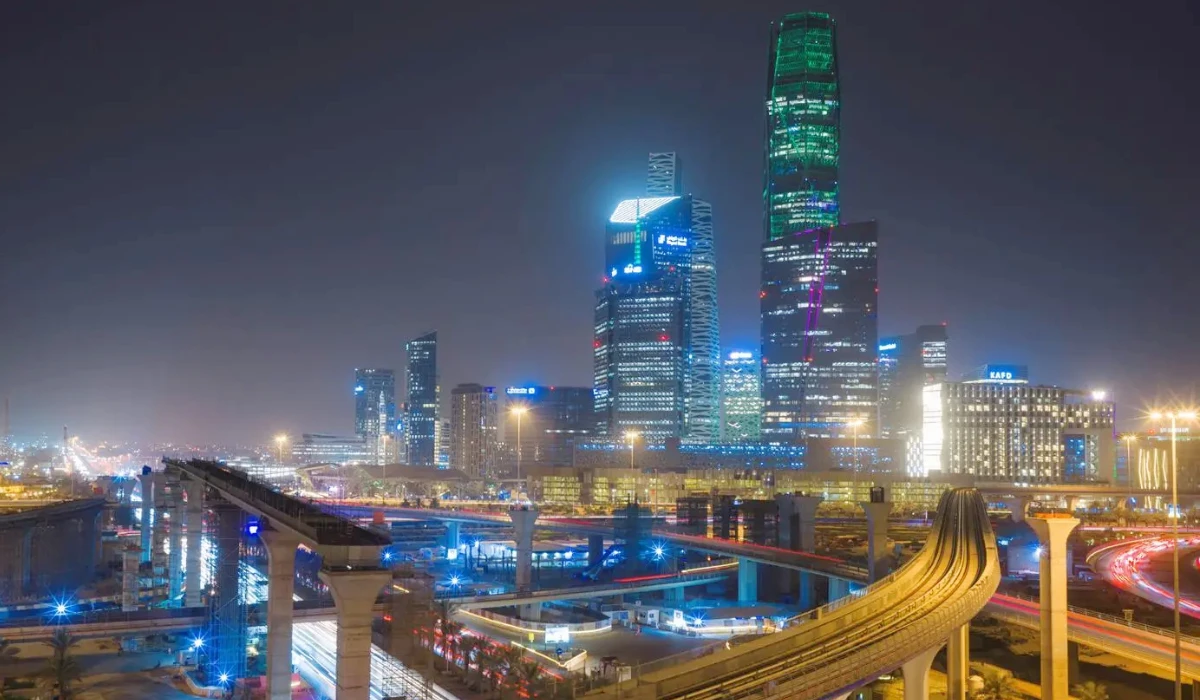
These two encounters, decades apart, reveal the same truth: some perceptions remain frozen long after reality has moved on. Saudi Arabia today is not the place many still imagine. It is shaped by a young population building its future in its own way. Men and women lead across industries with confidence, and heritage and modern life coexist naturally for those who live there.
In the UK, institutions, charities, and cultural bridging initiatives have begun creating new pathways for understanding.
Organizations including Turquoise Mountain, which works with artisans across the region, and platforms such as Lavish Concepts, which champions designers and artists from Saudi Arabia and the wider Middle East, and where some of my own work is also featured, have opened spaces where people can encounter culture directly rather than through assumption.
When Saudi artists, writers, and creatives share their work, they offer a view of daily life that is more accurate than earlier assumptions
Johara Global and the Saudi British Society each contribute in their own way to strengthening cultural literacy and dialogue. Dar Layan, through its recent Ultimate Journey collaboration with the Oxford Centre for Islamic Studies, has added another layer to this landscape by highlighting the depth and continuity of cultural storytelling.
Alongside these, Saudi student societies at UK universities, led by students organizing events, discussions, and cultural activities on campus, continue to foster understanding through active engagement. These communities, some of which I have worked closely with, show how culture, craft, and human connection can shift perceptions in ways that feel genuine and lasting.
Yet some impressions remain fixed, shaped by limited exposure or stories never revisited. They remain until something real replaces them. This is why Saudi voices matter. When Saudis speak for themselves, the picture becomes clearer.
When Saudi artists, writers, and creatives share their work, they offer a view of daily life that is more accurate than earlier assumptions. When Saudis take part in conversations beyond their borders, they replace old ideas with lived experience.
Change is visible everywhere, in film festivals, new art spaces, design exhibitions, restored heritage sites, and regions now open to visitors. It also appears in how young Saudis travel, study, and collaborate, and in the ease with which they express their identity.
These developments come from people living their lives and expressing their culture in ways that feel natural to them. That is what shifts understanding. People change their views when they encounter something real.
A visitor walks into a gallery and meets a Saudi artist whose presence alone challenges an old idea. A teacher in a classroom is corrected by a trainee who refuses to let a stereotype stand. Saudis are seen as individuals rather than cliches.
Saudi Arabia is already shaping its own narrative. It is defined by culture and by a heritage that exists in harmony with progress and modernity, and it no longer waits for permission to be understood.
The world may take time to adjust, but the direction is clear. It is being shaped every day by Saudis who speak, create, and engage with the world around them.
Saudi Arabia’s story is changing because its people are present in the world in ordinary, everyday ways, like everyone else. They study, build, educate, and create. As more take part in conversations beyond their borders, the picture becomes clearer. The story is moving forward; the world is catching up.
• Intisar Alyamani is an artist and cultural adviser advancing culture, art, and society, bringing them to the forefront of East–West dialogue. She is a trustee of the Saudi British Society and a fellow of the Royal Society of Arts.