

For decades, the international humanitarian system has defined itself by a simple mission: save lives until governments can resume their responsibilities. That assumption is becoming increasingly outdated.
Around the world, humanitarian organizations are no longer simply responding to emergencies. They are increasingly performing functions once reserved for governments themselves. They provide healthcare, educate children, distribute food, maintain water and sanitation systems, support livelihoods and, in some cases, help sustain entire communities for years or even decades.
The humanitarian system was built to respond to temporary crises. It is increasingly becoming a system of long-term governance.
This transformation has occurred gradually, almost unnoticed. Yet it may represent one of the most profound shifts in international affairs since the modern humanitarian architecture emerged after the Second World War.
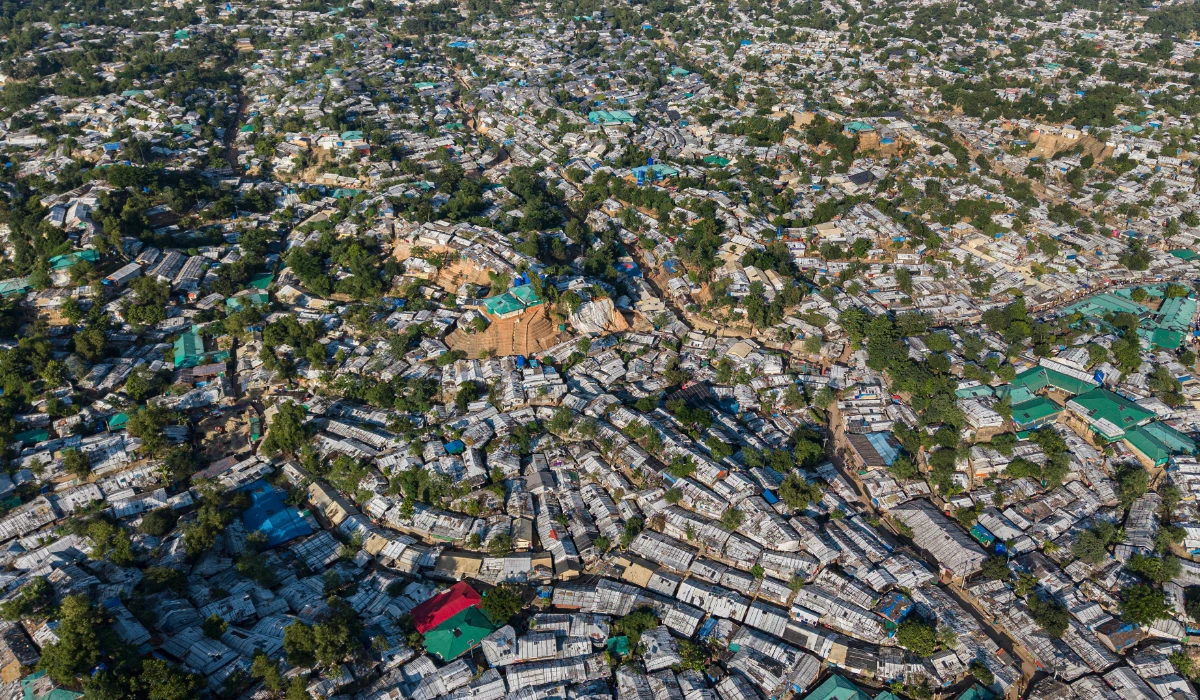
Myanmar illustrates this change better than almost anywhere else. Nearly a decade after more than a million Rohingya fled violence in Myanmar, the world’s response remains overwhelmingly humanitarian. International agencies continue to provide food assistance, healthcare, education, sanitation and protection services to refugee communities in Bangladesh. Without this support, the humanitarian consequences would be catastrophic.
Yet the uncomfortable reality is that these services are no longer simply emergency relief. They have become the basic infrastructure of everyday life.
An entire generation of Rohingya children has grown up under an international humanitarian system rather than under the institutions of a functioning state. Schools operate because aid agencies fund them. Healthcare exists because humanitarian organizations provide it. Food security depends almost entirely on international assistance.
The humanitarian system has not merely prevented suffering. It has become the principal provider of public goods.
The humanitarian system was built to respond to temporary crises. It is now becoming a system of long-term governance
Dr. Azeem Ibrahim
But Myanmar is not unique. Across northern Syria, humanitarian organizations have long supported hospitals, schools and local councils in areas where state institutions have collapsed or withdrawn. In Sudan, aid agencies increasingly operate amid fragmented authority while attempting to sustain civilian populations caught between competing armed actors. In Yemen, humanitarian assistance has become deeply embedded in the daily functioning of communities after years of conflict. Gaza presents similar dilemmas, where humanitarian agencies struggle not only to deliver aid but to preserve the essential services on which civilian life depends.
These are no longer short-term emergencies. They are prolonged systems of international administration operating alongside, or in place of, weakened state institutions. This creates a challenge that humanitarian policy has been reluctant to confront.
The international humanitarian system continues to describe itself as temporary, even when its operations become effectively permanent. This matters because humanitarian action was never designed to replace governance.
Humanitarian organizations are guided by principles of neutrality, impartiality and independence. Their legitimacy rests on providing assistance according to need rather than political considerations. Unlike governments, they do not seek political authority, collect taxes or exercise sovereign power.
Yet when humanitarian agencies become the primary providers of education, healthcare, water, sanitation and food security for years on end, they inevitably begin performing functions that shape the political and social life of entire communities.
They may not become governments but they increasingly carry governmental responsibilities.
This evolution has occurred because modern conflicts have changed fundamentally. The postwar humanitarian system assumed that wars would eventually end, governments would reestablish authority and humanitarian organizations would withdraw. Increasingly, conflicts do not follow that pattern.
Civil wars now last longer. Political settlements prove more elusive. Territorial control becomes fragmented rather than decisively won. States often retain international recognition while losing effective authority over large parts of their territory.
The greatest fiction in modern humanitarian policy is that today’s largest operations remain temporary
Dr. Azeem Ibrahim
As a result, humanitarian operations designed to last months frequently continue for decades. The consequences of this extend far beyond the delivery of aid. Long-term humanitarian systems inevitably influence local economies, labor markets, education, governance and social cohesion. They affect incentives for host governments, shape relations with local authorities and influence how displaced populations imagine their futures.
In other words, humanitarian assistance does not simply respond to political realities. Over time, it becomes part of them.
Myanmar again demonstrates why this matters. The international community continues to insist that voluntary, safe and dignified repatriation remains the preferred solution for the Rohingya. That objective is both morally right and consistent with international law. But successful repatriation will require much more than political agreements. It will require functioning schools, clinics, local administration, policing, dispute resolution and public services in the communities to which refugees return.
Who provides those institutions? Who maintains them? Who ensures that returning families can rebuild their lives? These questions reveal the increasingly blurred line between humanitarian assistance and governance.
As territorial realities in Rakhine continue to evolve, international organizations will inevitably have to work with whichever authorities exercise effective control over local communities. That does not imply political recognition or endorsement. It reflects a practical reality: humanitarian outcomes ultimately depend on functioning local institutions, regardless of the legal status of those administering them.
This challenge is not confined to Myanmar. Climate change, prolonged conflict, state fragility and mass displacement are likely to produce more situations in which humanitarian organizations become long-term providers of essential public services.
The international community has devoted enormous effort to improving humanitarian financing, coordination and emergency response. It has paid far less attention to the political implications of humanitarian systems that endure for decades. That conversation can no longer be postponed.
The answer is not to transform humanitarian organizations into governments. Their neutrality remains one of their greatest strengths and must be preserved. Nor is the solution to abandon populations trapped in protracted crises.
Instead, policymakers need to recognize that the boundary between humanitarian assistance and governance is becoming increasingly blurred. That demands new thinking about partnerships, accountability, local institution-building and the transition from emergency response to sustainable governance. Above all, it requires honesty.
The greatest fiction in modern humanitarian policy is that today’s largest operations remain temporary. For millions of people, they are not. They are the closest thing to government that exists. Myanmar should therefore be understood not only as a humanitarian tragedy but as an early warning of how modern conflict is reshaping the international system itself.
The question is no longer simply how to deliver aid more effectively. It is how to preserve humanitarian principles in a world where humanitarian organizations are increasingly asked to do what governments no longer can.
• Dr. Azeem Ibrahim is the director of special initiatives at the New Lines Institute for Strategy and Policy in Washington. X: @AzeemIbrahim


