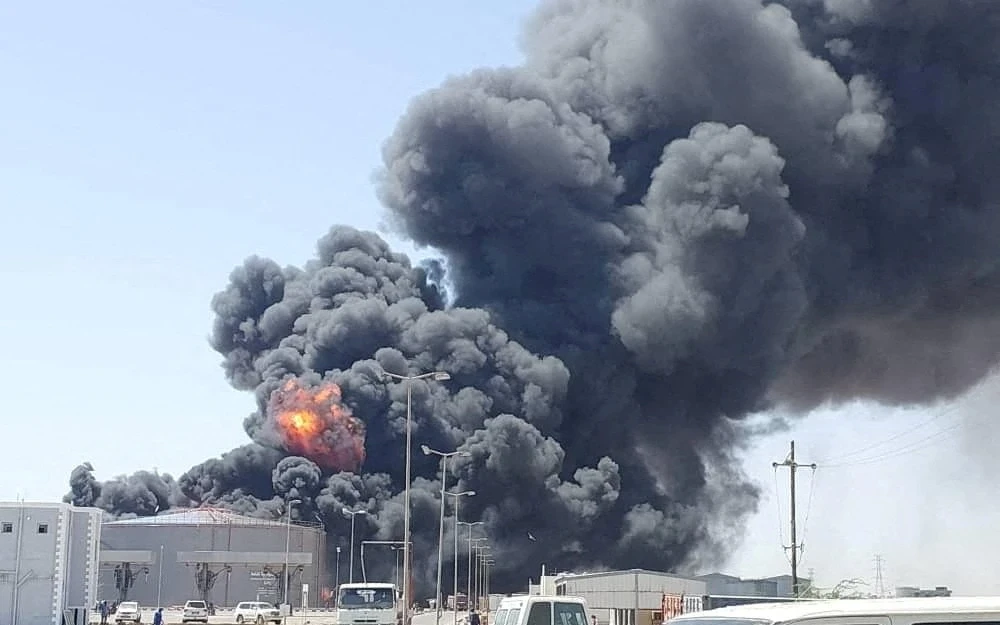
- Town had not been permanently occupied by Israeli forces during the recent conflict, although Israeli troops had periodically entered to carry out demolition operations
- Deployment is the first step in implementing the framework agreement signed in Washington on June 26 under US sponsorship
BEIRUT: The Lebanese army entered the town of Zawtar Al-Gharbiyah, north of the Litani River, at dawn on Tuesday, marking the first practical implementation of the pilot zones established under the US-brokered framework agreement between Lebanon and Israel.
The town had not been permanently occupied by Israeli forces during the recent conflict, although Israeli troops had periodically entered to carry out demolition operations.
The deployment is the first step in implementing the framework agreement signed in Washington on June 26 under US sponsorship. Under the agreement’s third clause, the Lebanese army will gradually assume full security responsibility in designated pilot zones as part of a phased and verified Israeli redeployment, with the broader aim of restoring the Lebanese state’s monopoly over arms and sovereign control of its territory.
A Lebanese military source told Arab News that the army had also entered several villages that were not occupied during the latest war, including Srifa, Al-Ghandouriyah and Froun.
“Zawtar Al-Gharbiyah is different because Israeli forces repeatedly entered and left the town while maintaining a presence on its eastern outskirts as an extension of their occupation of neighboring Zawtar Al-Sharqiyah, where the two towns’ lands overlap,” the source said.
The army had withdrawn from these areas after Hezbollah opened the southern front by launching rockets toward Israel in support of Iran on March 2, prompting the displacement of residents. They have been unable to return because the towns lie within the Israeli-designated “Yellow Zone,” where civilian access has been prohibited.
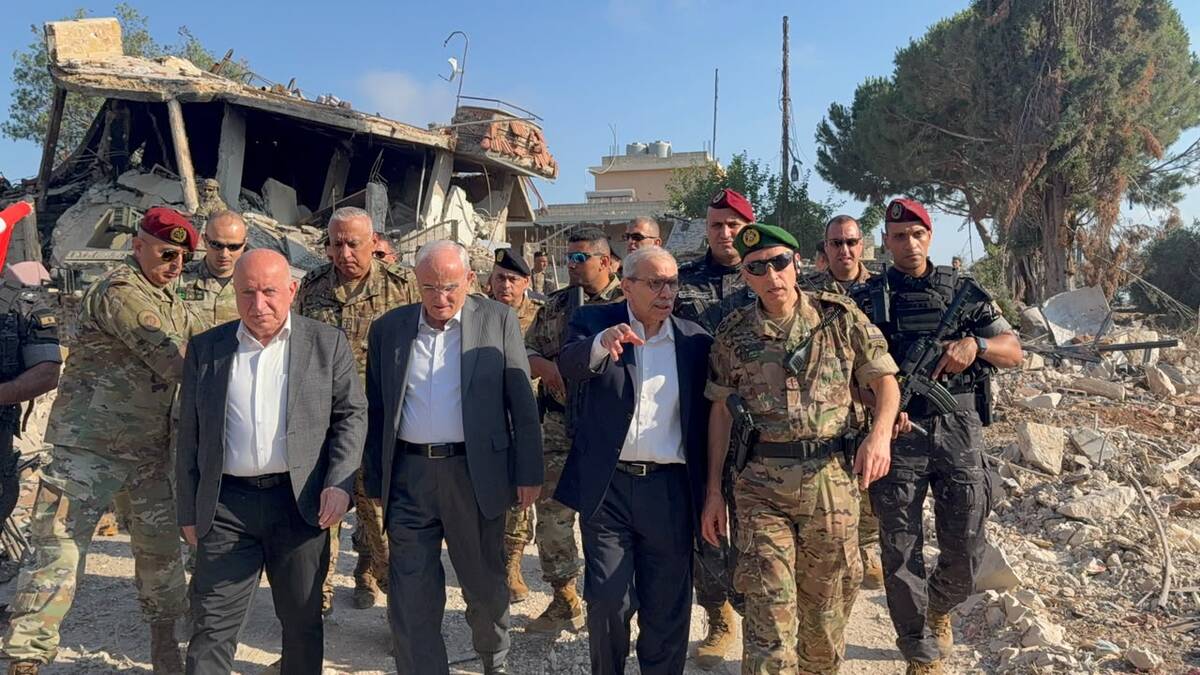
Lebanese political figures described the army’s deployment as “a goodwill gesture” secured through US pressure on Israel, coming just hours before the summit in Washington between US President Donald Trump and Lebanese President Joseph Aoun.
However, the deployment came under immediate strain after Israeli forces opened fire near Lebanese troops hours after they entered the town.
The Lebanese army said Israeli forces fired near its units while they were carrying out the deployment operation in Zawtar Al-Gharbiyah.
It warned that the incident “could obstruct the implementation of the deployment steps in the pilot zones,” which are being carried out in coordination with the Military Coordination Group for Lebanon, or MCG4L.
The Israeli Public Broadcasting Corp. acknowledged that Israeli troops had opened fire on Lebanese soldiers who had crossed into the agreed area using a bulldozer.
Earlier, the Lebanese army announced that military units had begun deploying in Zawtar Al-Gharbiyah as part of ongoing coordination with MCG4L.
A Lebanese military source told Arab News that entering the town marked the start of unexploded ordnance clearance.
“Engineering teams have begun surveying the streets to remove remnants left behind by the Israeli army, while a military bulldozer cleared rubble and reopened the road into the town,” the source said, adding that the Israeli gunfire did not halt the deployment.
The army also urged residents to follow the instructions of deployed troops to ensure their safety.
The deployment did not take place via the main road from Nabatieh through Nabatieh Al-Fawqa, Kfar Tebnit and Zawtar Al-Sharqiyah, nor from the southern approach via Qa’qa’iyat Al-Jisr because the Litani River bridge was destroyed in Israeli airstrikes.
Instead, troops entered through a secondary western route from Qa’qa’iyat Al-Jisr, where they established a checkpoint. Journalists and ambulances gathered at the site, while civilians were prevented from entering until later.
Among the first civilians to enter was Zawtar Al-Gharbiyah Mayor Abd Ezz Al-Din.
“There are no means of resilience in the town,” he told Arab News. “There is no electricity, the water well has been filled in by the Israelis, and about 50 percent of the town has been destroyed.”
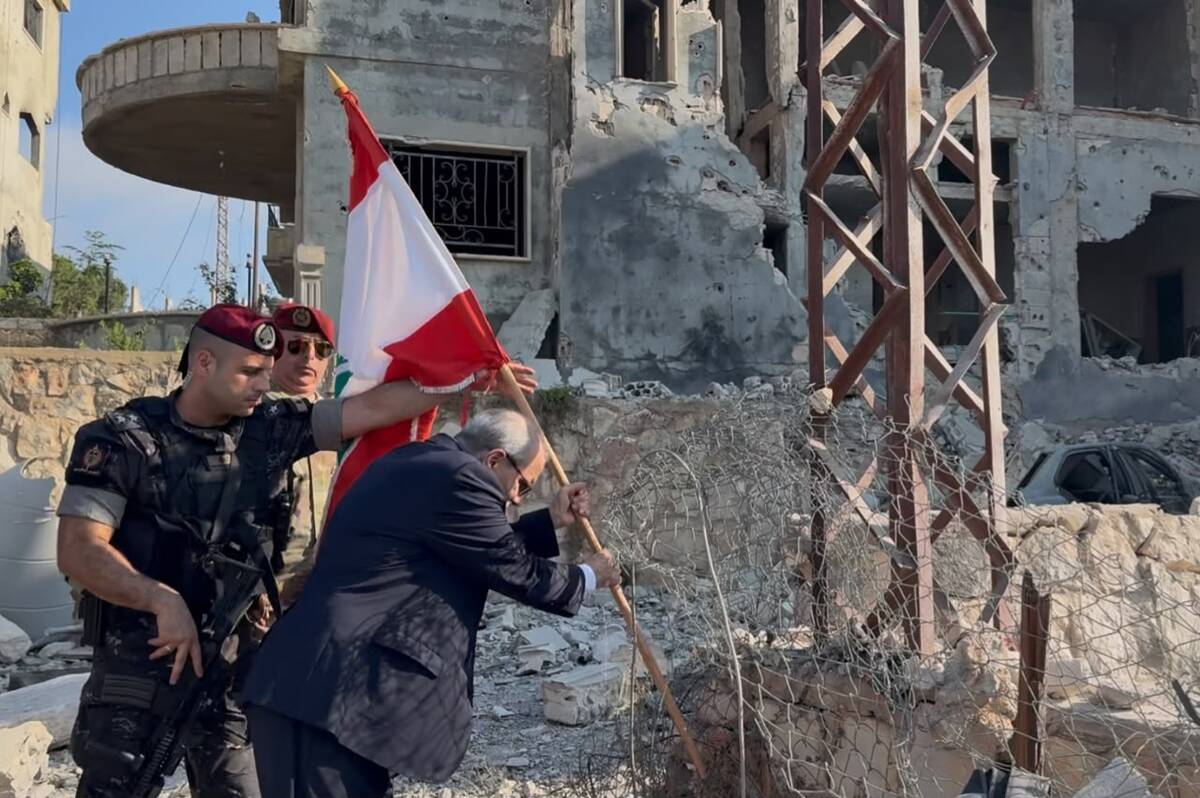
He said access remained extremely difficult for the town’s approximately 4,500 displaced residents because the main route passes through Israeli-held areas and the current road is only temporary.
“There is no possibility of living in the village at the moment, even though the army’s entry has brought some reassurance,” he said.
On Monday evening, the US State Department announced the launch of pilot zone operations in Froun, Srifa and Zawtar Al-Gharbiyah under the auspices of MCG4L.
“The United States will continue working closely with both parties to implement the framework to a successful conclusion,” the department said.
The Israeli military later confirmed the start of what it described as the “Safe Zone” pilot program in southern Lebanon, saying it was being carried out in coordination with US Central Command and the Lebanese Armed Forces.
It said Israeli, US and Lebanese military teams were coordinating implementation of the agreement, while warning that Israel would respond forcefully to any violations.
Before the first pilot zone came into effect, Israeli forces carried out six large detonations before dawn near Zawtar Al-Sharqiyah and Zawtar Al-Gharbiyah. Parts of Nabatieh Al-Fawqa were also subjected to intermittent artillery shelling.
The framework agreement does not specify a timetable for Israel’s withdrawal from areas it occupies or controls in southern Lebanon, including territory extending more than 10 km inside Lebanon.
The pilot zones are intended to be established on both sides of the Litani River.
Under the agreement, Israeli withdrawals are linked to the Lebanese army assuming full security responsibility in evacuated areas and to the disarmament of armed groups, an apparent reference to Hezbollah.
Israel has insisted that the Lebanese army inspect private properties in areas where it deploys. Under Lebanese law, however, such searches require judicial warrants.
Discussions are continuing over a mechanism that would allow the army to enter private properties in the presence of the local mayor during inspections.