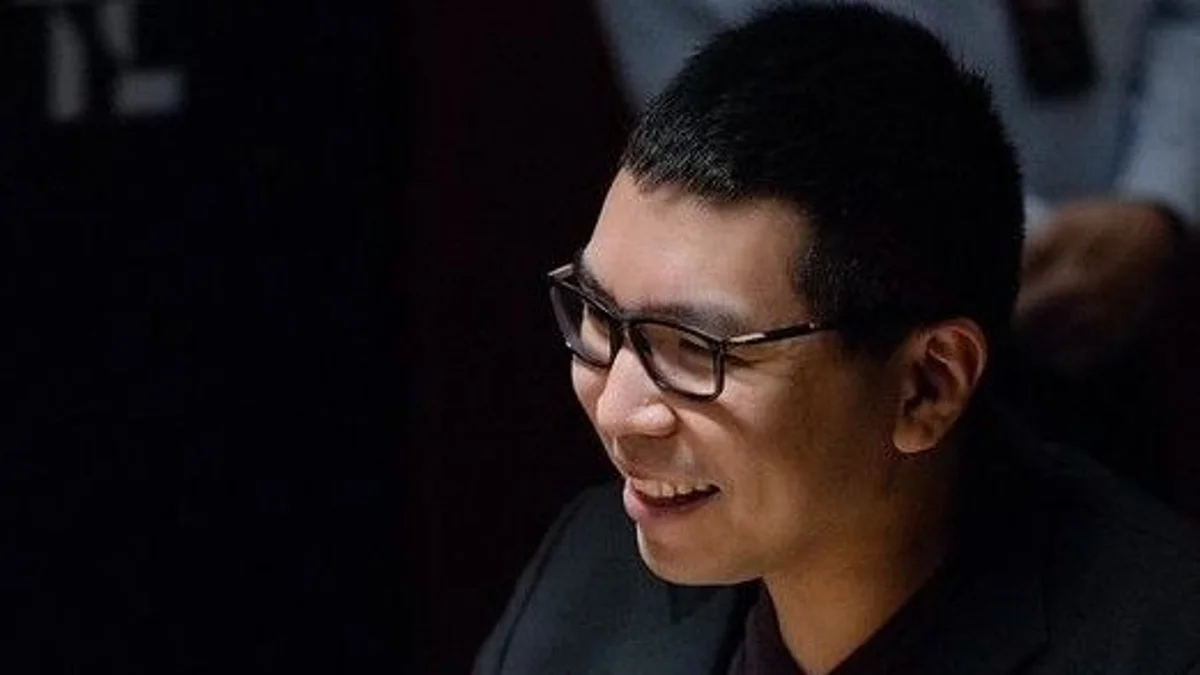
- The Filipino-American star told Arab News he hopes to play in the Kingdom one day — and reminds the Middle East of its place in the game’s history
BUDAPEST: For a man who retained one of the most prestigious titles in chess this summer, Wesley So speaks about the game with striking humility. Ask him about money and he talks about the mind. Ask him about Saudi Arabia and he lights up immediately.
“I would love to play in Riyadh,” So told Arab News at the Total Chess World Championship Tour Pilot in Budapest. “Sounds exciting. Maybe it will work out for me one day.”
It is a prospect that would delight a sizeable audience. Nearly 900,000 Filipinos work in Saudi Arabia, making the Kingdom the largest destination for overseas Filipino workers and home to the country’s sixth-largest expatriate community, according to Saudi labor ministry figures cited by the Philippine Embassy in Riyadh. And few chess players command the affection of that diaspora quite like the Cavite-born grandmaster, who now represents the US.
Form that travels
So comes into the conversation in fine form. In August he retained the Sinquefield Cup in Saint Louis, beating India’s R. Praggnanandhaa in an Armageddon playoff to become the first player to win the event in consecutive editions — and to join Fabiano Caruana as its only three-time champion.
Budapest has asked different questions. The pilot of the new FIDE-approved format, created by Norway Chess, tests 24 of the world’s elite across fast classic, rapid and blitz, a dry run for a four-city global tour that launches next year.
So’s campaign was a study in resilience. An opening-night blitz defeat to Vaishali Rameshbabu was followed by two hard-fought draws with Bibisara Assaubayeva, then a maximum six-point day built on back-to-back wins over Vaishali, and a first-game victory over Hans Niemann. He finished fourth in a tight Group D, just outside the knockout places, but regrouped in the placement brackets, beating Vincent Keymer before edging Levon Aronian in an Armageddon decider — a draw with the black pieces was enough — to finish 13th. Alireza Firouzja took the inaugural title, coming from behind to beat Anish Giri in the final.
The Riyadh connection
So’s Saudi link goes back to early 2025, when Ukrainian esports giant NAVI signed him as chess prepared to make its debut at the Esports World Cup in Riyadh with a $1.5 million prize fund. He has yet to play in the Saudi capital — this year’s chess event was staged in Paris, and a scheduling clash with the Grand Chess Tour kept him away — but he views the Kingdom’s investment in the game warmly.
“I think any investment in chess is a wonderful thing and hopefully that continues to grow,” he said. “Build chess in our communities if you want to see benefits that last a lifetime.”
Back to the source
Asked whether Saudi Arabia and the wider Middle East could become key destinations for international chess, So reached for history.
“Well, it would certainly be interesting, and I always hope for more expansion of chess anywhere,” he said. “After all, it was the Middle East that took the original game of chess from India and transformed it into the modern game we know today. They should remember that and build on it.”
It is a point well made. The game that traveled from India through the Gulf was refined across the Arab world as “shatranj” before carrying its strategies, problems and vocabulary on to Europe.
A message for young players
For the Kingdom’s growing community of young players, many of whom follow the elite game online, his advice is less about trophies than character.
“I would like the kids to know that they should follow an art because they love it, not because they hope to get rich from it,” he said. “They should learn to develop their minds and hearts, because both are needed to play this game well.”
It is a philosophy that has carried the three-time US champion from the Philippines to the top boards of Saint Louis and Budapest. If the pieces are ever set up for him in Riyadh, there will be no shortage of fans — Saudi and Filipino alike — waiting to watch.