DUBAI: Last month, at one of the art world’s most high-profile annual events, Art Basel, a luminous textile work by Saudi artist Hana Almilli traced a new kind of geography — one mapped through grief, alienation and the fragile notion of home and belonging.
Almilli, a multimedia artist, textile designer and poet, was among the artists presented by the Sigg Art Foundation during its Art Basel week program. Founded by Saudi Arabia-based Swiss collector Pierre Sigg, the foundation has a long-standing connection with the Kingdom’s cultural landscape, including an AlUla residency program supporting artists working across heritage, place, memory and new technologies.
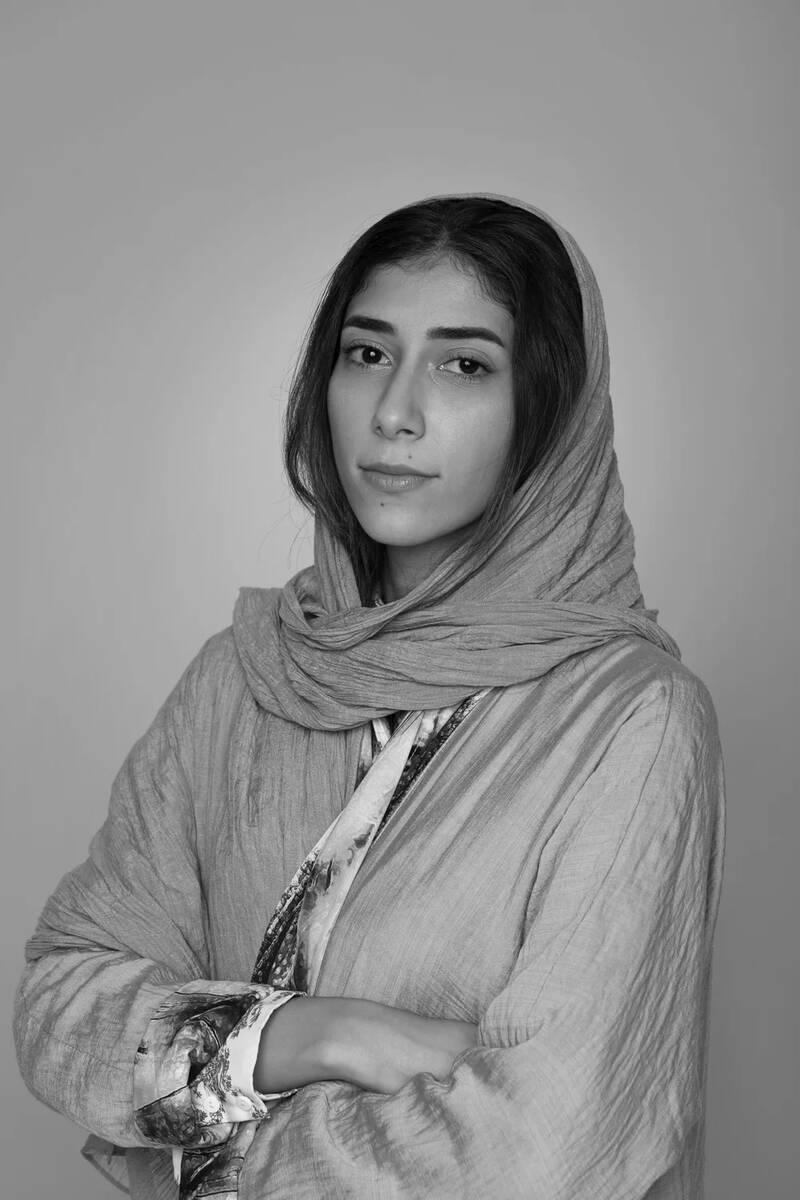
For Almilli, the Art Basel opportunity was the culmination of a relationship that had been developing for years.
“I’ve known them for quite a while. I’ve been honored to be nominated in the second edition of the Sigg Art Prize… and that led on to having more conversations with them, which led to speaking about including some of my works for the curated preview (at Art Basel),” she told Arab News. “It’s an honor, as a Saudi artist and a textile artist, to be a part of something such as this. For me, it’s important to have my voice out there. It’s important to highlight textiles as an art as well.”
That desire to elevate textiles within the contemporary art world sits at the heart of Almilli’s multidisciplinary practice, which spans photography, embroidery, poetry and fabric. Much of her work revolves around the Arabic concept of al-ghorba — often translated as alienation, but, she argues, far richer than a simple sense of displacement.
“I really use textiles as emotional terrain where I’m able to express feelings that I might not be able to convey by words,” she said. “Al-ghorba extends beyond physical displacement into the emotional experience of existing between places, languages, and generations.”
Across recent projects, Almilli has used thread and cloth to create what she describes as an “emotional landscape” of memory and loss. Her series “Echoes of My Alienation,” made up of photographs printed on silk organza and embroidered with multicolored thread, examines identity through movement, longing and the continuous search for home.
At Art Basel, however, one earlier work drew particular attention.
Created between 2018 and 2019 while Almilli was studying abroad, “Holes in My Abyss” emerged during a period marked by the death of her grandmother, whose influence continues to shape both her life and artistic practice.
“They hold a special place in my heart, but they’re also quite heavy on the heart,” she said of the works from that period. “‘Holes in My Abyss’ really reflects the emotional terrain of memory and loss and losing someone, and particularly the spaces left by those experiences that cannot be fully articulated or recovered.”
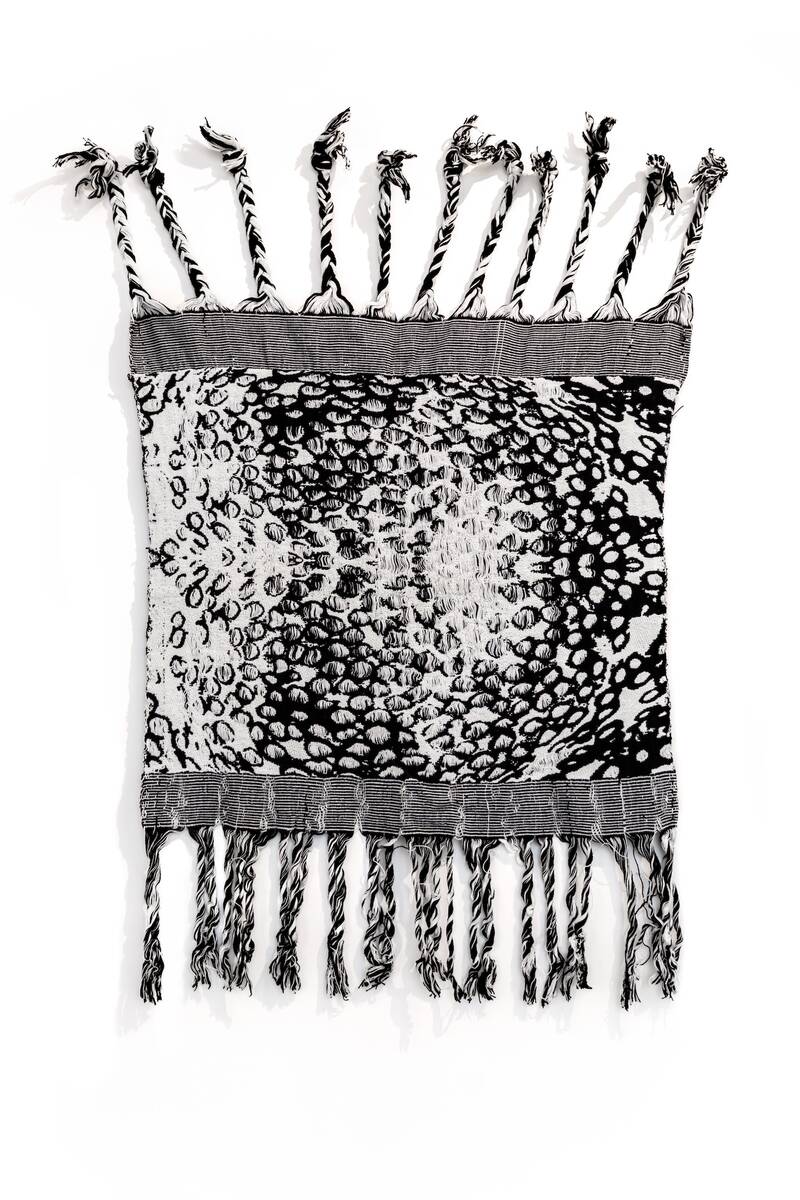
The work began as a woven textile on silk organza embroidered with cotton thread. Almilli then introduced a second, more radical, intervention, repeatedly puncturing the fabric by hand. Initially, the act appears destructive. But once the work is suspended and light passes through the tiny perforations, the piece is transformed into a luminous, three-dimensional installation.
“That really resembled that feeling of filling the gap, or filling the emptiness, with those memories,” she said. “That’s why I called it ‘Holes in My Abyss.’ I saw the light enter that abyss in some way.
“With the work, I consider absence not as emptiness, but as something that actively shapes my identity,” she said. “With the loss of someone, there’s always the seeking to fill that emptiness. And (that’s done) through those memories.”
Rather than signaling an end to grief, she sees the work as marking a shift in how loss is carried.
“It’s almost like this light at the end of the tunnel; when you go from grieving someone to just missing them and having them be a part of your memory,” she said. “Grief never ends, but it’s bittersweet.”
That sense of continuity also extends to the making of the work itself. While some of her embroideries take months to complete, “Holes in My Abyss” came together during an intense nine-hour session.
“I further explored this puncturing process,” she said, explaining that the holes themselves are temporary. “When you leave it, it actually goes back to being flat.”
The importance of textiles in Almilli’s work can be traced back to learning crochet from her grandmother..
“My grandma was in Syria. Every time she would visit, she would bring her crochet pieces and teach me. It was almost like a passed-down trade.”
Today, that inherited craft is increasingly intersecting with new technologies. As mentioned, Almilli is among the nominees for the 2026 Sigg Art Prize, which explores the relationship between intangible heritage and emerging technologies, including AI.
Rather than seeing technology as separate from craft, she views the two as complementary.
“That breaking boundary is something that I play around with because, at the end of the day, what I make is contemporary art,” she said. “I’ve started exploring this idea of crossing the artificial with crafts; the integration of touch and interaction as a part of textiles.”
The Art Basel presentation marks another step in that journey, one Almilli hopes will continue through future collaborations with the Sigg Art Foundation.
“It’s quite an exciting opportunity,” she said. “There’s more to come.”