- The Ecuadorian-Lebanese contender for UN secretary-general says the organization needs fewer bureaucratic fixes and more diplomacy built around trusted guarantor states
- A-Baki tells Arab News Saudi Arabia could play a pivotal mediation role under Crown Prince Mohammed bin Salman, while UN must reassert itself from Iran to Gaza and Lebanon
NEW YORK: Ivonne A-Baki has a simple diagnosis for what is wrong with the UN. It is not the Charter. It is not simply the Security Council veto. And it is not a problem that can be solved by creating more bureaucracy.
“The problem with the UN is that there is no trust,” the Ecuadorian-Lebanese diplomat told Arab News. “Nobody trusts anybody.”
A-Baki, one of the candidates seeking to become the UN’s 10th secretary-general and the first woman to take on the role, has built her campaign around the proposition that the organization can recover its relevance only if it returns to its most basic purpose: bringing adversaries together before crises spiral beyond control.
Her prescription draws heavily on her own experience helping broker an end to the last interstate war fought in South America.
In 1998, Ecuador and Peru signed the Brasilia Presidential Act, resolving a border dispute that had generated repeated conflict for generations.
For A-Baki, who played a central role in that process, its success offers a model for confronting some of today’s most intractable crises — from Iran and Gaza to southern Lebanon.
The key, she argues, was a small group of trusted guarantor states that accompanied the negotiations from their earliest stages through implementation on the ground.
That model, she believes, could work again. And among the countries she sees as capable of playing such a role today is Saudi Arabia.
“I think MBS is doing an amazing job,” she said, referring to Crown Prince Mohammed bin Salman. “I think he wants that. He’s modern-thinking. He’s young. I think Saudi Arabia would be a very important guarantor country, very important.”
She added: “I will meet with him first if I was secretary-general.”
The guarantor model
A-Baki’s career has spanned four continents and included posts as Ecuador’s ambassador to the US and France, as well as service as a cabinet minister in Quito. But it is the Ecuador-Peru peace process that forms the backbone of her candidacy.
The arrangement paired the two disputing governments with Argentina, Brazil, Chile and the US as guarantors.
Those states did not simply appear at the end to endorse an agreement. They accompanied the parties through negotiations, helped build confidence and remained involved as the settlement was implemented.
For A-Baki, however, the architecture mattered less than the confidence the parties placed in it.
“The decision of the two presidents was that we’ll accept what the guarantors suggest because we trust,” she said of then-Ecuadorian President Jamil Mahuad and Peru’s Alberto Fujimori.
Both leaders ultimately had to sell a politically difficult compromise at home. “So everything is based on trust,” A-Baki said. “This is the secret of success.” That premise runs through virtually every aspect of her platform.
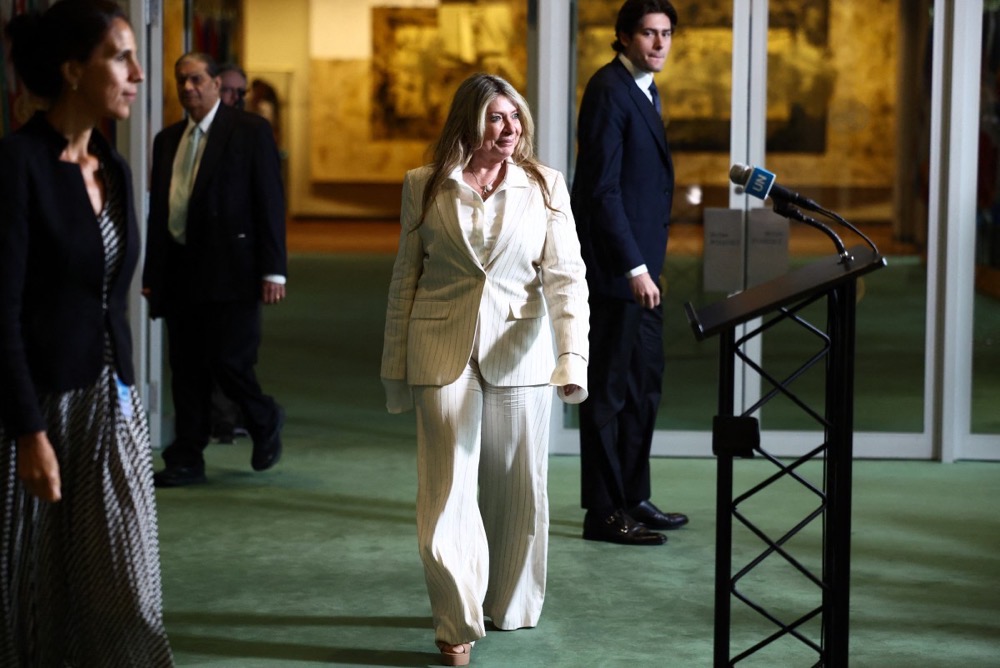
At a three-hour interactive dialogue at UN headquarters on Thursday, part of the General Assembly’s public vetting process for candidates seeking to succeed Antonio Guterres, A-Baki presented herself as a mediator first and an administrator second.
She is competing at a moment when the UN is under pressure on multiple fronts: unpaid dues, institutional sprawl, wars it has struggled to influence, and a Security Council repeatedly immobilized by geopolitical rivalry and the veto.
Her response is to argue for a more activist secretary-general. “When you react, the problem is already there,” she said.
“The secretary-general should be a mediator, period. No general. You don’t need generals. You need a mediator.”
Could it work with Iran?
Whether the guarantor model could be transferred neatly to the Middle East is a more difficult question.
Asked whether it could be applied to tensions involving Iran, A-Baki was more cautious. Guarantors, she said, cannot simply be imposed. They have to be accepted by both sides.
She pointed to Pakistan and Gulf states already involved in back-channel diplomacy, along with US special envoys Steve Witkoff and Jared Kushner and Vice President JD Vance, as evidence that elements of such a model may already be emerging informally.
But mediation, she stressed, works only when all sides accept that the final outcome will fall short of everything they want. “Both sides have to go out with a bad taste in their mouths, otherwise it’s not a win,” A-Baki said.
The same principle, in her view, should inform the UN’s approach to tensions around the Strait of Hormuz, through which roughly a fifth of the world’s oil passes.

Rather than limiting itself to statements from the Security Council, she said, the organization should be directly engaging leaders on all sides. “The UN should be the one talking with all the presidents,” she added.
UN headquarters remains uniquely suited to that role because every party is already represented there, she said, adding: “It’s the place for convening.”
Pressed on who is responsible for allowing the organization to become marginalized in major crises, A-Baki said: “I never blame.”
Instead, she returned to the same diagnosis: a loss of trust, compounded by a bureaucracy too often structured to respond after crises erupt rather than prevent them.
Gaza and the limits of old language
The Israeli-Palestinian conflict presents perhaps the clearest test of A-Baki’s contention that the UN must change not only how it mediates but how it communicates.
The Security Council vetoed seven draft resolutions in 2024 alone — the highest number in a single year since 1986.
A-Baki argued that even the language surrounding the conflict has become an obstacle. Rather than continuing to lead with the phrase “two-state solution,” which she said has “become a bad word,” she favors focusing on a more concrete proposition: secure and internationally respected borders for Israelis and Palestinians.
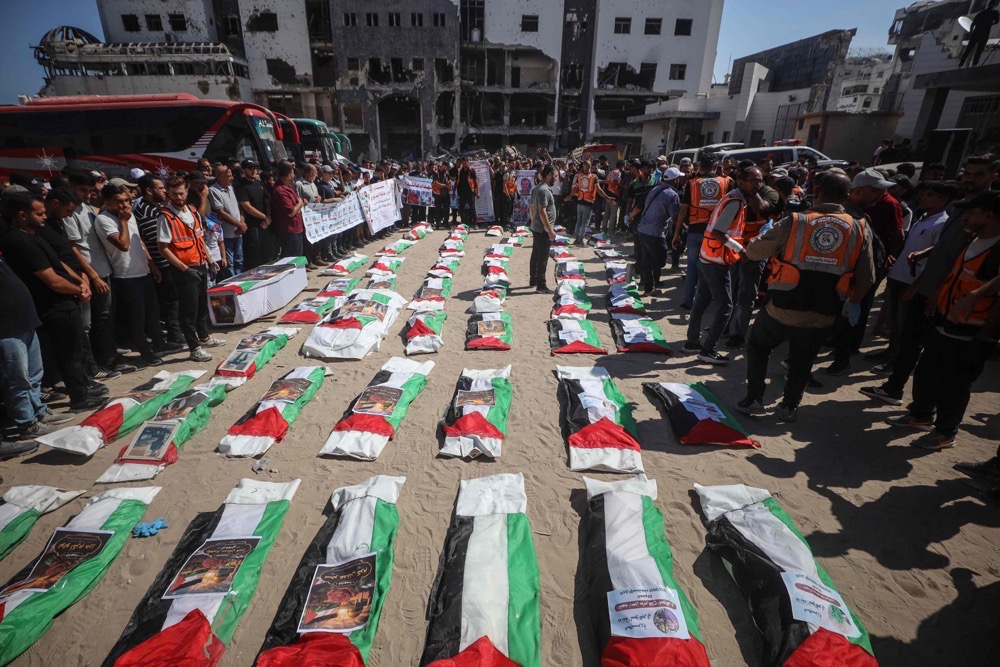
“We don’t say two-state solution,” she added. “We just say respect borders that aren’t going to be changed.”
She said such negotiations should take place under UN auspices and could work alongside the US-backed Board of Peace rather than in competition with it. A Board of Peace cooperating with the UN “would be a plus,” she added.
On the West Bank, where the UN says displacement has reached its greatest scale since 1967, A-Baki said she would “go there and meet with everyone. We have to return to what it was before.”
Lebanon is personal
Lebanon occupies a different place in A-Baki’s worldview. Her connection to the country is not simply diplomatic or ancestral.
Around four decades ago, she sheltered with her three children during the bombing of Beirut — an experience she has described as the moment she vowed to dedicate herself to peacemaking.
Today, she is deeply critical of where the security architecture in southern Lebanon has ended up.
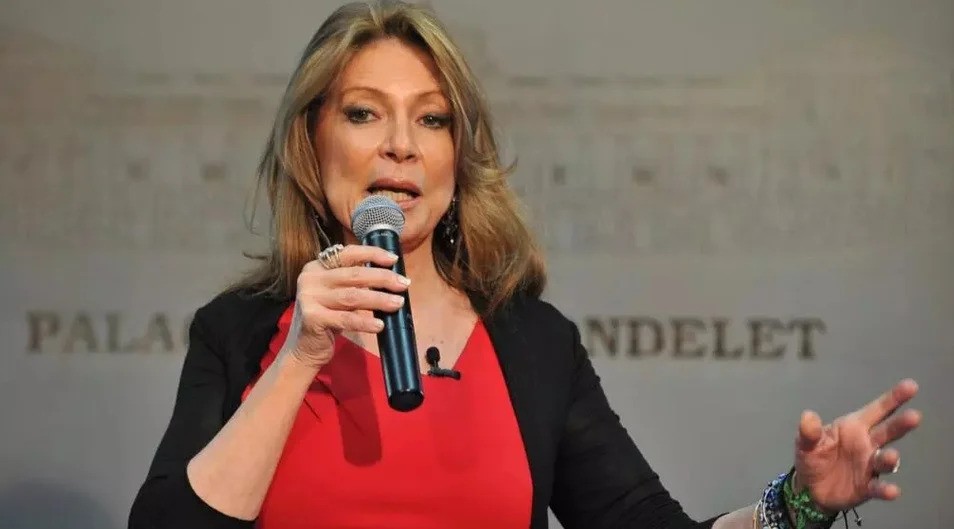
Israeli forces have continued operations there despite a US-brokered ceasefire arrangement with Hezbollah, while the future of the UN Interim Force in Lebanon and the role of the Lebanese Armed Forces remain central to the country’s security debate.
Her priority would be to strengthen the LAF — which she explicitly distinguishes from Hezbollah — with support from Gulf states and Washington.
That, she argued, would have to be paired with a full Israeli withdrawal and clearly defined, mutually respected borders.
For A-Baki, the Lebanon file embodies many of the themes running through her candidacy: weakened state authority, competing armed actors, distrust between governments, and a UN mechanism whose presence alone has not been sufficient to prevent renewed confrontation. Her answer is again mediation backed by political commitment.
‘Follow the money’
A-Baki is careful not to argue that every conflict can be solved through the same formula. Different wars, she said, emerge from different forces.
Some are driven primarily by interstate rivalry or sectarian divisions. Others, particularly in parts of Africa, are fueled by corruption, personal ambition and competition over resources.
Her experience confronting narco-trafficking in Ecuador also shaped how she views instability.
Whether the issue is Latin American cartels, Afghanistan’s opium trade or criminal networks operating elsewhere, she argues that illicit finance frequently provides the connective tissue between political instability and organized violence.
“Follow the money,” she said. “They have more money than the governments. They’ll never give up that control.”
The implication is that peacekeeping and diplomacy cannot be separated from the economic networks that sustain conflict.
The Trump question
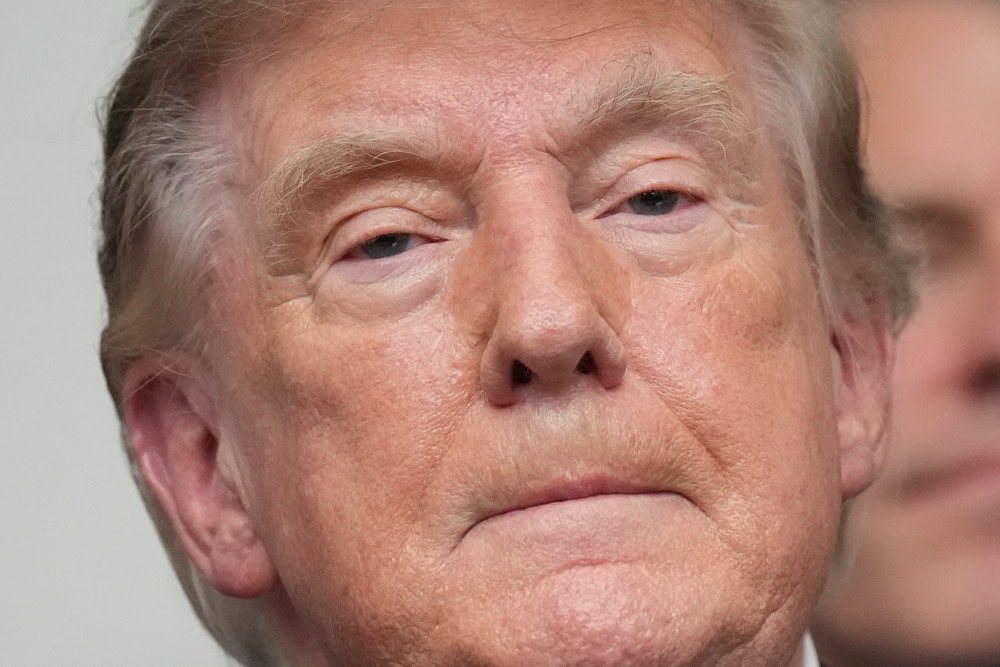
A-Baki’s decades-long friendship with US President Donald Trump has inevitably drawn scrutiny as she campaigns for a role that requires navigating relations among all 193 UN member states.
She rejects the suggestion that the relationship compromises her independence, saying her personal relationships span US administrations and political parties stretching back to Ronald Reagan.
“If they’re going to criticize me because I’m friends with Trump, then criticize me because I’m friends with (Bill) Clinton too,” she said, describing herself as politically unaffiliated and guided instead by “justice, transparency” and “pragmatic” instincts.
The test, if she were elected, would be whether that personal access could become a diplomatic asset without undermining perceptions of impartiality.
A different kind of secretary-general?
At Thursday’s dialogue, A-Baki leaned into her status as an outsider — and particularly into her identity as a mother and grandmother.
She argued that the absence of women from many of the world’s most important peace negotiations, including those over Ukraine and Gaza, has deprived diplomacy of a different approach to compromise and human cost.
For her, this is not simply an argument for electing the first woman to lead the UN. It is part of a broader contention that an institution built to prevent war has become too technocratic and detached from the people affected by its failures.
After stepping down as Ecuador’s ambassador, A-Baki said she changed her social media biography to read: “Citizen of the world for peace and a new world order.”
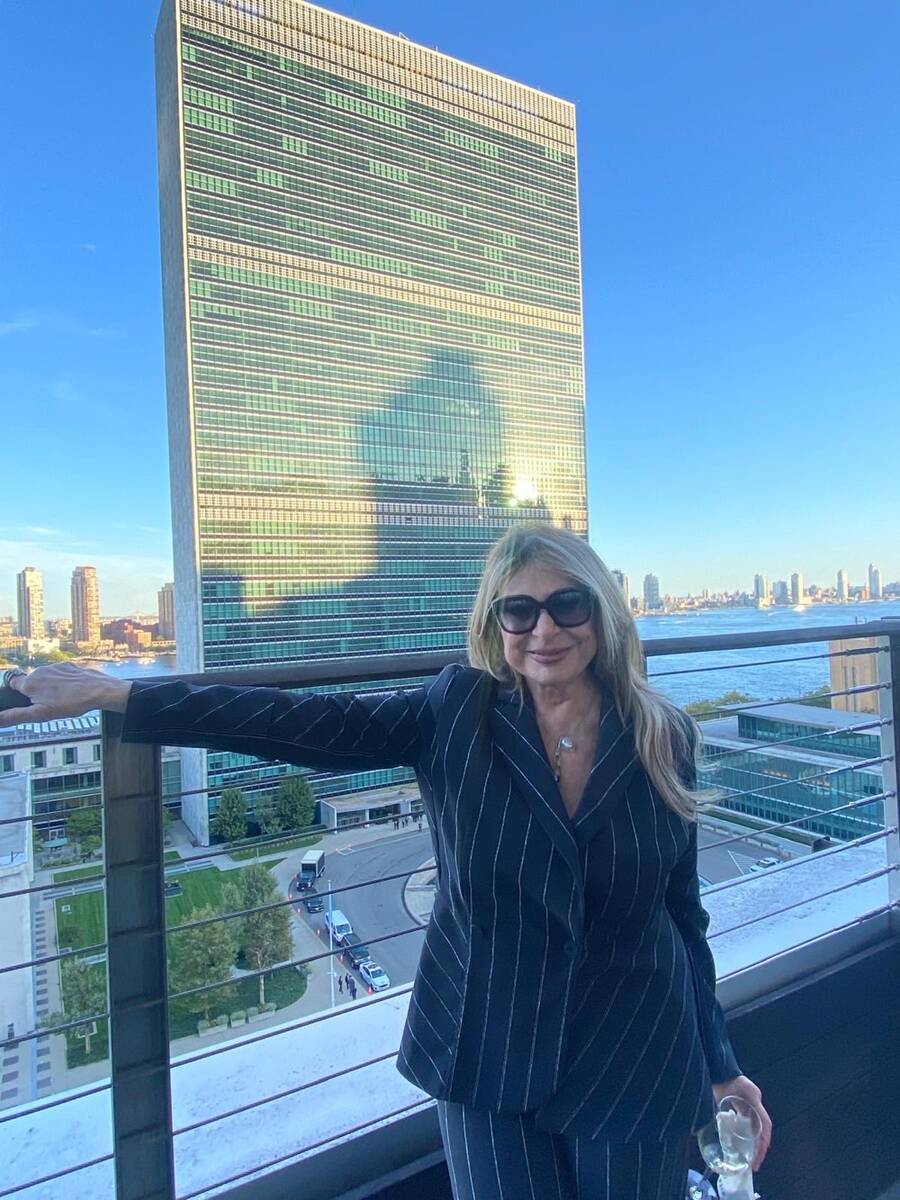
Asked how a diplomat accustomed to representing one country could suddenly represent 8 billion people, she returned to that idea.
“The UN needs more soul,” A-Baki said. “You can’t be a robot. You have to have feelings. You have to put yourself in the place of the other.”
For an institution wrestling with paralysis, distrust and questions over its relevance, A-Baki’s pitch is strikingly non-bureaucratic.
Her argument is that the UN does not primarily need another structural overhaul. It needs people and governments to trust one another enough to compromise. And if they cannot, no amount of institutional reform may be enough to save it.