- Activists say the project will kill any hope of a contingent Palestinian state in the West Bank
DUBAI: In recent days a chorus of condemnations and sanction threats have been levelled against Israel by the EU and Arab states for their expansionary policies in the West Bank.
The latest spur of diplomatic action has centered around the Israeli’s governments controversial plans to begin construction on the E1 settlement in East Jerusalem.
Despite Israeli settler encroachment on Palestinian territory being a decades old ordeal that has only escalated since the start of the October 2023, experts and Palestinians fear that the settlement represents the final ‘nail in the coffin’ of any future Palestinian state.
“The focus on the E1 settlement is where it's located. It's not just like any settlements project, we have many settlements expansion in the West Bank,” Palestinian human rights activist, Ihab Hassan told Arab News.
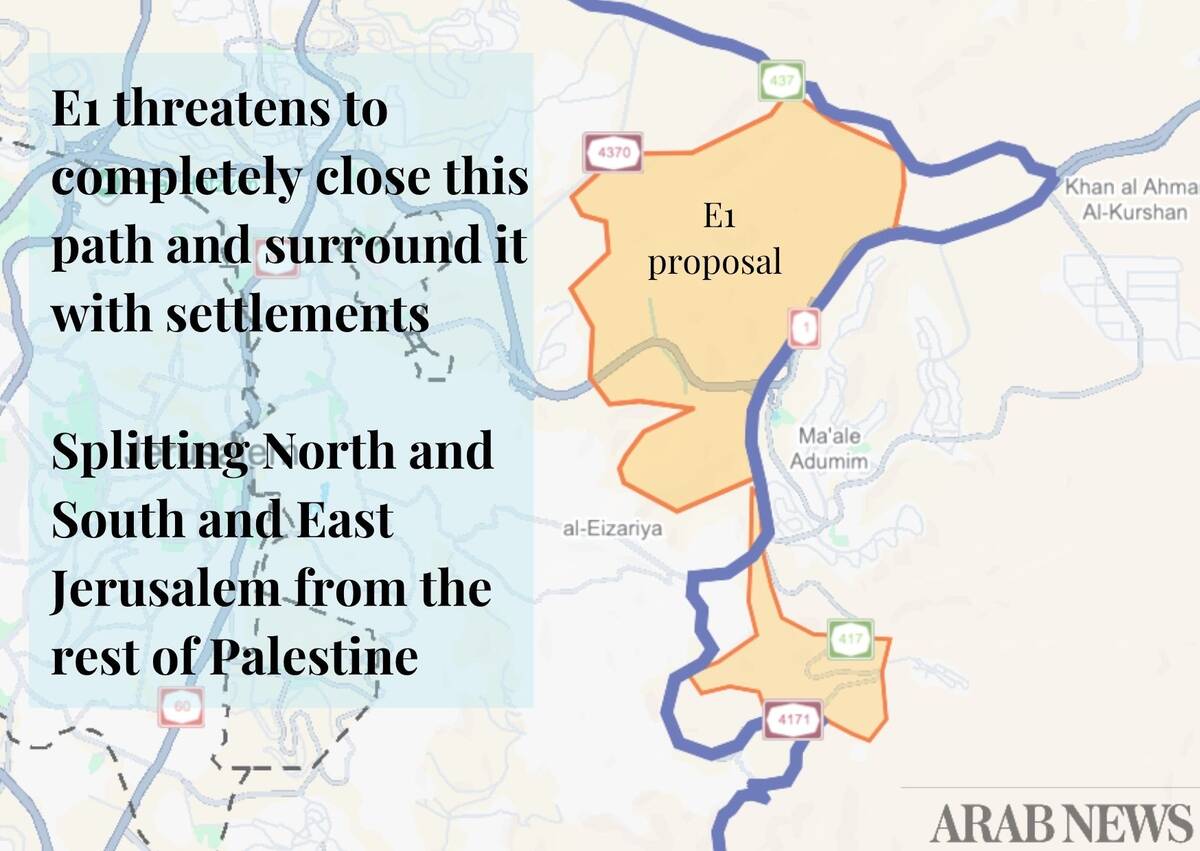
“It's between East Jerusalem and the Israeli settlement of Ma'ale Adumim, it will cut the southern West Bank from the northern West Bank and would literally mean the the two-state two-state solution is dead.”
Currently, Palestinians moving from northern cities like Ramallah and Nablus to southern cities like Bethlehem and Hebron pass through Abu George Road and the heavily restricted Highway 1 which runs alongside the border of the existing Ma’ale Adumim settlement.
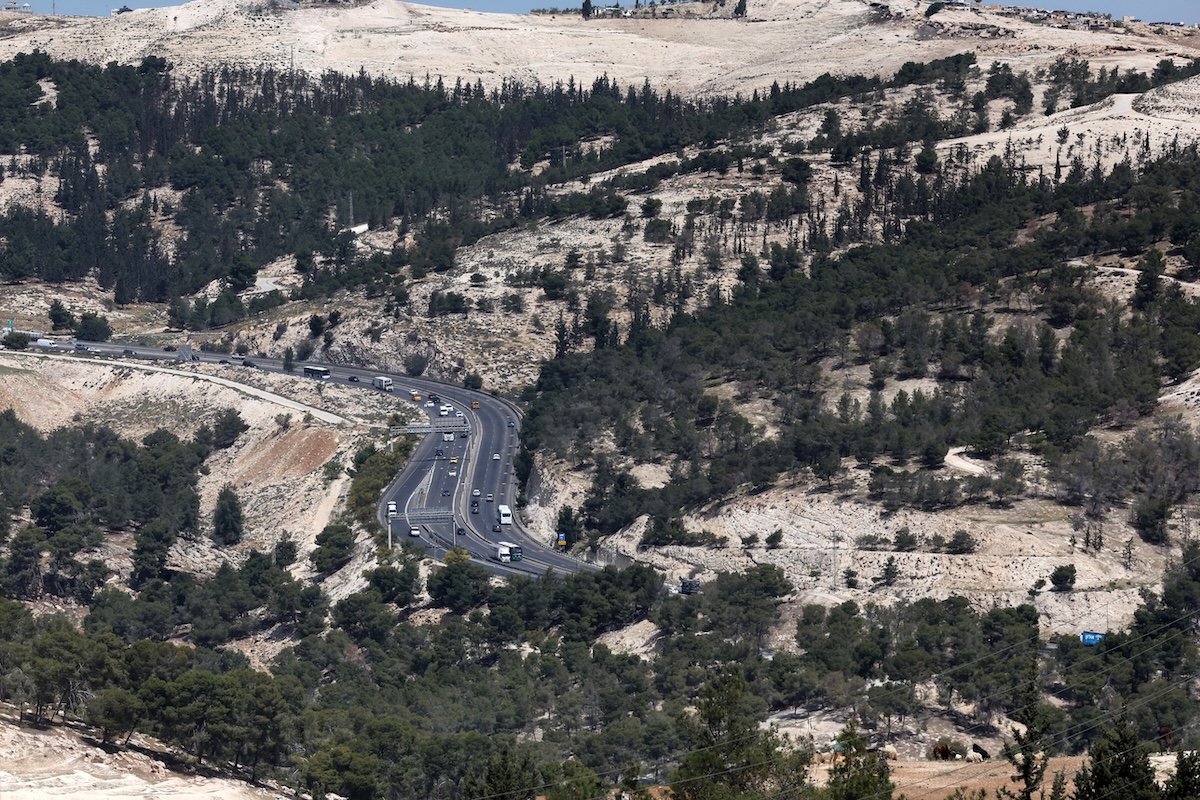
The proposal for the E1 settlement project, which was approved by the Israeli cabinet in August last year, entails building over 3,400 housing units in an area which will effectively completely close off the main arterial corridor that Palestinians rely on – and wedge all movement into an even narrower, more congested and heavily controlled area through East Jerusalem; itself surrounded by Israeli settlements.
On Tuesday, Israel’s Ministry of Construction and Housing issued a tender on Tuesday for the construction of more than 1,200 housing units in the E1 area east of Jerusalem.
“It will separate the entire like East Jerusalem from the West Bank, which is, you know, that the whole idea behind the two-state solution,” Hassan said.
Current proposal maps made available through the United Nations Office for the Coordination of Humanitarian Affairs (OCHA) visualize these routes, they show heavy the extent of restriction in the plan as well as the possible displacement of many communities.
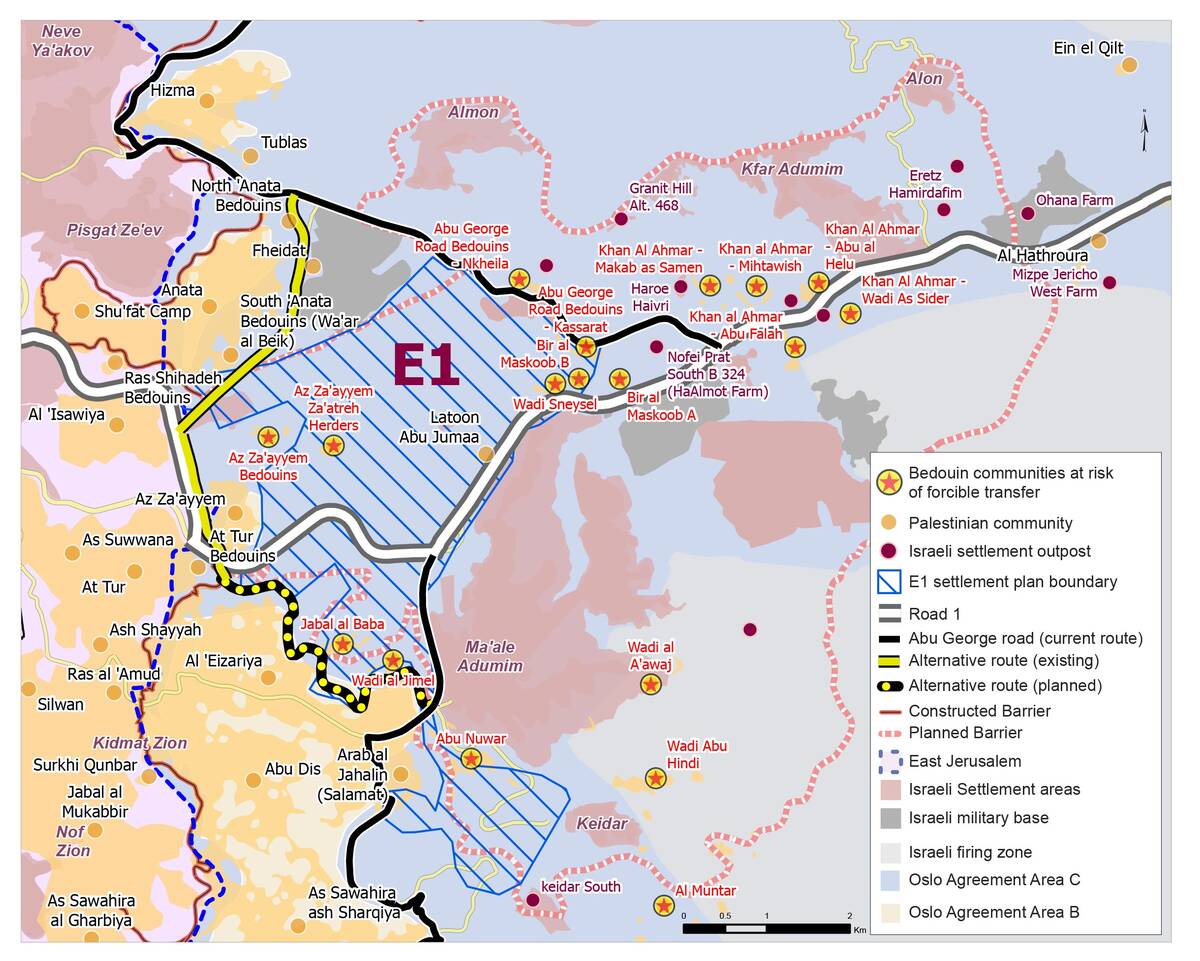
Aside from isolating East Jerusalem, the plan also threatens to permanently displace a number of Palestinian communities. According to OHCA since 2009, Israeli authorities have demolished more than 500 Palestinian-owned structures, displacing over 900 people, in the 18 Bedouin communities located in the area designated for the E1 settlement.
On Friday, it was revealed that the EU had drawn up an initial list of measures that could be activated if Israel proceeds with construction of E1. This news followed condemnation by Saudi Arabia and other Arab and Muslim countries who expressed ‘complete rejection’ of the plan.
“You will find many European governments, the US, all these Arab countries saying the E1 settlements is not acceptable,” Hassan said.
“For them they can handle some Israeli government decisions for like approvals of settlements here, illegal settlements there but at least it will still be negotiable. But if the E1 project is implemented, it's going to be over."