
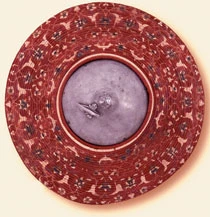
THE Arab World Institute in Paris, celebrating its 20th anniversary in 2007, invites visitors to discover the elegant culture of medieval Muslim knights.
Through a selection of strikingly beautiful weapons and armor, the art exhibit Furusiyya, Knights in the Islamic World offers a rare look at the moral and spiritual principles that inspired Arab, Turkish, Iranian, Indian, and Central Asian warriors over many centuries.
The Arabic word furusiyya, from faras, meaning horse, refers not only to horsemanship and the care of horses, but also to warfare and the Islamic traditions governing any armed conflict. Just as the medieval European Knights of the Grail and the Samurai of feudal Japan devoted themselves to a spiritual cause, Muslim knights prized honor and religious values above all.
The exhibit features 400 exceptional objects from the 8th to the 18th centuries, including royal Ottoman sabers, Iranian helmets, and Mogul Indian daggers, as well as talismanic garments and miniature paintings of emperors and sultans dressed for battle.
To emphasize the ethical principles that regulated warfare in the Muslim world, the objects are grouped not by type, but by theme. Upon entering the exhibit, the visitor views models of weapons considered worthy and appropriate, and learns about the techniques used to craft them. Sabers, lances, and arrows were the knights’ archetypal equipment. Firearms, widespread in the Western world since the 17th century, were traditionally rejected by Islamic warriors because guns disfigured the human body, a sacred gift of God, and rendered victims unrecognizable.
Besides appropriate weapons, a correct attitude was essential. A knight’s inspiration in battle was to come directly from God, not from petty human desires and rancor. When Ali, son-in-law of the Prophet Muhammad, (peace be upon him) faced an enemy who spat in his face, Ali refused to kill his opponent. The affront caused Ali to have feelings of anger, and a desire for vengeance, and he knew that these were unworthy motives for an Islamic knight to take a human life.
Another section of Furusiyya details all the elements worn and carried by by knights, either in battle or while parading on festive occasions. A display discussing the importance of divine protection explains the omnipresence of Qur’anic verses, engraved on saber blades, or embroidered into talismanic linen garments to be worn under a knight’s armor. A warrior who went into battle with these sacred verses was believed to have God with him.
The exhibit continues into the world of archery, considered one of the basic disciplines of Islamic knights. Archers’ rings from 17th century Mogul India, made of jade and decorated with gold, rubies, and emeralds, were worn on the thumb to protect the skin when the bow was pulled taut. Several of the rings shown belonged to Sultan Tipu, called “the Tiger of Mysore” for his fierce combats with British invaders.
Armor, harnesses, and other equipment crafted especially for horses are displayed, including a finely decorated metal headpiece from 14th century Turkmenistan, forged with grooves to strengthen the metal and contoured to conform to the shape of the horse’s head.
The exhibition concludes with an impressive display of bejeweled daggers from all parts of the Islamic world. Originally a weapon reserved for hand-to-hand combat, by the 1500’s the finely crafted daggers with elaborately sculpted handles and decorated sheaths began to take on the role of “masculine jewelry.” They were commissioned from renowned artisans, given as gifts to foreign royalty, and treasured as family heirlooms. Ivory and jade handles were carved to resemble the heads of rams, horses, or tigers. The ivory handle of a 17th century dagger from Mogul India is adorned with the head of an incredibly realistic and battle-ready horse, his nostrils flaring and teeth showing. Rubies line the horse’s bridle and the back of his head.
A 12th century Syrian or Palestinian dagger on view combines both Muslim and Christian elements. Arabic inscriptions speak of glory, prosperity, and luck, while a sculpted motif on the metal sheath shows a haloed St. George killing a dragon. The saint and his horse are portrayed in a medieval Celtic style reminiscent of the Bayeux Tapestry. This unique dagger was possibly made by a Muslim artisan for a Crusader of high rank.
Other splendid pieces from Spain, Sicily, Bosnia, Turkey, Algeria, Iraq, and Mongolia dazzle the visitor with the vast extent and heritage of the Muslim tradition.
Furusiyya, Knights in the Islamic World continues at the Arab World Institute in Paris until Oct. 21, 2007. For more information on the exhibit and related events, please consult www.imarabe.org.