- Demonstrators oppose proposals to lower the income tax threshold
- Many protesters feel vulnerable and believe that wealth distribution favors the rich
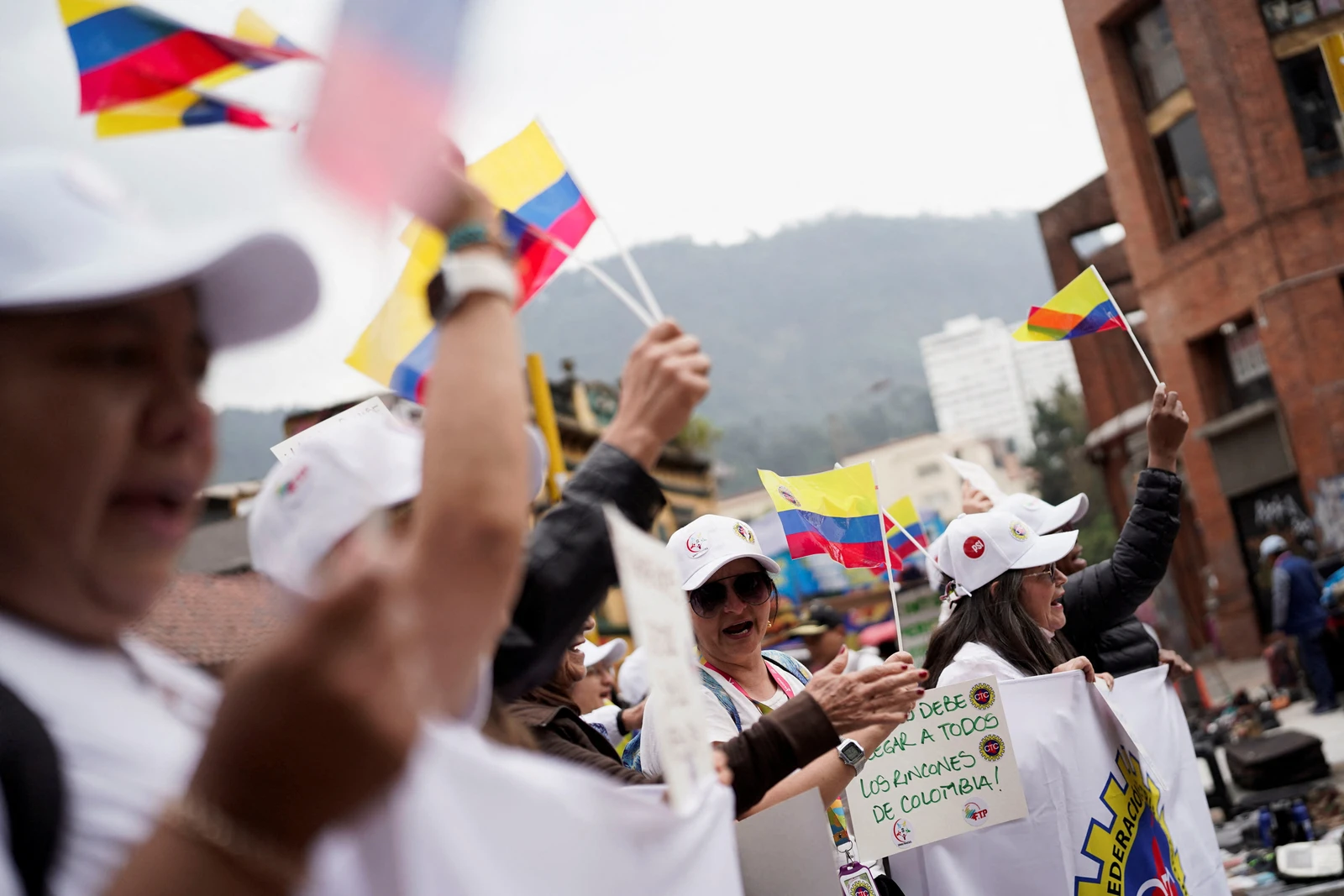
BOGOTA: Colombian trade unions and opposition parties held a second nationwide demonstration against President Abelardo de la Espriella’s contentious policies on Thursday, this time focusing on the economy.
Thousands of people across several cities protested against proposals to lower the income tax threshold, make people chip in more for health care and reduce corporate income tax, among other measures.
“A large part of Colombia feels vulnerable. The rich are the ones who are getting more money,” psychology student Leidy Gutierrez, 21, told AFP.
“They’re stealing the money from us Colombians, from the people at the bottom,” she said.
De la Espriella posted a video on X that showed him touring Bogota in an SUV on Thursday morning.
“Anyone who wants to march peacefully is perfectly free to do so... but I will not tolerate road blockades or urban terrorism,” he said.
In October, a presidential decree relaxed rules on the use of force by the authorities on protests, which garnered criticism from human rights organizations.
AFP observed around 30 riot police officers monitoring the protesters as they moved through the capital.
Congress is debating the reform that aims to increase state revenues amid a fiscal crisis, with next year’s deficit projected at 9.4 percent of GDP — Latin America’s highest, according to government figures.
An explosion of criticism over an initial proposal to increase VAT on food and basic goods forced the right-wing leader to backtrack.
But some Colombians remain incensed by the income tax plan.
The tax currently applies to people with monthly earnings above roughly $1,419, while the reform would see it apply to earnings above around $985.
“We are sometimes forced to eat just once a day. It’s truly disheartening,” said filmmaker Felipe Montano, 29.
The first nationwide demonstration following De la Espriella’s inauguration in August took place in October, when tens of thousands marched against what they perceive as the government’s erosion of human rights and social reforms championed by ex-leader Gustavo Petro.
The current president, a millionaire ex-lawyer, wants to do away with the country’s delicate peace process with armed groups, vowing to wage war on drug-running guerrillas instead.
His approval rating stood at 48.3 percent during his first 100 days in office, although the poll published by AtlasIntel shows a downward trend.