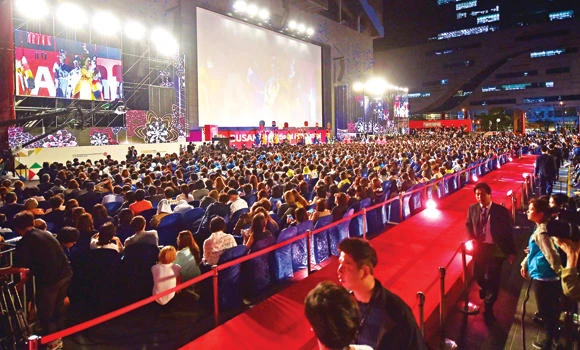
SEOUL: The future of Asia’s top film festival is being threatened by a bitter dispute over what organizers are calling an unacceptable political challenge to their artistic independence, with moviemakers pushing an “empty red carpet” boycott of this year’s event.
The Busan International Film Festival (BIFF) — held every October in the South Korean port of Busan — marked its 20 anniversary last year, but celebrations were soured by a lingering row that has since snowballed into a full-blown crisis.
A flurry of official probes targeting its organizers and an unprecedented cut in state funding have raised serious doubts over the event’s artistic and financial viability.
Artistic director Lee Yong-Kwan was forced to step down in February, even as his counterparts from other top international film festivals like Cannes and Berlin wrote an open letter warning that political pressure was threatening BIFF’s future.
Organizers say they have become targets of political retaliation for screening a film in 2014 — in defiance of state opposition — about the government’s handling of the Sewol ferry disaster.
The scathing, highly emotive documentary slammed Seoul’s botched rescue efforts in the immediate aftermath of the ferry sinking in April 2014 that claimed more than 300 lives, most of them school children.
“We are paying a hefty price for screening the movie that the government disliked,” a BIFF spokeswoman, Kim Jung-Yun, told AFP.
“Everyone is concerned about artistic and political independence of the BIFF... this is the biggest crisis we have ever faced,” Kim said.
“Diving Bell” (or “The Truth Will Not Sink With Sewol“) had its world premiere at the 2014 BIFF, against the wishes of the Busan city mayor, Suh Byung-Hoo, who serves as festival chairman and who deemed the movie “too political.”
“This festival is not a personal possession of state officials, but a valued cultural heritage nurtured and enjoyed by movie fans,” an amalgam of Korean filmmakers’ associations said in a joint statement released in March.
The group vowed to boycott the 2016 event unless the Busan city council — a major BIFF sponsor and stakeholder — accepts changes to the festival rules that they say would ensure its artistic independence.
“The world will witness the empty red carpet for the first time in 20 years of BIFF’s history and the audience from all over the world will stop coming to Busan for the festival anymore,” the statement said.
The council rejected the ultimatum, insisting the government probes and Lee’s departure had nothing to do with the controversial documentary.
Asia’s top film fest in crisis