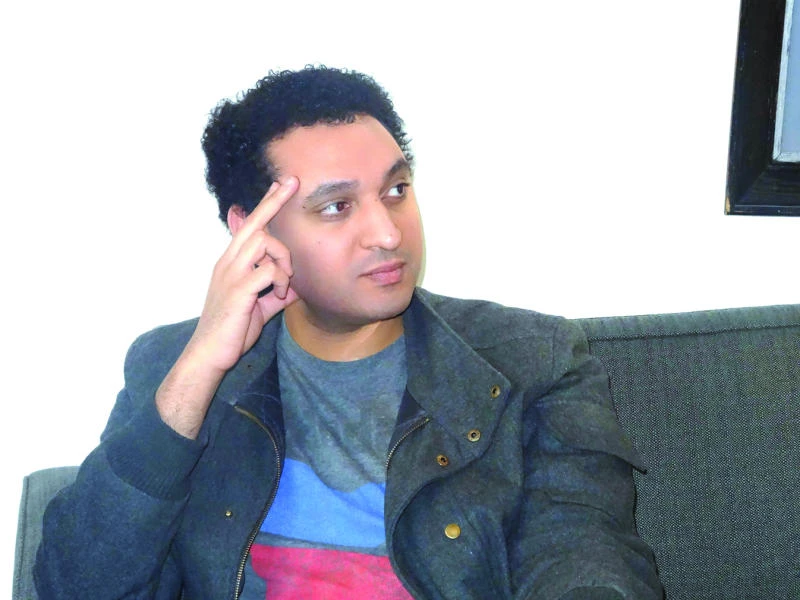
NEW YORK: In an era where conflict between cultures has become alarmingly frequent, the composer Mohammed Fairouz has crafted his music into a plea for understanding and the transformative power of poetry.
The prolific 29-year-old, whose work brings elements from the Islamic world to Western classical music, bases much of his new album, “Follow, Poet,” around verses by 20th-century literary giants W.H. Auden and Seamus Heaney.
The belief, Fairouz says, is that both music and poetry have a power to bring greater understanding, if only people take the time to listen and reflect.
“In order to make war, you have to dehumanize somebody — this is a very well-known fact. It’s much more difficult to dehumanize a group if you love their music and their poetry,” Fairouz told AFP over a mug of tea at a New York recording studio.
“It’s very dramatic to talk about civilizational war and I don’t believe that will be the case. But I think we have to tone down the volume a little bit because we have mutually assured destruction — if we go to war against each other, it is going to be devastating for both civilizations and take everybody back millennia,” he said.
Fairouz, an American who traces his ancestry to several parts of the Arab world, finds himself thinking poetically even on instrumental work. He said he writes lyrics that go unsung, with Fairouz the only one to know the hidden words unless he shares with the performers.
With “Follow, Poet,” Fairouz is the youngest composer to record a full album for the 115-year-old classical label Deutsche Grammophon. Along with poems by Auden and Heaney, the album features John F. Kennedy, who is heard declaring, “When power corrupts, poetry cleanses.”
A highlight of the album is “Sadat,” Fairouz’s ballet on the slain Egyptian president.
The ballet — with five scenes in Anwar Sadat’s life including his peace mission to Jerusalem and his assassination — will premiere at Carnegie Hall on May 26.
Fairouz said that his conceptions of music were transformed on a visit to Karachi when he heard the spiritual performances of Sindhi fakirs and sensed a connection to opera.
Fairouz, who dresses casually and picks words carefully, said it was important to be “a cosmopolitan entity” in an increasingly interconnected but that his approach has faced a backlash in classical circles.
“I’m not necessarily as interested as some think I should be in the exclusive domain of white men — especially dead white men — over musical composition,” he said.
Fairouz seeks more poetic era