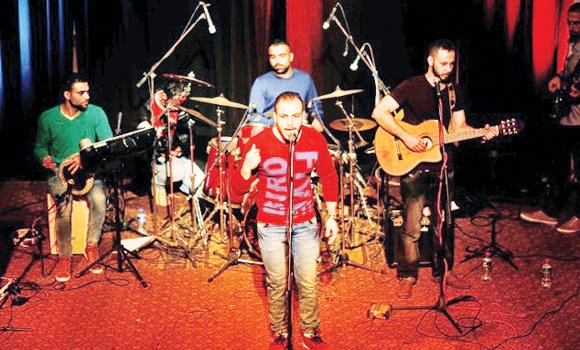
GAZA CITY, Palestinian Territories: Khamiss Abu Shaban’s band would love to wow the kinds of crowds seen elsewhere, but in Hamas-run Gaza they struggle to find venues and instruments, let alone get permission to play.
Even so, that hasn’t dispelled the enthusiasm for popular music in the Palestinian territory, where 70 percent of the population is under 30 years old.
“Gazans are fans of music. They flock to every concert,” Abu Shaban, a 22-year-old bass player in Watar Band, says on the small stage of a sold-out 200-seat theater.
It was only their third performance for the past year and a half.
Musicians and other entertainers have found it hard to make a name and living for themselves in the hardscrabble Palestinian territory’s few venues. That is the paradox of Gaza, a fact not lost on advertisers who seek to woo young breakdancers and devotees of parkour — the urban sport combining running, acrobatics and gymnastics.
But the rewards are few for the rappers, other musicians, dancers and acrobats trying to carve out a niche for themselves.
If they want to rehearse, record or be filmed, they must do it in whatever space they can find, often in their own homes.
Without official authorization and performance space, they cannot have grandiose dreams, they say.
There is also a lack of instruments and equipment, thanks to an Israeli blockade of the strip in place for nearly a decade.
The French Cultural Center was one of the few places where young Gazans could get away briefly from Palestinian political divisions, repeated wars with Israel, poverty and chronic unemployment, but it has closed its doors. In December 2014, it was hit by a bombing.
Even at the height of the grueling war of summer 2014, Watar Band and rapper Ayman Mghamess posted songs and videos shot in the ruins of bombed-out buildings because they believed people needed to hear music.
“In Gaza, it’s life or death, it’s the same,” chants Mghamess, a Gaza rap pioneer.
“They can put up more checkpoints and barriers/I shall not weary, believe me/our dreams will survive/even if I myself die,” he intones in a clip viewed tens of thousands of times online. It was online that Mahmud Saradi, 21, dressed in sportswear and a green and blue baseball cap, was initiated into breakdance moves.
Gaza rockers face the music