
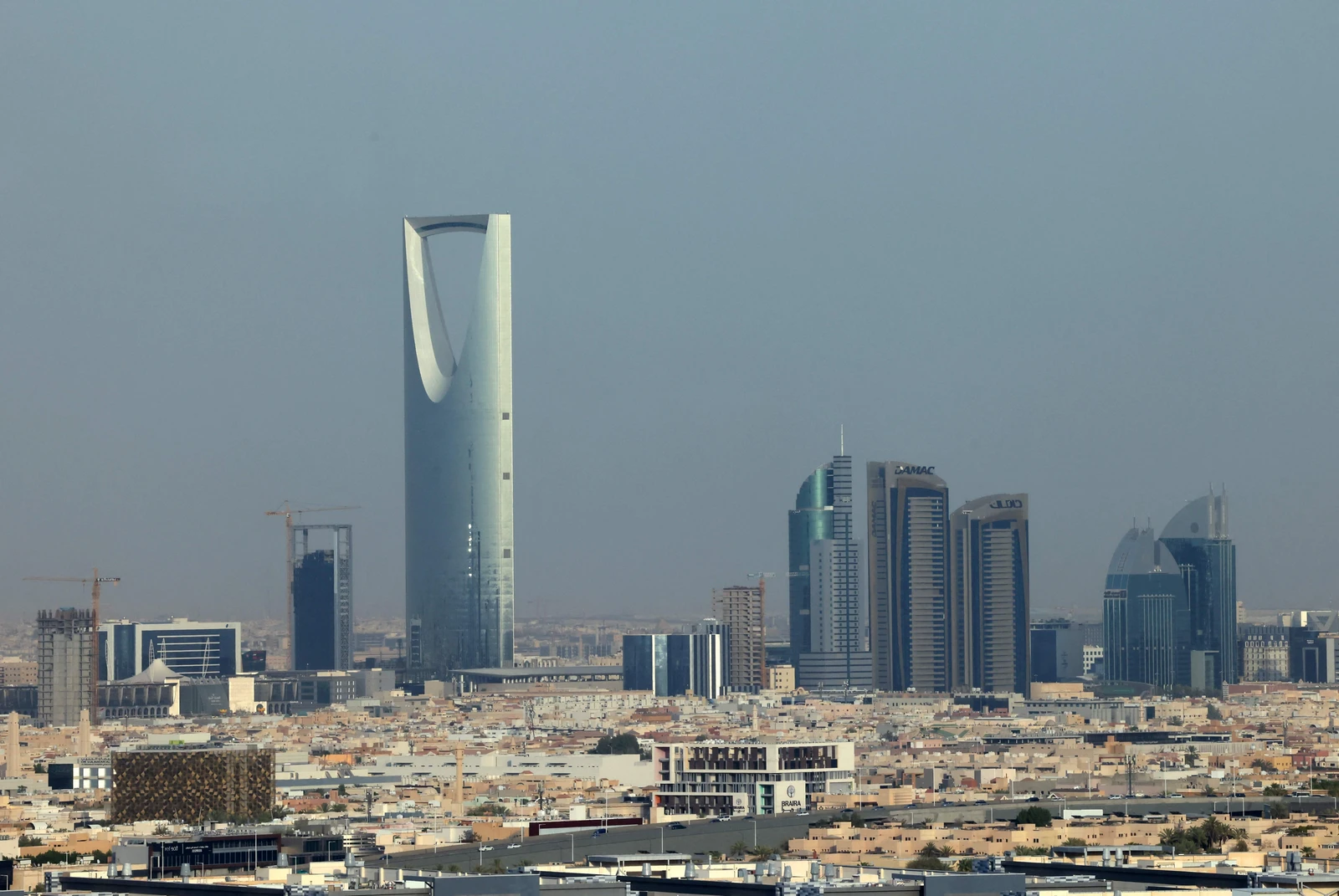

The spate of Houthi attacks on civilian and energy infrastructure in Saudi Arabia has triggered intense speculation about the game plan of the Yemeni group and its backers in Tehran. Why, many ask, have the Houthis chosen to target the Kingdom after largely sitting out the US-Israeli war on Iran and failing to match their fiery anti-Israel rhetoric with comparable action? After all, the 2022 truce had brought a measure of calm to war-shattered Yemen and the wider Arabian Peninsula.
For the rest of the world, events in the Middle East since Feb. 28 offer a cautionary tale about the vulnerability of investments in education, industry, modern infrastructure, technology and tourism when backward regimes and militias just across the border neglect their own people’s progress and prioritize missiles, drones and old-fashioned wars.
Parsing every sentence uttered by Houthi spokespersons for clues to some elaborate grand strategy would be a waste of time. As Ali Shihabi, the author-commentator on the politics and economics of Saudi Arabia, wrote on X: “For any conventional army, confronting an insurgency engaged in asymmetric warfare is an enormous challenge. The United States itself struggled with this in Iraq and Afghanistan … The Houthis operate from a largely barren and devastated landscape with relatively few vulnerable assets.”
The truth is that, since the 1979 revolution in Iran, the visions pursued by the regime in Tehran and its Arab neighbors for their peoples and the region have had little in common.
The juggernaut of destruction spawned by the 1979 revolution has placed the Gulf countries firmly in its sights
Arnab Neil Sengupta
Whereas Tehran saw Arab countries with sectarian fault lines as tempting targets for its expansionist designs and revolutionary ideas, the Gulf states saw the same countries as sources of talent for their ambitious development projects and places to invest their surplus oil revenues. Today, with a crescent of Arab territories devastated or damaged by the export of the Iranian vision, the juggernaut of destruction spawned by the 1979 revolution has placed the stable and prosperous Gulf countries firmly in its sights.
Using this year’s US-Israeli military campaign against Iran as a fig leaf, Tehran and its regional proxies seem determined to extinguish the Arab region’s dreams, hopes and aspirations, which the Gulf states’ oil wealth, wise leadership and sound policies have helped bring within reach. No amount of slicing and dicing of the region’s geopolitics can obscure the unprovoked and disproportionate harm that Iran’s proxies have inflicted on Arab lives, Arab economies and Arab societies.
After the Sept. 11, 2001, Al-Qaeda attacks on New York’s Twin Towers and the Pentagon, Samuel Huntington’s seminal 1996 book, “The Clash of Civilizations and the Remaking of World Order,” attracted renewed attention for its seemingly prescient observations. Thirty years after the book’s publication, what is unfolding in the Middle East has the hallmarks of a conflict not so much between two civilizations as between two philosophies.
There is certainly a kernel of ideology in what drives the leaders and soldiers of Hamas, Hezbollah, the Houthis and Iraqi militias into endless warfare, alongside their thirst for power and financial resources. Even so, these militias have shown considerable ideological flexibility when striking deals across sectarian lines, negotiating with their sworn enemies and picking their battles.
On the receiving end are countries that have chosen development instead of militant sloganeering. Their challenge has long been to protect prosperity without allowing the cost of that protection to consume it. The ancient adage, “If you want peace, prepare for war,” tells these countries that the time to prepare for war is not when an attack is imminent but rather when times are peaceful. It also suggests that strong armed forces and regular peacetime drills can warn adversaries and malign actors that an attack may not be worth the cost.
For Japan and South Korea, living in the shadow of North Korea’s weapons, this dilemma is familiar. Their missile warning cooperation with the US offers a practical example of sharing information rather than duplicating every capability. At the same time, Pyongyang’s nuclear arsenal leaves no room for complacency. For the people of Japan and South Korea, credible deterrence and clear allied commitments alongside national readiness are no less important than economic vitality as matters of survival.
Their challenge has long been to protect prosperity without allowing the cost of that protection to consume it
Arnab Neil Sengupta
Closer to home, Iraqi dictator Saddam Hussein’s invasion of Kuwait in 1990 showed that sovereign wealth accumulated over decades cannot by itself deter a predatory neighbor. Kuwait’s liberation the following year by a US-led coalition, with Saudi Arabia playing a central role, demonstrated the value of collective military action. The lesson of that conflict for the Gulf and beyond was clear: establish muscular security arrangements before a crisis erupts, while sustaining the development they are meant to protect.
Prosperity can coexist with a hostile neighborhood, provided governments take security seriously without allowing fear to dictate every economic decision or consume the resources needed to improve their people’s lives. For the Gulf region, shared early warning, intelligence, training and procurement systems can strengthen collective self-defense while spreading costs.
Defenses should match the threat, combining protection against suicide drones with capabilities against more demanding ballistic and cruise missile attacks. An expensive interceptor can be justified when it protects an airport, power station or refinery. But the challenge in the age of asymmetric warfare is to build layers of protection that can withstand repeated attacks launched with relatively inexpensive weapons and to give training, spare parts and ammunition as much attention as new military hardware.
On the civilian side, reliable electricity, water reserves, alternative communications and rapid repair arrangements can keep Gulf economies functioning through disruption. Self-reliance strategies should aim to develop local skills, maintenance and production where these contribute to reliability of supply. Education, research and development and competitive industries can reinforce defense capabilities, with the government mainly playing a regulatory role.
For countries in vulnerable regions, whether in Northeast Asia or the Middle East, strong defense systems, self-reliance to the greatest extent possible, collective self-defense and credible deterrence will be key. No country in this age of artificial intelligence and galloping scientific advance can afford to adopt an ideological system that keeps its people backward, discontented and immersed in a culture of demagoguery and permanent confrontation. Whatever malign game plan the Houthis and their backers in Tehran devise, the Gulf’s dreams, hopes and aspirations must never be held hostage to missiles and drones.
Arnab Neil Sengupta is a senior editor at Arab News. X: @arnabnsg


