

A lot has been done in the race to tame global warming but much more is needed if we are to preserve life and help nature regenerate, while ensuring the human race survives and flourishes. A sense of urgency should be a no-brainer, as killer heat waves increase in length and durability, storms show ever-increasing intensity and various parts of the planet oscillate between flooding and drought, with temperatures ticking up all the time.
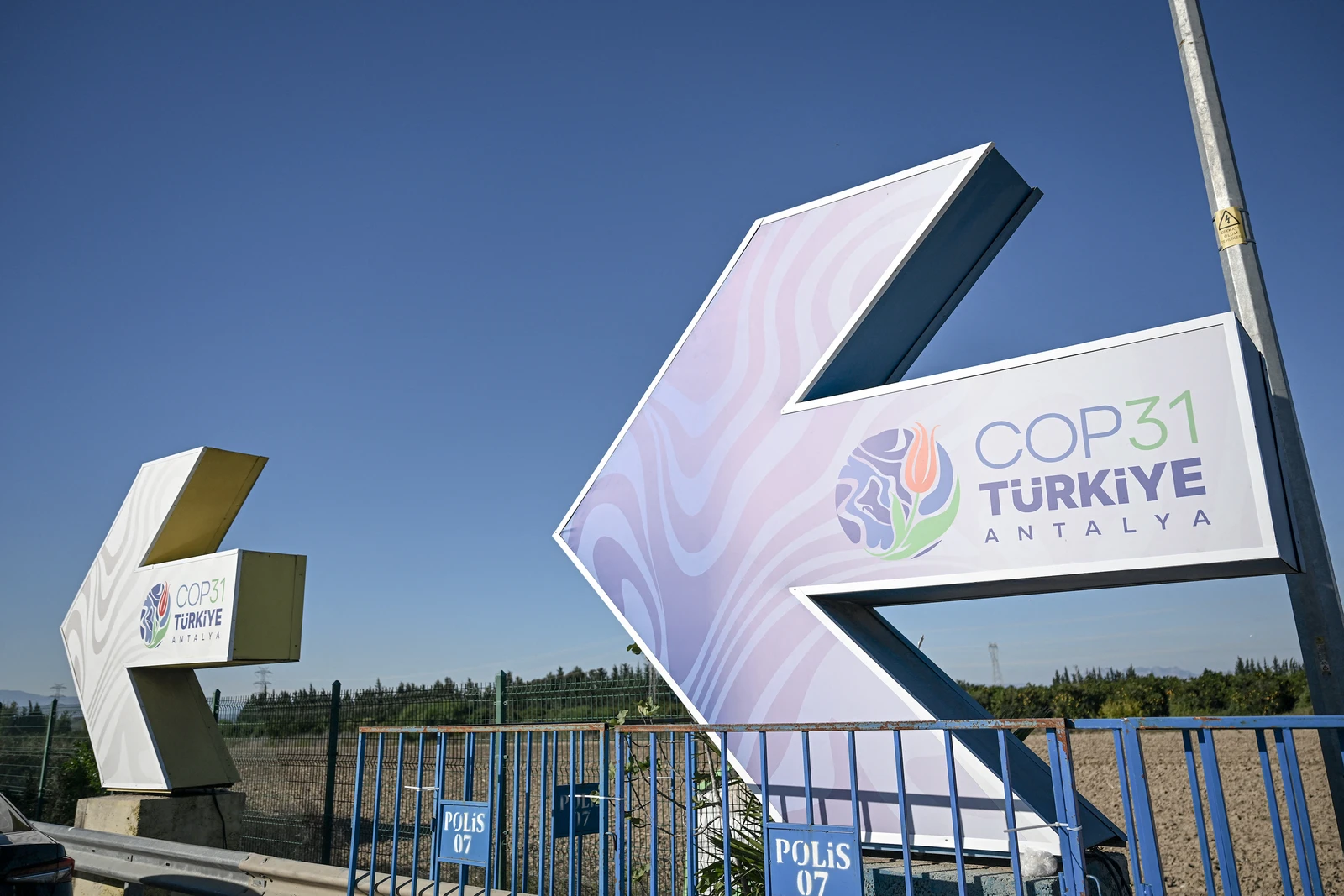
As the annual UN climate summit opened this week in Turkiye, Secretary-General Antonio Guterres had yet another urgent message for world leaders, similar to the apocalyptic ones he has made over the last 10 years. The world can do a lot still to avert or reduce the impact of an era he has called “global boiling.”
Guterres’ interventions have frequently attacked political leaders for failing the planet and humans. In moments of geopolitical and geoeconomic discord, the 2015 Paris Agreement and its main goal — to limit warming to 1.5 degrees Celsius above preindustrial times — remains the only deal in town in terms of a base for a political, economic and technological partnership that could limit the damage humans do to planet Earth.
Climate talks may be unpopular but there are no viable alternatives. For a better future, the talks must go on. Many may wonder what is the point. Others are already counting the cost of what are often self-serving and ineffective policies that fail to save the environment and instead fill the pockets of vested interests, while selling dreams of carbon capture and carbon trading.
Climate talks may be unpopular but there are no viable alternatives. For a better future, the talks must go on
Mohamed Chebaro
The green transition might look colossal and, for some societies, it appears unachievable. Its price tag perhaps looks too big to afford but it might not be as high as that of the extreme weather events that are increasingly being witnessed.
Let us agree that the UN climate change conferences are the key conduit, however dim the chances are of redressing the imbalance in priorities in this conflictive world. The cause is obviously not helped by countries like the US pulling out, with the Trump administration belittling the dangers and campaigning for increased growth and prosperity through solutions that mean ever greater emissions. The results of the US midterm elections offer some respite for the world and the Democrats, who turned the tide at the polls, have sent 20 congressmen to Antalya while the White House boycotts the summit for the second successive year.
This month’s COP31 should seek to regain trust in the science and ask in good faith for realistic policies that circumvent empty posturing and finger-pointing between nations, corporations and activists.
The science tells us every day that heat is accumulating in Earth’s systems at an accelerating rate. The UN’s weather agency has reported that 2026 is on track to be one of the four warmest years on record. The World Meteorological Organization, in its latest “State of the Global Climate” update, said that the imbalance between incoming energy from the sun and energy leaving Earth had reached the highest level since monitoring began.
Slow but important progress is being made, with more clean energy coming online in rich and poor countries alike
Mohamed Chebaro
The result is clear: an accumulation of heat. The average surface temperature for January to September was about 1.47 C above the preindustrial average, with sea temperatures hitting monthly records. Oceans absorb the majority of the excess heat trapped by greenhouse gases and 2026 is on track to be a 10th successive year of record ocean heat. This imbalance is where the danger lies.
What is reassuring amid the gloom, however, is the attendance in Antalya, where representatives of more than 190 countries have come to talk. Achieving tangible results will be tough, as rich and poor nations and governments and corporations fight it out as to who is responsible and who should foot the bill. But that does not hide the fact that slow but important progress is being made, with greater electrification and more clean energy coming online in rich and poor countries alike.
During the two weeks of meetings, developing countries and civil societies will seek to put climate finance and justice at the heart of COP31. But the important discussions of justice should not overshadow the progress, as market forces are putting down roots that will limit heat even without finance or global governance.
Commercially speaking, China sent $132 billion in clean technology and investment to the developing world last year as part of its clean-tech machine, which is reshaping the global climate fight. This is by far the greatest contribution to carbon dioxide emissions reduction by any country. A Reuters analysis reported that China, partly through heavy subsidies, nearly matched the total of grants, loans and private finance that all wealthy nations sent to poorer ones in 2024 to help mitigate climate change.
In 2025, Chinese clean-tech exports exceeded $220 billion. The world’s largest greenhouse gas emitter is now by default the world’s leading supplier of clean energy technology. According to the International Energy Agency, China accounts for about 85 percent of solar and 80 percent of lithium-ion battery supply chain production capacity. In addition, nearly 75 percent of electric vehicles were manufactured there. Some go as far as talking about a new and electrified world order, championed by a rising China.
All this goes to say that, amid the gloom, there is hope. Climate talks, climate transition policies and climate summits are often unpopular but they are necessary. Global discord, largely due to the superpowers’ lack of alignment on global warming reduction commitments, delay and distort the drive to reach tangible solutions. Voters in the Northern Hemisphere have even been turning against climate provisions, as they can lead to budgetary pressures and the diversion of funds from social and welfare programs. In the Global South, green solutions are thought of as cost-cutting measures to access energy or to supplement existing poor or nonexistent energy infrastructure.
Maybe people, governments and companies all round the world are failing the planet and themselves. But all is not lost. The green shoots are obvious, even if they are imperfect, insufficient and unpopular.
Mohamed Chebaro is a British-Lebanese journalist with more than 25 years of experience covering war, terrorism, defense, current affairs and diplomacy.


