
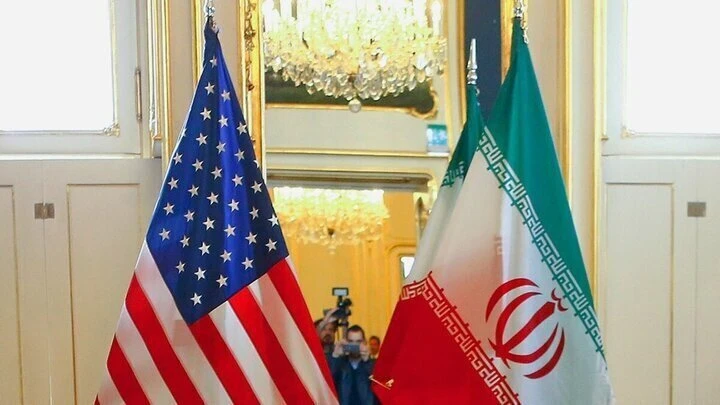

The US-Iran talks are faltering again as the gap between the two countries’ positions widens. While American negotiators are sounding optimistic and showing considerable flexibility, Tehran is doubling down on its seven conditions and demanding the US deliver its concessions first.
One reason for the impasse is the internal power struggle underway in Tehran, where the protagonists vying for power are fearful of appearing to give concessions, lest they be accused of being soft on the US, Iran’s archenemy.
What makes matters worse this time is that Iran is trying to take advantage of the changing political fortunes of its two main antagonists, Donald Trump and Benjamin Netanyahu. Tehran sees this as a sound strategy to maximize its demands while biding its time until a more cohesive leadership emerges at home.
In the past, when there was such a stalemate, military action inevitably resumed to try to move things along. Given this real possibility, participants raised questions earlier this week at the annual Abu Dhabi Strategic Debate whether Gulf Cooperation Council countries have a proactive “grand strategy” to deal with the conflict, instead of merely mediating and waiting for a favorable outcome to come about.
GCC states are among those most affected by the conflict, yet it has been difficult for them to affect its course
Dr. Abdel Aziz Aluwaisheg
It is a legitimate question because GCC states are among those most affected by the conflict, yet it has been difficult for them to affect its course. There are at least two reasons for this hesitation. The region has been on unfamiliar territory since the war started in February. Unlike in the past, the US started the war without consulting or coordinating with its GCC partners and against their repeated advice to give diplomacy a chance.
Then we have to factor in that this war has no rules. Iran has deliberately used attacks against civilian targets in the Gulf and the closure of the Strait of Hormuz as instruments of warfare, in total disregard for international law, including the UN Convention on the Law of the Sea and international humanitarian law. Iran’s more than 8,000 attacks have intentionally inflicted damage on GCC countries, which are major providers of energy, fertilizers and petrochemicals to the world. This destruction was intended to put pressure on the US but its effects have been largely felt by the rest of the world in terms of energy and food shortages, high prices and an economic slowdown that affects poor countries the most.
In this new and lawless environment, GCC countries have prioritized diplomacy to protect their people and their livelihoods and establish some rules to allow for the resumption of freedom of navigation and trade to ease pressure on the world economy.
While they have prioritized diplomacy, the GCC countries have developed a more comprehensive approach that is based on a mix of diplomacy, defense and deterrence, plus, in this case, preserving economic development goals at home and for the rest of the world. You can call them “the four Ds” for short.
First, diplomacy has taken different shapes. At the UN, GCC countries tabled the draft for UN Security Council Resolution 2817 in March, condemning Iran’s attacks and stressing the principles of the sanctity of civilians and freedom of navigation. China and Russia abstained, allowing the resolution to pass, but they vetoed a subsequent draft resolution, also prepared by GCC states, dedicated to freedom of navigation.
Further efforts are underway to enable effective collective action under the UN umbrella. Mediation is part of this track, supporting efforts by Qatar and the Makkah alliance countries. Diplomacy is also at work on restoring the nuclear nonproliferation regime and strengthening the International Atomic Energy Agency’s role in monitoring compliance, as well on restoring freedom of navigation in the Strait of Hormuz.
While they have prioritized diplomacy, the GCC countries have developed a more comprehensive approach based on ‘the four Ds’
Dr. Abdel Aziz Aluwaisheg
Second, the GCC’s conventional defenses have proven quite robust but work is underway to provide more protection against drones and low-flying missiles, the current main source of threat.
Maritime security has been beefed up by the establishment in July of the Multinational Maritime Defense Alliance, a new group based in Saudi Arabia whose purpose is to protect freedom of navigation, secure international trade routes and safeguard energy supply lines across the Bab Al-Mandab Strait, the Red Sea and the Gulf of Aden. Its Saudi commander and his deputy from Pakistan have been appointed and its activities have already started. GCC countries also play an active role in the Bahrain-based, 47-country Combined Maritime Forces but more work needs to be done to strengthen its mandate and defense capabilities to help safeguard freedom of navigation in the Gulf and through the Strait of Hormuz.
Third, to strengthen deterrence, the GCC in 2019 established the Unified Military Command to coordinate its military services and provide cohesion and sharpen its efficiency. This week, a forward command was set up in Kuwait. In addition to the GCC Mutual Defense Agreement of 2000, collective defense was considerably enhanced by the signing of the Makkah Joint Defense Agreement between Pakistan, Saudi Arabia and Turkiye, which has now been ratified by the three signatory countries.
Deterrence is further strengthened by security partnerships with the US and other permanent members of the UNSC, among others.
Fourth, the development priority means strengthening resilience and economic growth at home and abroad, while resuming the GCC countries’ historical role in providing the world with energy and offering economic assistance to countries and communities in need during the current economic slowdown. Resilience means increased connectivity within the region and intraregionally by building new roads, pipelines, ports and other means to overcome challenges to freedom of navigation. Sharing prosperity with countries near and far has been one of the enduring goals of the GCC countries, as they believe that shared interests can contribute to peace and stability.
These four elements have been articulated before, such as in the 2024 GCC Vision for Regional Security, but the current conflict has made them more imperative.
Since the war started eight months ago, the GCC countries have deferred to the Iran-US talks as the primary path toward ending the conflict, while offering help from the sides. However, with the US-Iran talks now in abeyance and the threat of war again looming, it is urgent for the GCC countries to play a more active role, collectively and individually, to safeguard these four priorities and prevent a return to war.
Dr. Abdel Aziz Aluwaisheg is the GCC assistant secretary-general for political affairs and negotiation. The views expressed here are personal and do not necessarily represent those of the GCC.
X: @abuhamad1


