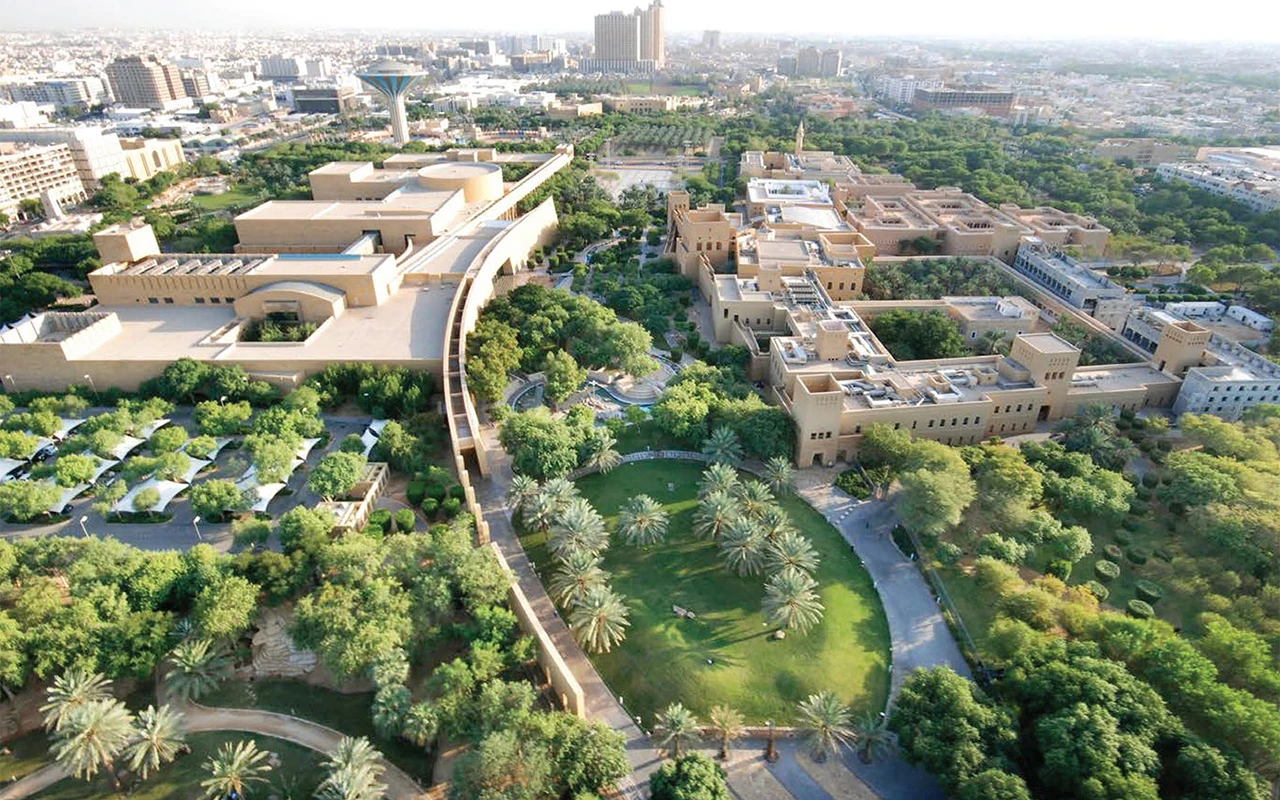
After another summer of extreme heat, the response from people experiencing it is understandable: They want better methods of cooling.
Recent polling across six European countries found strong support for greater access to air conditioning, with majorities backing it as standard in new homes.
Air conditioning has transformed modern life, and in hot countries such as Saudi Arabia, cooling is essential infrastructure. But meeting growing demand simply by installing more air conditioning has consequences that extend beyond individual buildings. Cooling already accounts for around 10 percent of global electricity consumption, and that demand is expected to grow as temperatures rise and access to air conditioning expands.
The challenge becomes particularly acute during extreme heat, when large numbers of cooling systems draw power at the same time, contributing to sharp peaks in electricity demand. Power systems need enough generation and grid capacity to meet those peaks, placing additional pressure on electricity networks precisely when cooling is needed most.
Access also matters. People exposed to extreme heat will not always have access to energy-intensive cooling, increasing the need for solutions that require little or no additional electricity.
In a hotter world, finding ways to use less energy to stay cool may become just as important as finding new ways to produce that energy.
Qiaoqiang Gan
This creates an uncomfortable paradox: The hotter it becomes, the more energy we need to keep cool, while heat itself can make some of the technologies generating, carrying and using that electricity work less efficiently.
The answer is not to stop using air conditioning. It is to reduce how much work we ask air conditioning to do.
This is where passive cooling can play a role. Specially designed materials can reflect sunlight away from a surface, release heat naturally, or use evaporation to provide cooling. A building, solar panel or piece of equipment can therefore stay cooler before a powered cooling system has to do the work.
This requires a shift in how we think about cooling. Rather than focusing only on removing heat once it has built up, we should also design materials, buildings and technologies to produce less unwanted heat in the first place.
Consider solar energy. A solar panel needs sunlight to generate electricity, yet much of the sunlight it absorbs ultimately becomes unwanted heat. As a solar cell becomes hotter, its electrical performance declines.
This problem has driven much of my research and deep interest in this area of science. With my colleagues at the King Abdullah University of Science and Technology, we are developing a material that absorbs moisture from the surrounding air and later releases that water, using evaporation to cool solar cells without additional electricity. In outdoor testing, we recorded temperature reductions beyond 10°C.
Heat also affects the electricity infrastructure itself. Overhead power lines are exposed to heat from the sun while generating heat as electricity passes through them. As conductor temperatures rise, the amount of electricity those lines can safely carry can fall. Heat can therefore increase demand for electricity while simultaneously placing additional thermal constraints on parts of the infrastructure supplying it.
This illustrates why cooling can no longer be treated as a problem for air conditioners alone. Heat needs to be considered across the energy system, from generating electricity to delivering and ultimately using it.
At KAUST, we have also explored whether passive cooling could help power lines themselves. Outdoor testing in Saudi Arabia found that a specially designed coating kept cables substantially cooler, while modeling suggests this could allow existing lines to safely carry more electricity during extreme heat.
For decades, much of our response to heat has focused on building better machines to remove it. Those machines will remain necessary. But the next stage of cooling research must also focus on designing buildings, materials and energy technologies that prevent unwanted heat from accumulating in the first place.
That means designing for heat from the outset — in our buildings, materials and energy infrastructure — rather than addressing it only after something becomes too hot. In a hotter world, finding ways to use less energy to stay cool may become just as important as finding new ways to produce that energy.
Qiaoqiang Gan is a professor of materials science and applied physics at King Abdullah University of Science and Technology.
Qiaoqiang Gan is a professor of materials science and applied physics at King Abdullah University of Science and Technology.