

The drone attacks launched from Iraqi territory against Saudi Arabia in recent months reveal something more troubling than the familiar problem of rogue militia weapons.
A more complex security structure is emerging within Iraq’s irregular armed landscape. It is a force that can operate from state territory and move freely in the space the factions occupy, and one whose launch sites are easier to locate than its decision-makers.
That gap between where the fire comes from and where the order comes from is likely to become the defining security challenge for Prime Minister Ali Al-Zaidi’s government.
I have tracked the behavior of Iraq’s substate forces for years. On several occasions on Al-Arabiya’s “Saat Hiwar” program, I have pointed to a shift in how the armed factions operate. Smaller groups are appearing alongside the long-established ones and they are more radical and more detached from the ruling political class. They are also bolder in acting outside of political calculations, which makes them especially appealing to commanders in Iran’s Revolutionary Guard who are seeking further retaliation.
Riyadh was more explicit about earlier attacks. In July, it said drones that struck oil facilities in the Eastern Province and Riyadh had been launched from Iraq by “Iran-affiliated militias.” In July, Saudi forces, coordinating with US Central Command, struck targets in Iraq that the Kingdom said were linked to those attacks.
Smaller substate groups are appearing alongside the long-established ones and they are more radical
Hassan Al-Mustafa
The military response was followed by a diplomatic one. The Saudi and Iraqi foreign ministers met in Jordan and Saudi intelligence chief Khalid Al-Humaidan traveled to Baghdad. A senior Iraqi security delegation later visited the Kingdom and met Defense Minister Prince Khalid bin Salman. Riyadh’s message was that it had no dispute with the Iraqi people or with Al-Zaidi’s government and that it had acted only after much restraint in the face of attacks by Iran-backed factions.
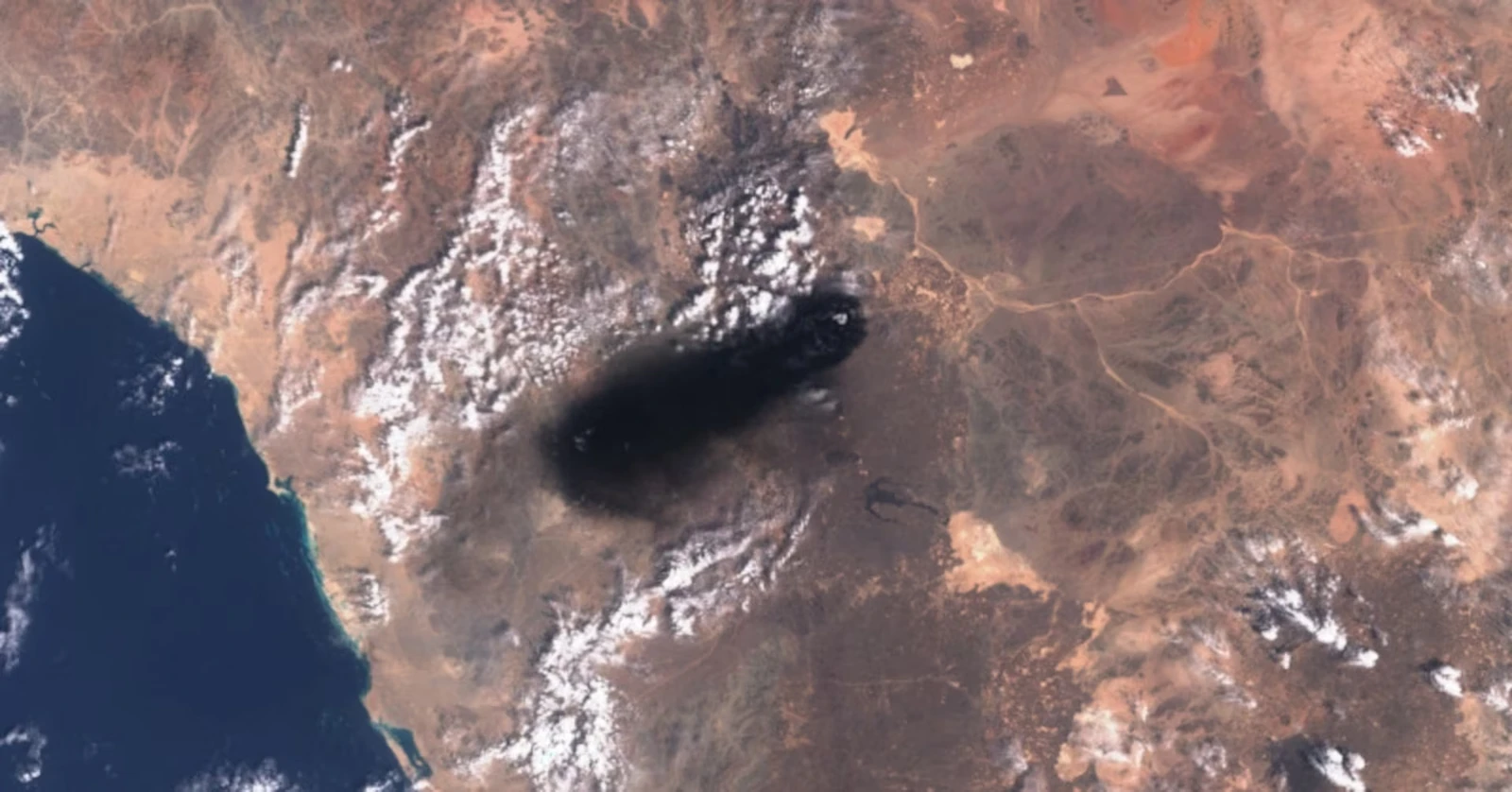
After the pipeline strike this month, Saudi Arabia again said the drones came from Iraq but this time it named no faction. At Al-Zaidi’s request, it held off on a military response to give Baghdad room to act, while reserving the right to defend its security and facilities.
Al-Zaidi responded quickly. The investigation he ordered traced the launch to Maysan province. The regional operations commander was dismissed, other security officials were questioned and held to account, and field operations were carried out near the Iranian border.
These were significant steps, carrying clear political and security messages. But so far, they have not identified who planned the attack or the chain of command that directed the weapons.
In June, Reuters reported, citing eight Iraqi sources, that Iran’s Revolutionary Guard had formed small cells in southern Iraq that operate separately from the traditional command structures of some factions and that these cells were linked to attacks on Gulf targets.
This month, Amwaj.media reported a trend toward reorganizing faction members into smaller units.
I flagged this tactic in an earlier commentary. A similar model was used, on a smaller scale, in attacks on Baghdad’s Green Zone by the so-called Katyusha cells.
This shift means armed capability is migrating from organizations with a known name, leadership, and headquarters to smaller, more covert networks that can spread responsibility thin. That makes Al-Zaidi’s pledge to bring weapons under state control far harder to deliver.
It also changes how a faction’s strength should be measured. The number of its fighters or brigades matters less than before and so does the popularity of its clerics or party leaders. What counts now is the capability a faction can deploy and the damage it can inflict without the operation appearing to come from inside its official structure.
That is what is really at stake with the Sept. 30 deadline for the American military’s final withdrawal. Al-Zaidi has promised to bring weapons under state control once the US forces’ mission ends. But the positions of groups such as Kata’ib Hezbollah and Harakat Al-Nujaba show there is no broad agreement among influential political leaders on what “control” even means. Support is limited to factions close to the prime minister, the Shiite religious seminary in Najaf and civic movements opposed to militarizing the state.
In the absence of a wider consensus, Iraq’s political vocabulary has drifted from “disarmament” to “regulating” or “freezing” weapons. The disagreement is less about where the rifles are stored than about the nature of power itself. The core issue is whether official institutions alone will hold the weapons.
Baghdad may well succeed in scaling back the military role of the known factions. The greater danger is that more shadowy networks grow in their place. Then the state’s problem will no longer be only that it lacks a monopoly on arms. It will be that it does not know who decides to use them, against whom or to what end.
Hassan Al-Mustafa is a Saudi writer and researcher interested in Islamic movements, the development of religious discourse, and the relationship between Gulf Cooperation Council states and Iran.
X: @Halmustafa


