
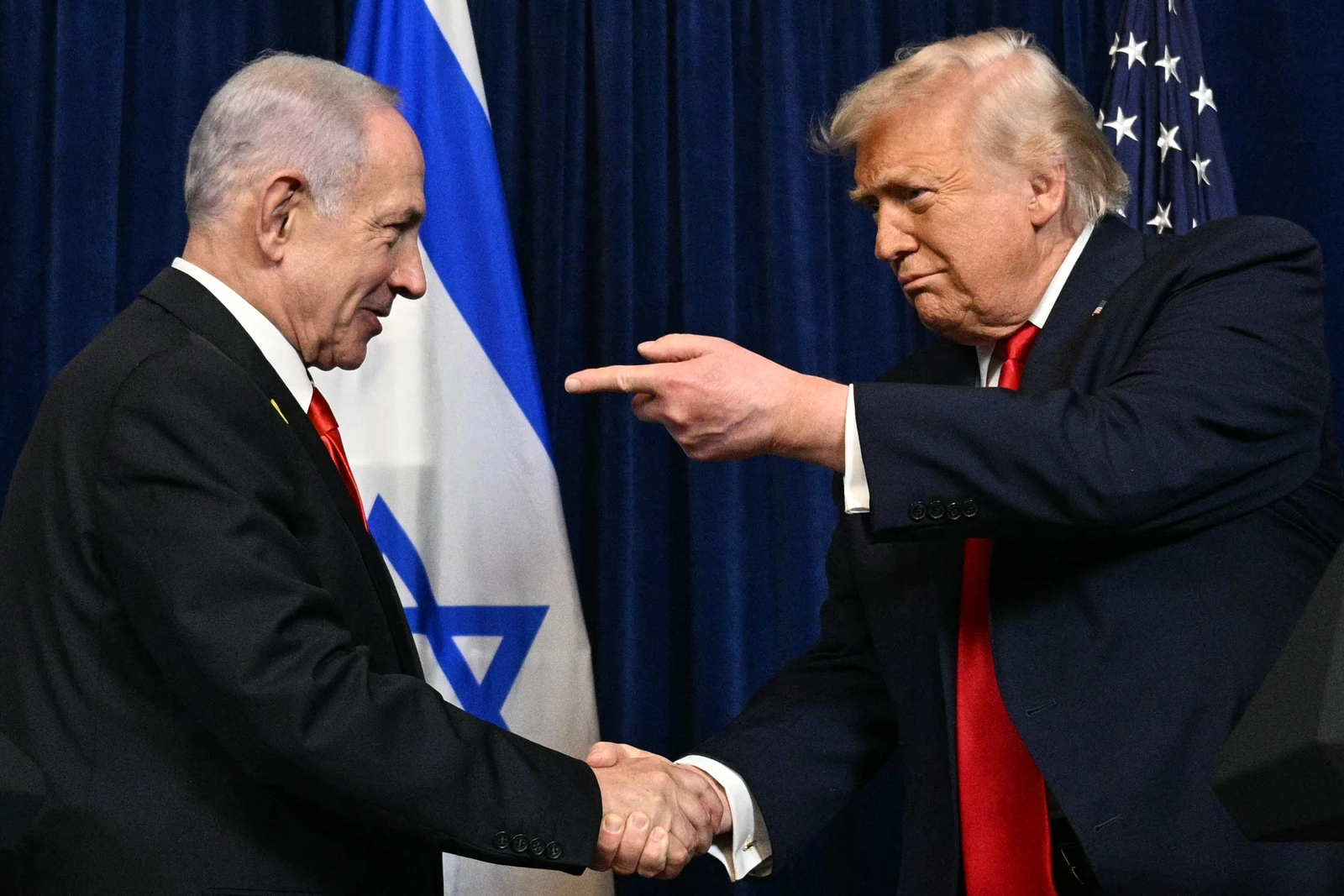

The strong alliance between the Trump administration and the Netanyahu settler government has produced a strange situation. The US and, to a different degree, Israel appear to prefer and prioritize Hamas and Gaza rather than the moderate Palestine Liberation Organization and the West Bank.
Efforts at getting the Ramallah-based Palestinian government involved in the situation following the Gaza ceasefire failed without any logical explanation. The Israelis told the Trump administration that the Ramallah leadership is corrupt, undemocratic and antisemitic. As a result, Washington, along with the international community generally, decided last September at the UN General Assembly (which the moderate, peace-loving Palestinian leaders were not allowed to attend) that until the Palestinians carried out extensive reforms, they would be shut out of any talks or even legitimization.
Hamas, however, was fair game, as the president’s son-in-law, Jared Kushner, met with the group to move ahead with the strangely concocted Board of Peace process. Hamas acquiesced, announcing that it accepted the plan to disarm. Kushner then traveled to Israel and, at one time, was a mere 11 km from the offices of President Mahmoud Abbas, yet he failed to even pose for a photo op with the Palestinian Authority leader. Meanwhile, Israeli Prime Minister Netanyahu rejected a 15-point plan that even Donald Trump had approved.
But it turns out that neither the condition of reform nor Hamas’ willingness to disarm fit into the Israeli efforts to eliminate Palestinian aspirations, as reflected in item 19 of the 20-point US plan that became a binding UN Security Council resolution. This article states that, “while Gaza redevelopment advances and when the PA reform program is faithfully carried out, the conditions may finally be in place for a credible pathway to Palestinian self-determination and statehood, which we recognize as the aspiration of the Palestinian people.”
Neither the condition of reform nor Hamas’ willingness to disarm fit into the Israeli efforts to eliminate Palestinian aspirations
Daoud Kuttab
Instead of fighting some of the ridiculous conditions, the Palestinians agreed. As part of the commitment made by Abbas to French and Saudi leaders, Palestine ended its direct support to families of prisoners and martyrs, worked on further edits of Palestinian school textbooks and even held municipal elections.
But it seems that this was as much as the Israelis wanted. Palestinian legislative elections slated for Nov. 28 and the presidential election in the first quarter of 2027 are now in jeopardy. The US has yet to make it clear to Israel that these democratically due events should be honored and not impeded.
Israel under Netanyahu, on the other hand, is totally opposed to any elections that would legitimize Palestinian nationalism.
The latest report by the Israeli human rights organization B’Tselem, published this week, is entitled “The Elimination Project,” with a sub-headline “Israel’s Systematic Dismantling of Palestinian Collective Life in the West Bank.” The study, which draws on about 2,000 testimonies from Palestinians in the West Bank, “reveals that the project of elimination is now being implemented more openly, directly and violently than before, and increasingly relies on cooperation between official state authorities and settler militias operating in the West Bank with state backing and support.”
It is not yet clear what will happen to the Palestinian legislative elections, which have been cleverly planned for one month after the Israeli Knesset vote. Internal issues, including the absence of Fatah reconciliation, with the reform trend headed by Mohammed Dahlan, could force a postponement. Popular Front for the Liberation of Palestine supporters are said to favor a postponement of more than six months but less than a year. The delay may be explained by Gaza’s overall unreadiness and the difficulty of holding elections there.
Israel under Netanyahu is totally opposed to any elections that would legitimize Palestinian nationalism
Daoud Kuttab
But a delay would mean the Palestinian public losing any remaining trust in the current leadership. They have registered to vote at a record rate of 87 percent and are yearning for a process to introduce new blood to Palestinian politics.
For sure, the problems in Palestine are not only about democracy. No country under occupation can hold free and fair elections when the occupying military obstructs the basic requirements of a proper election campaign. These include the entry of ballot boxes to Gaza, permission for East Jerusalemites to vote and guarantees that Israel will not impede or block Palestinians from voting or from being seated on a legislative council.
Abbas may have called the Israeli-US bluff, but holding the elections will be a big challenge.
Palestine needs reform, a power-sharing leadership and accountability for those in power in Ramallah, Gaza and the diaspora. Hamas needs to answer why it did what it did in October 2023 and be accountable for its policies since. War and peace can never be the monopoly of one party or one leader. While Palestinians, including Hamas, have conceded that the PLO can negotiate on an ultimate solution to the conflict, such an agreement would need to be approved by a Palestinian plebiscite for it be acceptable to all Palestinians.
The US and the international community need to stop parroting Israel’s conditions for starting serious talks with the legitimate Palestinian leadership. America and the European holdouts need to recognize the state of Palestine on the June 4, 1967, borders. Once Palestine is recognized, including by the UNSC, then negotiations need to take place between the leaders of Israel and Palestine to work out all the details relating to borders, settlers, refugees, Jerusalem and economic cooperation. Such an agreement would require buy-in from the Palestinian people.
A road map for peace in the Middle East exists. It begins with recognition of Palestine and the start of talks between Palestine and Israel regarding all the modalities between the two states.
Daoud Kuttab is an award-winning Palestinian journalist and former Ferris Professor of Journalism at Princeton University. He is the author of “State of Palestine Now: Practical and Logical Arguments for the Best Way to Bring Peace to the Middle East.” X: @daoudkuttab


