
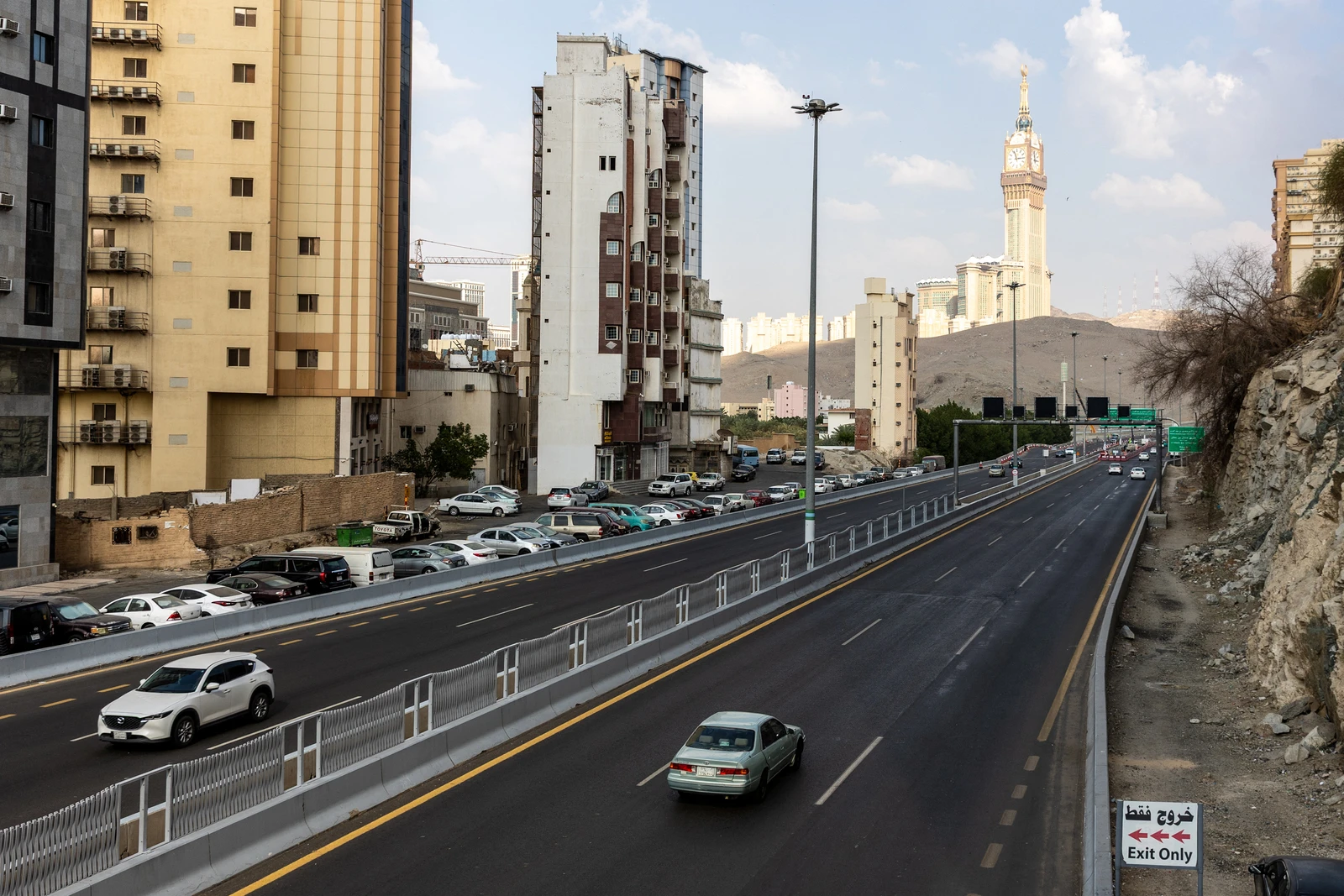

On Oct. 24, Saudi air defenses intercepted two ballistic missiles heading toward the regions of Makkah and Madinah. Debris fell in four places between Jeddah and Taif. Six days later, a drone was shot down near Makkah. The Houthis denied targeting the holy cities, saying they aimed only at oil facilities and military bases.
That denial deserves a legal answer because it rests on a misunderstanding of the law. International humanitarian law does not ask only what an attacker says it was aiming at. It asks what the attacker could reasonably foresee.
The rule against indiscriminate attacks is one of the foundations of the law of war. It prohibits weapons that cannot be directed at a specific military objective and attacks whose effects cannot be limited. It is codified in Article 51 of the First Additional Protocol to the Geneva Conventions and recognized as customary law that is binding on states and armed groups alike.
A ballistic missile fired hundreds of kilometers toward one of the most densely visited regions on Earth is a textbook case. Whatever its declared target, the risk to pilgrims, residents and holy sites is foreseeable. The law also requires attackers to take every feasible precaution to spare civilians. Firing toward Makkah during the season of Umrah is the opposite of precaution.
A ballistic missile fired hundreds of kilometers toward one of the most densely visited regions on Earth is a textbook case
Dr. Bashayer Al-Majed
Places of worship enjoy a protection of their own. The Second Additional Protocol, which governs conflicts involving nonstate armed groups, prohibits acts of hostility directed against places of worship that constitute the spiritual heritage of peoples. The Rome Statute of the International Criminal Court lists intentional attacks on buildings dedicated to religion as a war crime. In 2017, UN Security Council Resolution 2347 affirmed that such attacks may amount to war crimes in any conflict.
These are not abstract rules. In 2016, the International Criminal Court convicted Ahmad Al-Faqi Al-Mahdi for directing attacks on mausoleums and a mosque in Timbuktu. It was the court’s first conviction for the destruction of religious buildings and it was followed by a reparations order to the community. The message was clear: attacks on sacred places are not collateral politics, they are prosecutable crimes.
A law professor owes readers candor. Neither Saudi Arabia nor Yemen is a party to the Rome Statute, so the court cannot act unless the UNSC refers the situation to it and a referral would face the usual politics in New York. Accountability will not come quickly.
The protection of cultural and religious heritage is not a luxury of peacetime. It is part of a nation’s sovereignty
Dr. Bashayer Al-Majed
That makes documentation essential. Every interception, every fragment and every launch site should be recorded to an evidential standard, so that the record exists when a forum does. War crimes are not subject to a statute of limitations in customary international law. The Organization of Islamic Cooperation, headquartered in Jeddah, is well placed to give these attacks a collective legal characterization on behalf of the Muslim world, while the UNSC has already condemned the Houthi strikes on Saudi Arabia.
Kuwait knows what it means when heritage is treated as a target. During the occupation of 1990, invading forces looted the Kuwait National Museum and the Al-Sabah collection of Islamic art, setting the museum on fire. Much of the collection came home after liberation under UN supervision. Kuwaitis learned then that the protection of cultural and religious heritage is not a luxury of peacetime. It is part of a nation’s sovereignty.
Makkah and Madinah belong, in a different sense, to more than a billion Muslims. Saudi Arabia’s role as their custodian is a responsibility it carries on behalf of all of them. When Gulf Cooperation Council Secretary-General Jasem Al-Budaiwi called the October attacks a grave violation of the sanctity of the holy sites, he was stating a legal position as well as a religious one.
The Houthis may believe that denial is enough. It is not. Under international law, the question is not only what they meant to hit but what they were prepared to risk. On Oct. 24, they were prepared to risk the holiest ground in Islam. The law has a name for that and the record should show it.
Dr. Bashayer Al-Majed is a professor of law at Kuwait University, and a visiting fellow at Oxford.
X: @BashayerAlMajed


