
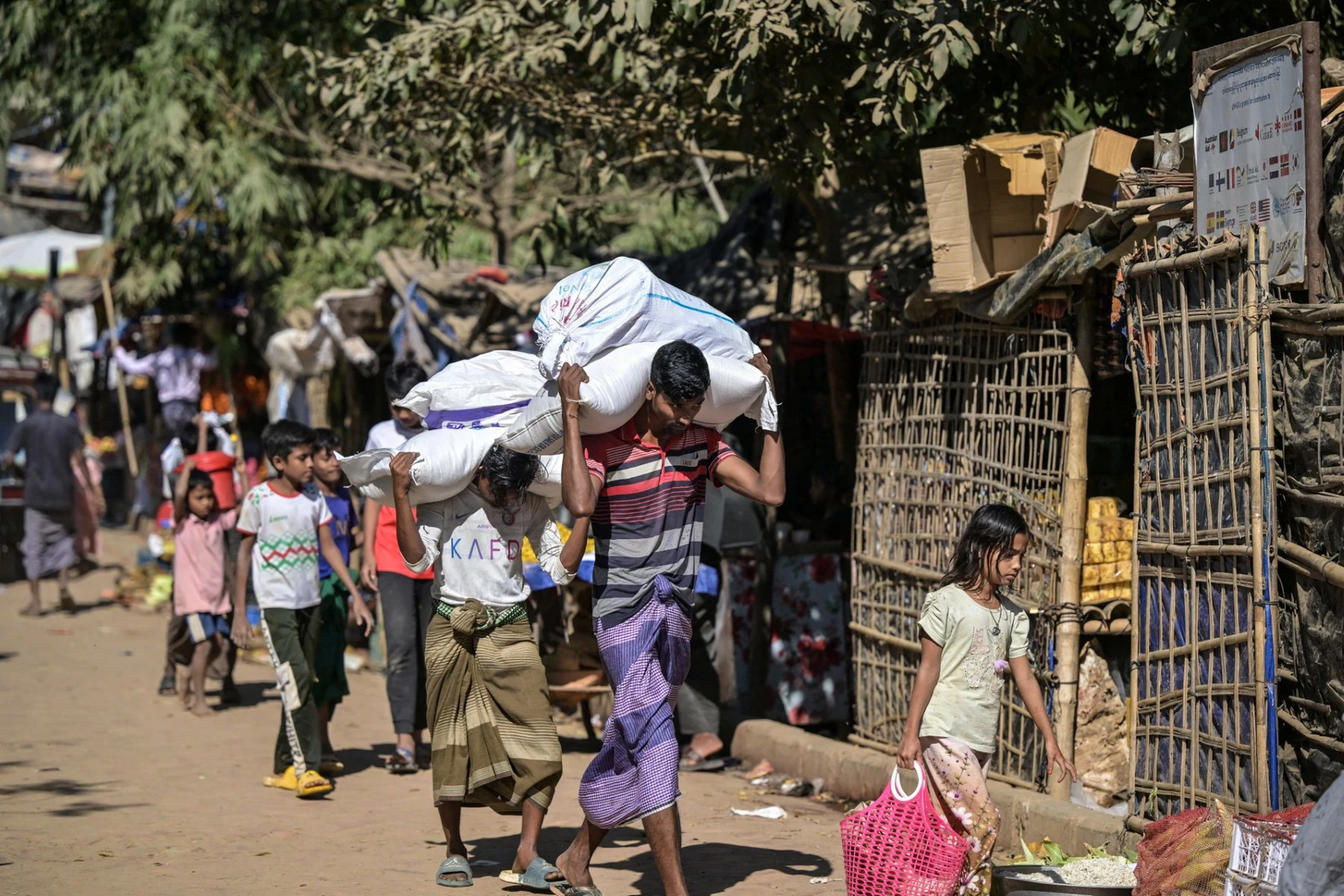

Perhaps the strangest feature of the modern refugee system is that governments frequently complain about the cost of supporting refugees while simultaneously preventing refugees from supporting themselves.
The UN Refugee Agency is facing one of the most serious financial crises in its history. It estimates it needs $8.5 billion this year to support more than 130 million forcibly displaced and stateless people. By the end of July, however, it had received only 32 percent of that amount. The agency warned last month that 8.3 million people are at risk of losing access to essential assistance because of funding shortages.
Yet, while humanitarian budgets shrink, millions of refugees remain prevented from fully participating in the economies of the countries hosting them.
The latest UN Refugee Agency figures indicate that only about 62 percent of refugees live in countries where they have the legal right to work. Legal rights are only part of the problem. Earlier global surveys found that just 45 percent lived in countries where they enjoyed unrestricted practical access to formal employment. Permits, bureaucracy, restrictions on movement, difficulties opening bank accounts and the failure to recognize qualifications can all prevent refugees from converting a theoretical right to work into an actual job.
The result is an expensive form of dependency that is partly created by policy.
Millions of refugees remain prevented from fully participating in the economies of the countries hosting them
Dr. Azeem Ibrahim
Refugees who could work legally instead find themselves dependent on food assistance, cash transfers and humanitarian services. Others enter informal labor markets, where they are more vulnerable to exploitation, receive lower wages and contribute little in direct taxation.
This model made greater sense when refugee emergencies were expected to be temporary. Increasingly, they are not. Conflicts can last decades, leaving many refugees displaced for much of their working lives. The economics of such displacement demand a different approach.
This does not mean pretending there are no costs to allowing refugees to work. Host governments have legitimate concerns about employment, wages, housing and public services. Those concerns are particularly important because about three-quarters of the world’s refugees are hosted by low- and middle-income countries, many of which already struggle to create sufficient jobs for their own citizens.
A government confronting high youth unemployment cannot simply be told that opening the labor market to hundreds of thousands of additional workers will produce no consequences. But the evidence suggests those consequences are more complicated than the popular assumption that every job taken by a refugee is a job lost by a citizen.
World Bank research examining Colombia, Ethiopia, Jordan and Uganda found that the overall effects of refugee populations on host labor markets were generally modest and sometimes positive. Some groups of local workers did experience greater competition but other groups benefited from increased demand, investment and economic activity. The important lesson is not that refugee integration is cost-free. It is that the costs are concentrated and can therefore be addressed through targeted policy.
Jordan provides an important example of what a different model can look like. Faced with a huge Syrian refugee population, Jordan worked with international partners to expand access to formal employment while simultaneously investing in the wider Jordanian economy. The annual number of work permits issued to Syrians rose from about 45,000 in 2019 to more than 90,000 in 2023, with some 340,000 permits issued cumulatively. Regulations were also changed to make it easier to establish home businesses, while programs expanded financial inclusion, childcare and employment opportunities for Jordanians as well as Syrians.
The significance of the Jordanian experience is not simply that refugees were allowed to work. It is that refugee economic inclusion was linked to investment in the host community. That should become the basis of a new international bargain.
At present, donor governments largely ask refugee-hosting countries to perform a global public service in exchange for humanitarian funding. Countries such as Jordan, Uganda, Colombia and others absorb large displaced populations while international donors help pay for food, education, healthcare and shelter.
As donor budgets decline, that arrangement is becoming less sustainable. A better bargain would increasingly connect development finance to economic inclusion.
Donors should offer refugee-hosting countries preferential financing for infrastructure, schools, transport, businesses, vocational training and job creation. In return, host governments should progressively remove unnecessary barriers preventing refugees from legally working, opening businesses, using financial services and moving to areas where employment exists.
Crucially, the money should benefit citizens and refugees together. A new industrial zone should employ both. Better roads should serve both. Skills programs should train both. Small business financing should be available to local entrepreneurs as well as displaced ones. That changes the politics of refugee assistance.
Instead of citizens seeing international money flowing exclusively toward refugee populations, hosting refugees can become the reason additional investment reaches struggling communities that might otherwise receive little international attention.
The World Bank is already experimenting with precisely this logic. Its financing mechanisms for refugee-hosting states increasingly combine concessional funding with policy reforms intended to improve access to employment and public services for displaced people and local communities. This model should now move from the margins of refugee policy to its center.
A person does not stop being a refugee simply because they have a job. But they can stop being unnecessarily dependent
Dr. Azeem Ibrahim
Humanitarian assistance will always remain necessary. Children, elderly people, people with disabilities and newly displaced families cannot simply be told to find employment. Nor should the right to work become an excuse for wealthy countries to withdraw assistance from poorer states carrying a disproportionate share of global displacement.
But there is an enormous difference between supporting people who cannot support themselves and designing systems that prevent people from doing so.
The refugee system was largely constructed around protection and care. The next stage must place much greater emphasis on economic participation. That means recognizing refugees not merely as recipients of assistance but as potential workers, taxpayers, consumers and entrepreneurs.
As humanitarian budgets contract, governments essentially face three choices. They can cut assistance and allow refugee living standards to deteriorate. They can continually ask increasingly reluctant donors for more money. Or they can enable more refugees to earn livelihoods of their own.
The third option will not solve every refugee crisis but it can make prolonged displacement significantly less expensive while restoring something humanitarian assistance alone can never provide: economic agency.
A person does not stop being a refugee simply because they have a job. But they can stop being unnecessarily dependent.
In an era when the international refugee system is running out of money, allowing people to support themselves may be one of the most valuable forms of assistance we can provide.
Dr. Azeem Ibrahim is the director of special initiatives at the New Lines Institute for Strategy and Policy in Washington. X: @AzeemIbrahim


