
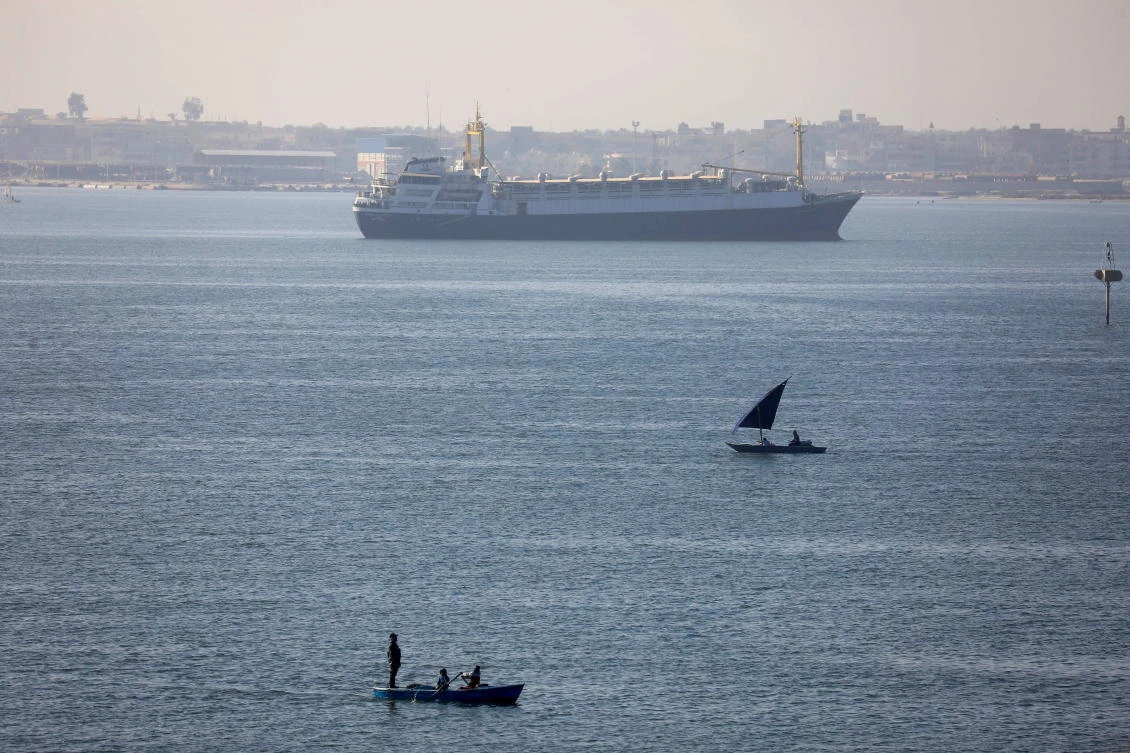

When Egypt nationalized the Suez Canal in July 1956, it faced a severe financial and political blockade from colonial powers. Riyadh understood immediately that targeting Cairo threatened the entire Arab world. In response, Saudi Arabia aligned with Egypt to establish a framework affirming that Arab destinies would not be dictated by Western capitals. Today, the international system is reproducing similar crises, albeit with different calculations.
According to the Stockholm International Peace Research Institute’s 2024 data, global military spending had surged to a record $2.7 trillion. The Middle East accounted for about $243 billion — roughly 10 percent of this total — driven by volatile security conditions and an urgent imperative to develop sovereign self-defense capabilities.
Amid this global turbulence, the Saudi-Egyptian partnership has emerged as a formidable geopolitical force capable of rebuilding international alliances from the ground up, transcending ceremonial diplomatic coordination to achieve true operational and security integration.
As British military theorist B.H. Liddell Hart underscored in his classic treatise “Strategy,” enduring alliances are forged not in conference rooms but through the convergence of vital interests on the front lines. This is vividly demonstrated today by the emerging doctrine of self-deterrence, which seeks to neutralize existential threats in the Middle East and Africa, dismantle historical dependencies and sever the region’s reliance on the hollow security umbrellas of the US and European capitals.
Engaging with the BRICS bloc was not a mere diplomatic maneuver for Riyadh and Cairo, it was a strategic and financial imperative. The move addresses the severe economic friction caused by dollar volatility and the weaponization of Western financial systems, while circumventing the punitive conditionalities historically imposed by the International Monetary Fund.
The era of securing global trade via traditional Western arrangements in the Middle East is ending.
Dr. Bader bin Saud
Through the New Development Bank, these two nations help give BRICS unparalleled logistical depth, bridging production centers to global markets outside Western jurisdiction. Saudi Arabia commands global energy markets, while Egypt controls the Suez Canal, the world’s most critical maritime chokepoint. This transforms the partnership from a theoretical alliance into a powerhouse of investment and development, securing food and economic stability through local currency trade and immunizing supply chains against unilateral sanctions.
Recent assessments by Bloomberg Economics and the IMF underscore this reality: BRICS now accounts for nearly 37 percent of global GDP based on purchasing power parity — eclipsing the Group of Seven — and controls more than 40 percent of global oil production.
Beyond energy, the strategic dividends of BRICS engagement drive a concerted push toward financial and technological sovereignty. The bloc is rapidly developing autonomous digital infrastructures, notably BRICS Pay and the BRICS Bridge platform for digital transfers, designed to shatter the monopoly of Western cloud computing and financial messaging systems. Riyadh and Cairo are uniquely positioned to leverage these architectures to secure their mega-projects — including smart cities, regional data centers and 5G networks — without being ensnared by US technology export controls, such as the CHIPS Act.
Crucially, technological sovereignty now serves as a primary deterrent against actors who routinely weaponize digital systems for intelligence or punitive leverage. By localizing advanced technologies through partnerships with Beijing and Moscow, the Saudi-Egyptian partnership is establishing a secure, independent foundation insulated from American and European coercion.
In the realm of regional security, Riyadh and Cairo have deliberately moved beyond reliance on Western bases and naval fleets, operationalizing a policy of self-deterrence across the Red Sea and the Horn of Africa. The International Institute for Strategic Studies in 2024 documented that escalating military coordination between the two nations is designed to secure trade routes and energy corridors independently, compensating for the glaring inadequacies of Western naval deployments — most notably the failure of US defense systems to reliably neutralize maritime threats.
As International Institute for Strategic Studies maritime security assessments have highlighted, the era of securing global trade via traditional Western arrangements in the Middle East is ending. Shipping lanes are now increasingly being governed by regional power dynamics. Both capitals operate on the uncompromising conviction that the defense of strategic maritime arteries must be indigenized. They are actively constructing a regional security architecture that neutralizes geopolitical blackmail and prevents the region’s waterways from being reduced to a theater of conflict for US Central Command and Western influence.
The combined gravity of these two nations transcends conventional political calculations, positioning Saudi Arabia and Egypt as the vanguard of the Global South within the broader BRICS framework. Historically, the intersection of Egypt’s cultural weight and the Arabian Peninsula’s strategic geography has dictated international trade rules far beyond the reach of monopolistic Western centers.
Backed by the New Development Bank’s $100 billion capital base, Egypt is perfectly positioned as a demographic bridge and vital African hinterland, serving as a primary conduit for transcontinental investment. Simultaneously, Saudi Arabia provides the decisive financial leverage required to underwrite this developmental agenda. This strategic convergence grants developing nations a formidable negotiating platform capable of dictating terms to the global financial system, transforming their BRICS engagement from a symbolic presence into a powerful engine that is actively rewriting the rules of global trade without Western dictation.
On Oct. 26, the Egyptian parliament overwhelmingly approved a mandate to deploy military forces on a defensive mission in support of Saudi Arabia, acting on a recommendation from the National Defense Council. This was not a reactive measure to a temporary crisis — it was the manifestation of a unified security doctrine recognizing that the stability of the Gulf and the Red Sea is inextricably linked to Egyptian and Arab national security.
This operational synergy is further reinforced by relentless diplomatic coordination, as demonstrated earlier this month, when the Egyptian and Saudi foreign ministers held urgent consultations to forge a unified stance against regional military escalation. This decisive momentum illustrates the true depth of the Saudi-Egyptian partnership, echoing through the corridors of the international system. Their integration is not merely the formation of another axis but the consolidation of a robust containment bloc.
Together, Riyadh and Cairo possess the material capacity to check unilateral overreach and dismantle hegemonic frameworks that exploit developing nations. Ultimately, this shift from reactive diplomacy to proactive global leadership cements an independence that actively rejects polarization. The Saudi-Egyptian partnership proves that modern geopolitical power is not measured by the sheer size of an alliance but by the capacity of sovereign states to enforce their will, reject external interference and recalibrate the international order on a foundation of absolute equality.
Dr. Bader bin Saud is a columnist for Al-Riyadh newspaper, a researcher in media and knowledge management, a university professor, an expert in crowd management and strategic planning, and the former deputy commander of the Special Forces for Hajj and Umrah in Saudi Arabia.
X: @BaderbinSaud


