More than 100,000 people have already visited the Royal Commission for Jubail (RCJ) Nation’s Festival, which brings together exhibitions from several countries around the world.
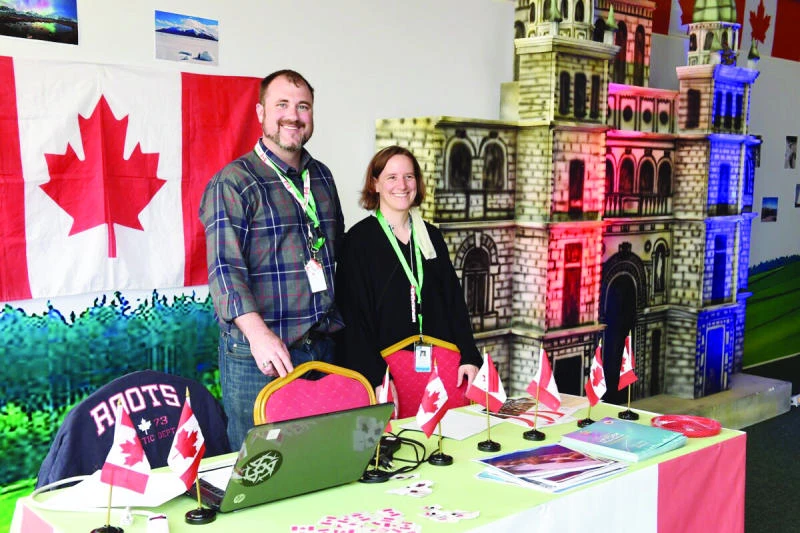
David Amanq, the British pavilion’s representative, said he was happy to provide information about his country to visitors. Canadian Andrew McDonald said most people wanted to know about tourist sites and study opportunities in his country.
The US pavilion had a model of the Statue of Liberty, with some visitors saying they would like to see it in America. Weiner Tarmen, the US pavilion’s representative, said many visitors knew more about the US than some Americans.
The pavilions provide various souvenirs to visitors including flags, hats, prints, photographs and small sculptures. Many people flocked to the exhibitions at the Global Village, which included the pavilions of Pakistan, India, the Philippines and South Korea.
Pakistan’s representative Muhammad Khan provided information about his country’s history, culture, customs, cooking, national dress, and wedding traditions. “I feel that Saudis love people from Pakistan, especially since the two countries are linked by Islam.
The Philippines’ pavilion included beautiful Asian décor, with representatives wearing traditional outfits and taking photographs with visitors. Sever Eyana, responsible for the pavilion, said the country was delighted to participate in this event and interact with visitors about the country’s food, games and music.
The Indian pavilion’s representative Muhammad Ahmed lauded the organizers for setting up the event. He provided information about Indian culture and historical sites such as the Taj Mahal and Mysore Palace. “Most visitors inquire about tourism, medical treatment and study in India,” he said.
He said some visitors asked for information about Mahatma Gandhi, who helped India become independent, other famous personalities, and historical sites, customs, traditions and Indian clothing.
At the South Korea pavilion, Choi Jung said: “We welcome visitors in the Korean manner, answer their questions, and explain our history, customs, culture, traditional clothing, and various religions.”
“We provide information about the different events and holidays in Korea, and hand out flags, photographs, and prints to visitors,” he said.
100,000 attend Jubail multicultural festival