Riyadh Municipality has entered into agreements with seven local livestock companies to fix the price of seven kinds of sheep sacrifices for Eid Al-Adha.
The move is in line with municipality’s efforts to prevent price manipulation by fixing prices for sacrifices as endorsed by the three main markets in the capital — Anam Alrriyadh, the West market and Al-Sa’adah market. Sources said the agreement makes it mandatory for the companies to allow buyers to seek replacement of any sacrificial animal found with deformations or health problems or receive reimbursements.
“The agreement also stipulates that the companies stick to the prices agreed upon, or face the imposition of fines,” said the source, stressing that municipality teams will carry out inspection to ensure compliance with the terms and conditions of the agreement.
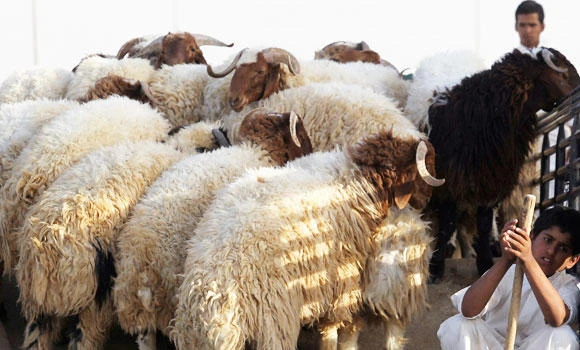
During a visit to the livestock market, the newspaper was briefed on the ways and means adopted by sellers to cheat customers like lifting the front side of the sheep to make it appear fat and healthy from its rear, while other vendors hit the sick sheep in front of the buyer to give the impression that the animal was healthy.
Some breeds of sheep were missing from the markets like the local Nuaimie sheep, with some vendors cheating customers by palming off imported breeds claiming it to be Nuaimie breed. The Najdi sheep was selling at SR1,200 to SR2,000, Nuaimie at SR1,200 to SR1,800, and Sawakni at SR550 to SR1,200.
Traders expect the prices of sheep to go up with the demand increasing in the last minute. “During the last few days, the market was stagnant. This led to a drop in prices as compared to the past seasons,” Othman Al-Obaid, a livestock merchant said, adding that his company will remain committed to the price agreement.
He warned against cheating ignorant buyers who do not know how to buy a good sacrificial animal. “Some traders resort to cheating by painting the wool of the sheep to make it appear like it is from a certain region or origin, or injecting sick animals to make them look healthy,” he said, adding that the breed of sheep most in demand among Saudi elders was Najdi followed by Nuaimie.
Agreements set on livestock prices