- Agreement establishes framework for joint research, student training, professional development
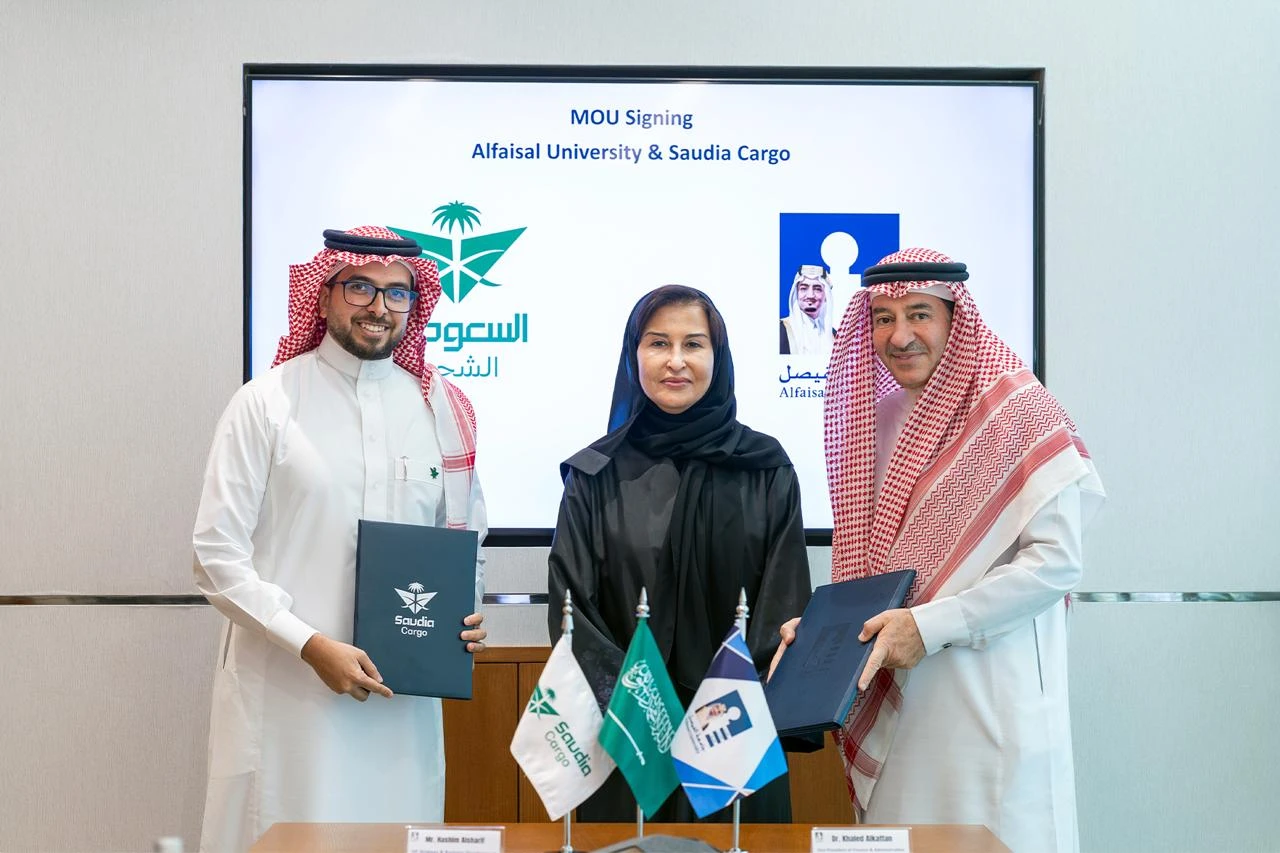
JEDDAH: Alfaisal University and Saudia Cargo have signed a memorandum of understanding to advance artificial intelligence research, develop curricula and expand training opportunities in the logistics sector.
The agreement establishes a framework for joint research, student training and professional development, with a focus on AI applications in air cargo and logistics.
It was signed by Dr. Khaled Al-Kattan, the university’s vice president for finance and administration and dean of the College of Medicine, and Hashim Alsharif, vice president of strategy at Saudia Cargo.
Under the agreement, the two sides will explore research programs involving students, faculty and staff, focusing on logistics operations and emerging technologies. They will also work on curricula that equip students with skills needed by the private sector.
Training opportunities will include short-term placements at Saudia Cargo’s headquarters through the Tamheer on-the-job training program, subject to eligibility requirements, or cooperative training.
The partnership also covers specialist workshops on AI applications in logistics, conferences, seminars and scientific lectures, alongside initiatives to improve logistics services. Saudia Cargo will explore opportunities for its employees to join the university’s academic, training and professional development programs.
Al-Kattan said: “Artificial intelligence is reshaping how goods move around the world, and logistics is central to the Kingdom’s ambitions under Saudi Vision 2030.
“Our partnership with Saudia Cargo connects Alfaisal’s work in AI — from our undergraduate and graduate programs to our research — with one of the region’s leading air cargo operators, so that our students and faculty can work on real challenges in a sector of national importance.”
The university’s College of Engineering and Advanced Computing offers a bachelor’s degree in artificial intelligence, including a summer industry internship. Its master’s degree in applied artificial intelligence covers machine learning, data science and AI systems.
Its Artificial Intelligence Center supports research, teaching and industry partnerships, while its AI Academy offers practical summer programs introducing pre-university students to the field.
Al-Kattan said: “Training our students alongside Saudia Cargo’s professionals, and opening our programs to its employees, creates a two-way exchange of knowledge. Together, we aim to develop national talent and support innovation and transformation in the logistics sector.”
Alsharif said integrating academic expertise with smart solutions and AI technologies could help advance the logistics sector.
He said: “We take pride in our partnership with Alfaisal University to collaborate on joint research programs and curriculum development aligned with market needs.”
He added that the agreement would expand practical training and professional development opportunities for students and employees, helping improve air cargo efficiency and develop Saudi talent.
Founded by the King Faisal Foundation in 2002, Alfaisal University combines teaching and research with industry engagement. Its internship and cooperative training partnerships aim to connect students’ education with labor market needs.
A steering committee will oversee activities under the agreement. Its members include Princess Aljohara bint Faisal bin Musaad, the university’s director of alumni and placement relations, and Majdi Alrehaili, executive director of external affairs at Saudia Cargo.