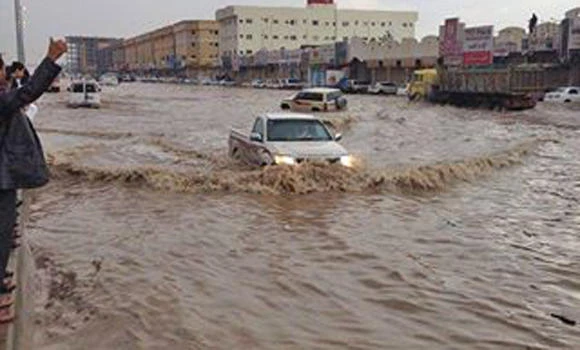
RIYADH: The flood situation in Buraidah remained grim on Saturday, two days after the rains stopped. The poor precautionary measures taken and the limited work done to avoid flooding of the main streets and neighborhoods paralyzed vehicular traffic and hindered commercial activities.
King Abdulaziz Street (Al-Khubaib) remained under water for a long time and no one could access shops surrounded by water. Cars were submerged all around.
A number of municipalities neighboring Buraidah harnessed all capabilities and equipment to help the Qasim Secretariat pump water out of the locations. Nonetheless, King Abdulaziz Street remained marooned, evoking resentment from citizens and merchants alike.
Meanwhile, a number of furnished apartment owners and rest houses in Buraidah and nearby villages opened their doors to receive people displaced by the floods. The charitable gesture came in for praise from all quarters.
Owners of furnished apartments told the General Directorate of Civil Defense in Buraidah that they should tell people in need of shelter that they are available for free.
Some social activists also launched a campaign to help the flood-affected families. The campaign is looking after their food, clothing and other necessities.
The General Directorate for Health Affairs in Qasim also checked on the safety and security of families whose houses incurred damages in the flood. The emergency and crisis management division at the directorate formed medical field teams to look after the people, with around 400 cases examined by doctors to make sure they are in good health.
Ibrahim Al-Thouwaini, the director of emergency and crisis management at the Qasim health department, said it was very important to check the health conditions of those affected by the floods and evacuated from their homes.
“Medical field teams were formed for the follow-up of the field command of the emergency and crisis management. King Fahd Specialist Hospital and Buraidah Maternal and Children Hospital are looking after them. The residential units were increased to 11, and 400 cases of citizens were examined as well,” he said.
Apartment owners shelter flood-hit