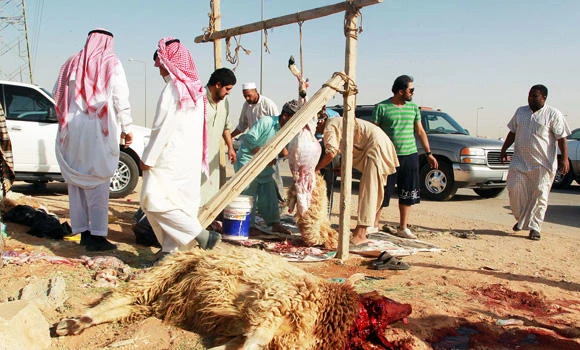
Veterinarians have warned against random slaughter in streets and houses without specialists examining livestock since the sacrificial animals could be suffering from diseases like jaundice, tapeworm and diseases.
Sulieman Al-Masri, veterinarian, said lambs are usually examined after slaughter, especially for these three diseases. If the sheep is inflicted with any of these, they are stamped and taken back to the slaughter house through the municipality.
He said if the lamb has jaundice, it is kept for 24 hours and put to sleep.
Sheep are also put down if they have 10 tapeworms, and if it had less than 10, the liver is thrown away. Sheep that have disease are also put down.
Director-General of Slaughter Houses and Public Benefit Markets in Jeddah Municipality Dr. Naser Al-Jarallah said if any of these diseases are found in sacrificed lambs, they are immediately cut up, and sprayed with disinfectant and moved to the rubbish dump.
He said 20 veterinarians working with the municipality examine lambs in all the slaughter houses. Al-Jarallah said citizens who bought sick sheep from approved yards will be given a letter stating their sheep had been put down because they were inflicted with a disease and they should be compensated with another sheep.
If a citizen bought it from a street vendor, they will not be compensated.
Al-Jarallah called on all citizens to buy their sacrificial lambs from yards approved by the municipality to avoid contracting any disease through its consumption.
The Ministry of Municipal and Rural Affairs has put to sleep 1,725 sheep, out of 728,716 inflicted. These were put to sleep after examinations confirmed the existence of a disease since it will have a negative effect on those who consume its flesh.
“The number of imported sheep that have been put down last year was 353, while the number of local sheep which met with the same fate was 1,372 in 10 provinces” stated the report.
“Diseases that affect sheep and humans who consume its flesh are plenty, but the most common of these diseases are jaundice, TB and false TB, tapeworm vesicles and poisoning,” said Mahmoud Mohammad Ali.
Avoid random slaughter, vets warn