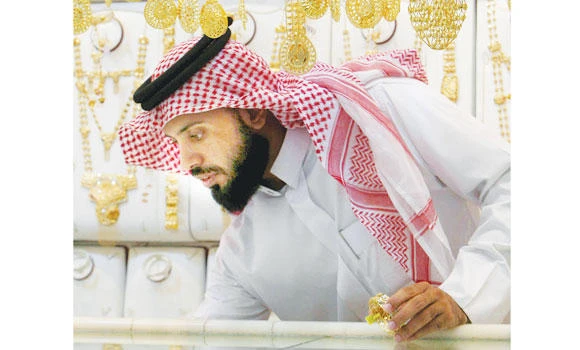
Gold dealers here have claimed that sales of the precious metal dropped by between 35 and 50 percent during the Haj period.
They said this was due to government reducing quotas for local and foreign pilgrims, and Hajis living far from the city’s gold markets.
Dealers sold one gram of 21-carat gold for between SR165 and SR185, and a gram of 18-carat gold for SR155. In general, the price of gold stood at $1,330 an ounce, a local newspaper quoted the dealers as saying.
However, dealers said that sales have now gone up as pilgrims shop before leaving for their home countries.
Abdullah Sahl said sales are now between SR300,000 and SR400,000 a day. Sales would drop after Dhul Hijjah 25 (Oct. 30) when most pilgrims leave the country. He said most gold consumers are European and African American.
He said there was a drop in Haj sales because of the reduced quotas and pilgrims living far from Makkah’s central gold markets.
Mohamed Al-Omrani said sales have risen 100 percent following the Haj period with a daily average of SR500,000. He said sales dropped during the Haj period because dealers lost their traditional customers from Egypt and Libya.
Salim Al-Siyairi gave another estimate of over SR700,000 in sales a day. On the question of adulterated and fake gold products, he said this amounted to only 5 percent of traded quantities because dealers have laboratories and solutions to test goods.
Salim Al-Karbi said diamond sales increased by 70 percent during the Haj season, with most customers from Morocco, Egypt and Chechnya.
Mohamed Azouz, an investor, said the Haj season compensated gold traders for poor sales in the two months before the pilgrimage. However, sales were down by 50 percent compared to last year. He said sales were also affected by government’s campaign to root out illegal workers.
Ziyad Farsi, head of the gold and jewelry committee at the Makkah Chamber of Commerce and Industry, said the Haj season remains the most lucrative for traders.
However, he claimed sales have dropped steadily of the last five years because of the global rise in gold prices, pilgrims’ dwindling purchasing power, and the shorter period they can stay in the country after the Haj. Farsi said many traders have closed up shop while others have seen their profits slashed.
‘Haj gold sales down by 35 to 50 percent’