- A new bilingual guide to the Sarawat and Hijaz highlands blends science, folklore and art to reconnect readers with Saudi Arabia’s natural heritage
RIYADH: “You are never alone in the mountains.”
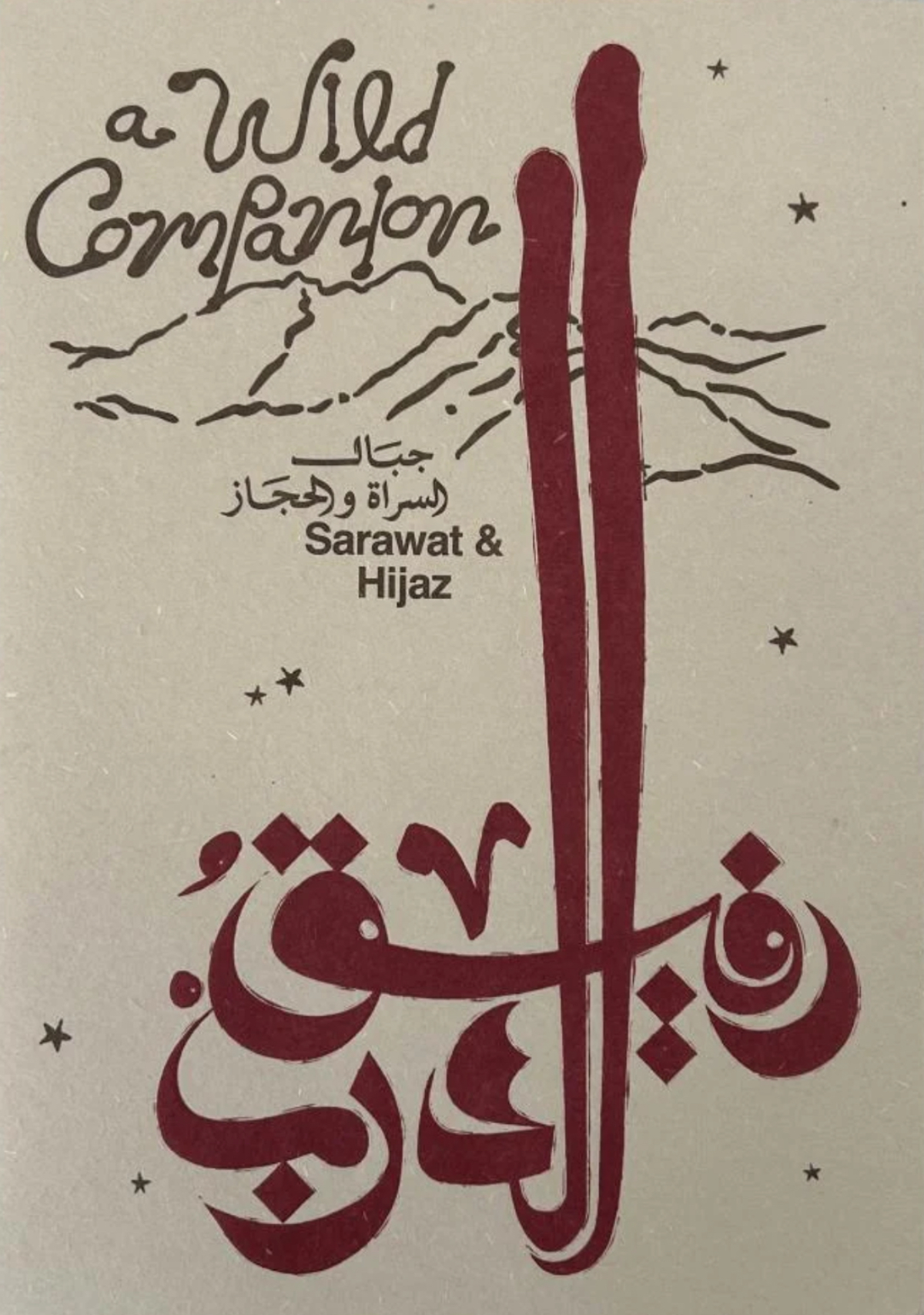
That is the promise that greets readers in the opening pages of “A Wild Companion: Sarawat and Hijaz,” a bilingual exploration of the wildlife, plants, stories and cultural memory of western Saudi Arabia’s highlands.
Conceived as a “friendly sage” rather than a conventional field guide, A Wild Companion blends science, folklore, poetry, and art to introduce readers to 101 species found in the Sarawat and Hijaz mountains. In an exclusive interview with Arab News, co-authors Maria Alem and Abdulaziz Al-Juhani reflected on how the project evolved from personal curiosity into a wider effort to reconnect people with the natural and cultural heritage of western Saudi Arabia.
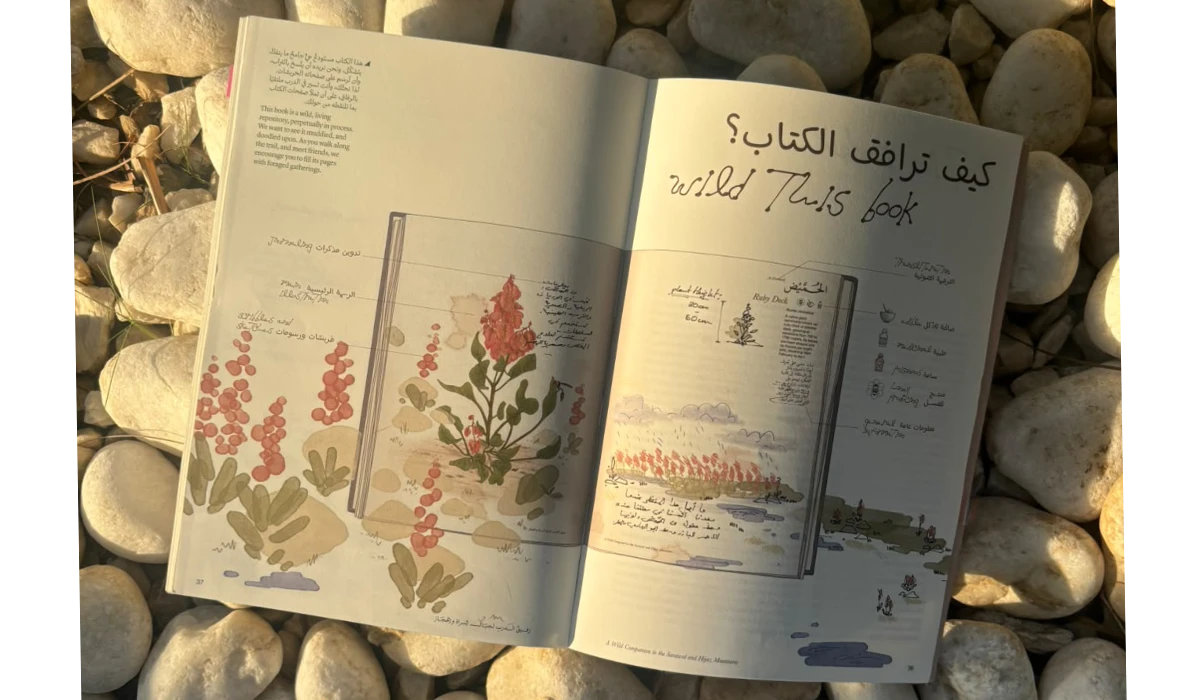
More than a field guide, the beautifully illustrated book introduces readers to native plants, animals and ecological histories through a blend of scientific information, photography, artwork, folklore, poetry and oral history. It concludes with “A Wild Cookbook,” featuring recipes inspired by plants encountered throughout its pages.
For Alem and Al-Juhani, however, the project is about far more than cataloguing species; it is a reflection on belonging, memory and the ways modern life has distanced people from their natural surroundings.
The book moves freely between botany, language, anthropology, food and art. In doing so, it argues that knowing a plant means more than identifying it. It also means understanding what people called it, how they used it, the stories they told about it and the memories attached to it.
The idea emerged gradually.
“Like many great things in life, this book is a series of coincidences,” Al-Juhani said.
For Alem, the seeds of the project were planted years earlier.
“I have always loved nature, but for me, nature was something I could only find outside,” she said. “I always had this feeling that I wanted to go to nature, as though it was this distant place somewhere out there.”
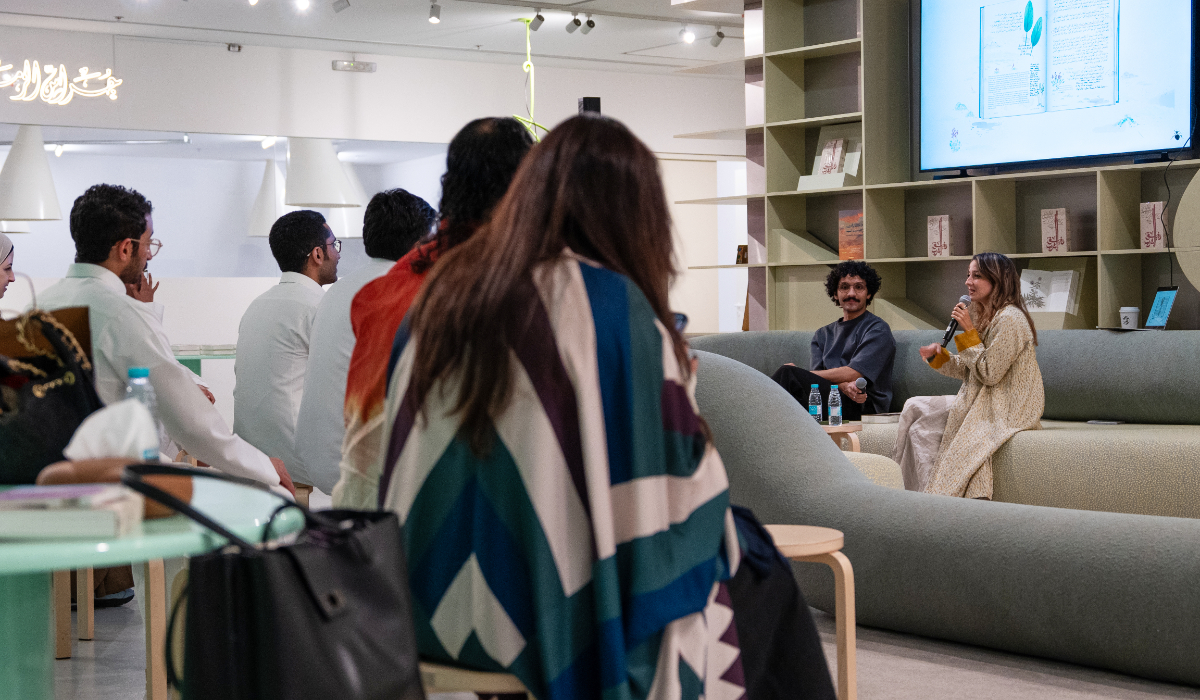
That perception began to change while she was studying in the US. There, she became increasingly fascinated by the natural environment around her. A turning point came when a professor explained that learning the names of local trees had helped him develop a sense of belonging.
“That really struck me,” Alem said. “Growing up, my idea of the city had almost nothing to do with nature. So, the idea that someone could be so rooted in the land that their sense of belonging was connected to a tree was fascinating to me.”
When she returned to Saudi Arabia, Alem began hiking around Taif, noting the names of plants and animals she encountered, and recording the knowledge shared by local guides and residents.
The idea later found a home in Khunfus, the independent publishing house she co-founded.
“When my co-founders and I started our publishing house, Khunfus, the idea became a series of books introducing people to local nature, starting with the Sarawat and Hijaz because that was my first love,” she said.
Al-Juhani’s journey into the project began with an unusual habit from his university days in Jeddah.
“During university in Jeddah, I used to collect leaves from trees,” he said. “It was a slightly strange thing; I would dry them and collect them from the university campus. That tiny detail was enough for a mutual friend to connect me with Maria.”
Both writers shared a concern that urbanization had weakened people’s everyday relationship with the natural world.
“My grandmother lived in a completely different social, cultural and environmental setting. She was much closer to nature. It was part of her everyday life — in cooking, clothing and daily practices, but also in stories and myths.
"These kinds of stories created a relationship with plants for me that was rooted in memory and storytelling. But when I would go out into the city I lived in, I would see trees without stories.
“The project became a very fitting opportunity for me to start reading more and researching that world,” Al-Juhani added.
Neither author set out as a scientist. Alem studied philosophy, while Al-Juhani trained as an architect. That outsider perspective ultimately shaped the tone of the book.
“Nature lovers made this book, not experts,” Alem said. “We wanted to make a book for somebody who is interested in nature but does not know where to begin.”
As a result, the book does not attempt to document every species in the region.
“Our book is the furthest thing from comprehensive,” she said. “It is a very small part of the wildlife in Saudi (Arabia), but it is meant to be an entry point. The whole book is really an invitation to the reader to look more closely at nature and to continue discovering.”
That sense of curiosity and wonder runs throughout the project.
For Al-Juhani, reconnecting with nature also means restoring plants to their historical place within human life.
“If you go back, they were fundamental to people’s lives — in construction, clothing and everyday practices,” he said.
Today, he believes, plants are often viewed primarily through a scientific lens.
“You can look at them through Arabic poetry. You can look at the history of the Arabic language itself and find that recording the language was connected to collecting the names of plants and trees.”
The research behind the book took around three years and formally began in 2022. The authors collaborated with specialists, including plant scientist Dr. Mohammad Al-Awfi and ethnobotanical researcher Usama Al-Ghazali, while drawing on scientific literature, historical sources and earlier regional documentation.
“Sometimes our questions might have sounded silly to an expert,” Alem said, “but that became interesting for the way we built the book. It allowed us to break certain assumptions and ask why things had to be presented in a particular way.”
One of the project’s most intriguing discoveries concerned the complexity of belonging itself.
While researching regional species, Alem initially sought to distinguish between native and non-native plants. The task quickly became less clear-cut. Some introduced species had become deeply woven into local ecosystems and cultural identities.
“You cannot think about plants in Taif without thinking about Damask roses, which are a hybrid shrub,” Alem said.
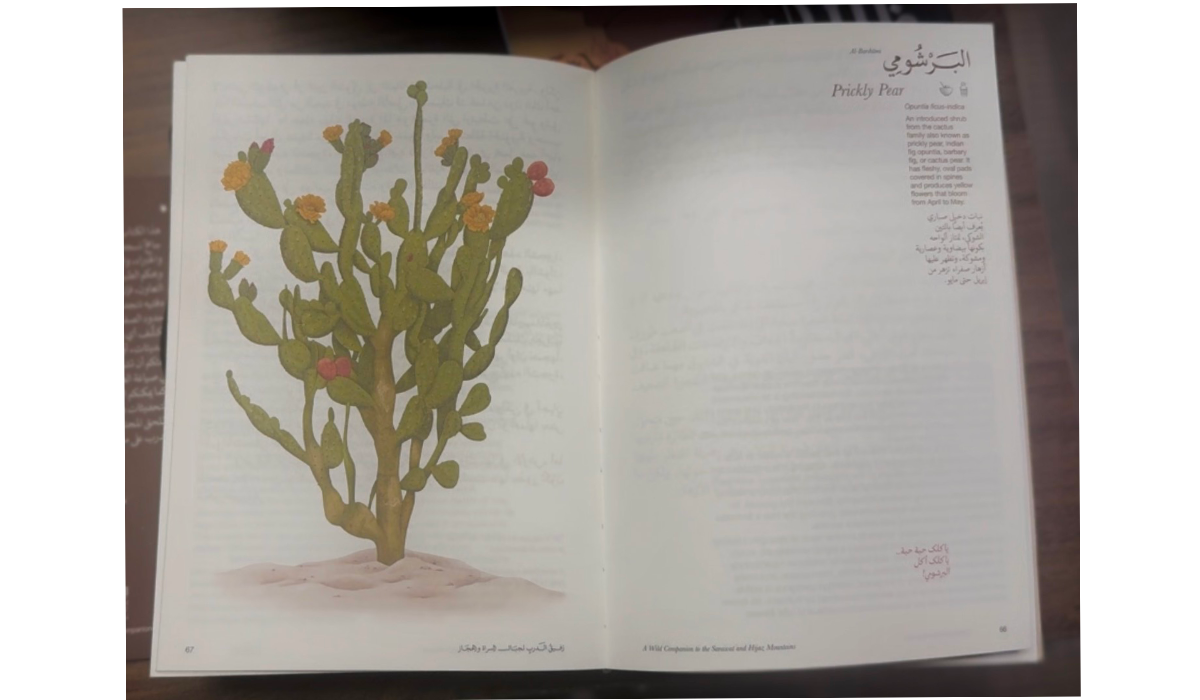
The same is true of prickly pear, a species originally introduced from Mexico.
“It is now in our songs, in our idea of Taif,” she said.
Those conversations often led beyond botany into broader questions about identity, migration and place.
“You begin discussing a plant, and suddenly you are talking about belonging, borders and migration,” Alem said.
She recalled Al-Ghazali challenging conventional ideas about what it means for a plant to belong somewhere.
“He said nature changes with human migration, but it also changes with climate and with the movement of continents,” Alem said. “So, belonging starts becoming much less simple. It is not always a binary — either something belongs, or it does not.”
The authors mined a remarkably broad range of sources, from scientific texts and local communities to oral histories, classical Arabic literature, and online forums where enthusiasts share knowledge about cultivation and native plants.
For Al-Juhani, historical Arabic scholarship offered a particularly rich perspective.
“Through reading such texts, you learn to see the universe as interconnected. The sources were incredibly rich,” he said, referring to writers such as Al-Dinawari and Al-Asma’i, who documented plants alongside language, stories and human encounters.
That layered approach is reflected in the book’s bilingual structure. Rather than serving as direct translations of one another, the Arabic and English texts were developed in parallel. Each draws on different sources, conversations and cultural references, occasionally complementing, diverging from, or even contradicting the other.
The visual experience of the book was equally important to its creators.
“Botanists and zoologists used to draw, and not simply because there were no cameras. When you draw, you learn a great deal about the plant. You notice its veins, the shape of its flowers, all its details, but you are also contemplating its beauty,” Alem said.
Ultimately, the authors view “A Wild Companion” not as a finished work but as the beginning of a larger conversation.
The first volume explores 101 species from the Sarawat and Hijaz highlands. The next will focus on the Red Sea region. Readers are also encouraged to contribute their own memories, observations and stories through the book’s community log.
“We want readers to enter it. Publishing the book is the beginning, not the end,” Alem said.
In that sense, “A Wild Companion” offers more than a guide to wildlife. It is an invitation to look again at familiar landscapes and discover that the mountains, as its opening pages suggest, were never empty to begin with. They were always full of stories waiting to be named.