- The BRICS summit facilitated stronger economic ties between Saudi Arabia and India, covering areas such as investment, infrastructure, and technology.
- Greater engagement with BRICS countries could lead to technology transfer and partnerships in sectors like renewable energy and digital technologies for Saudi Arabia.
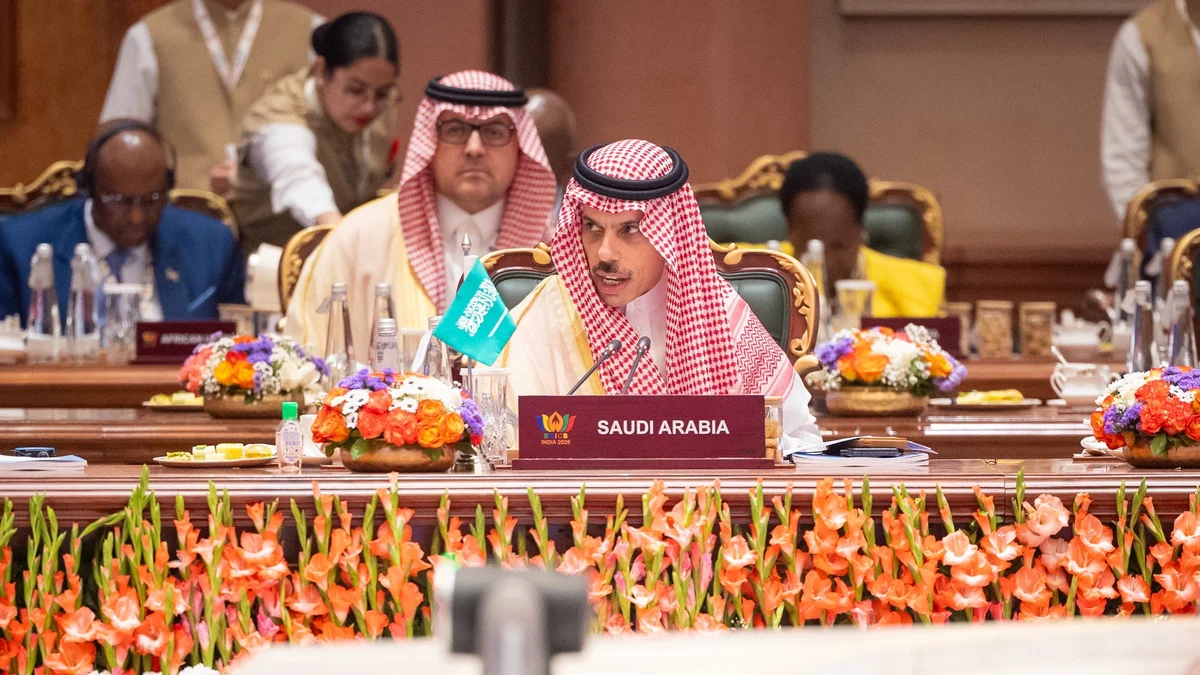
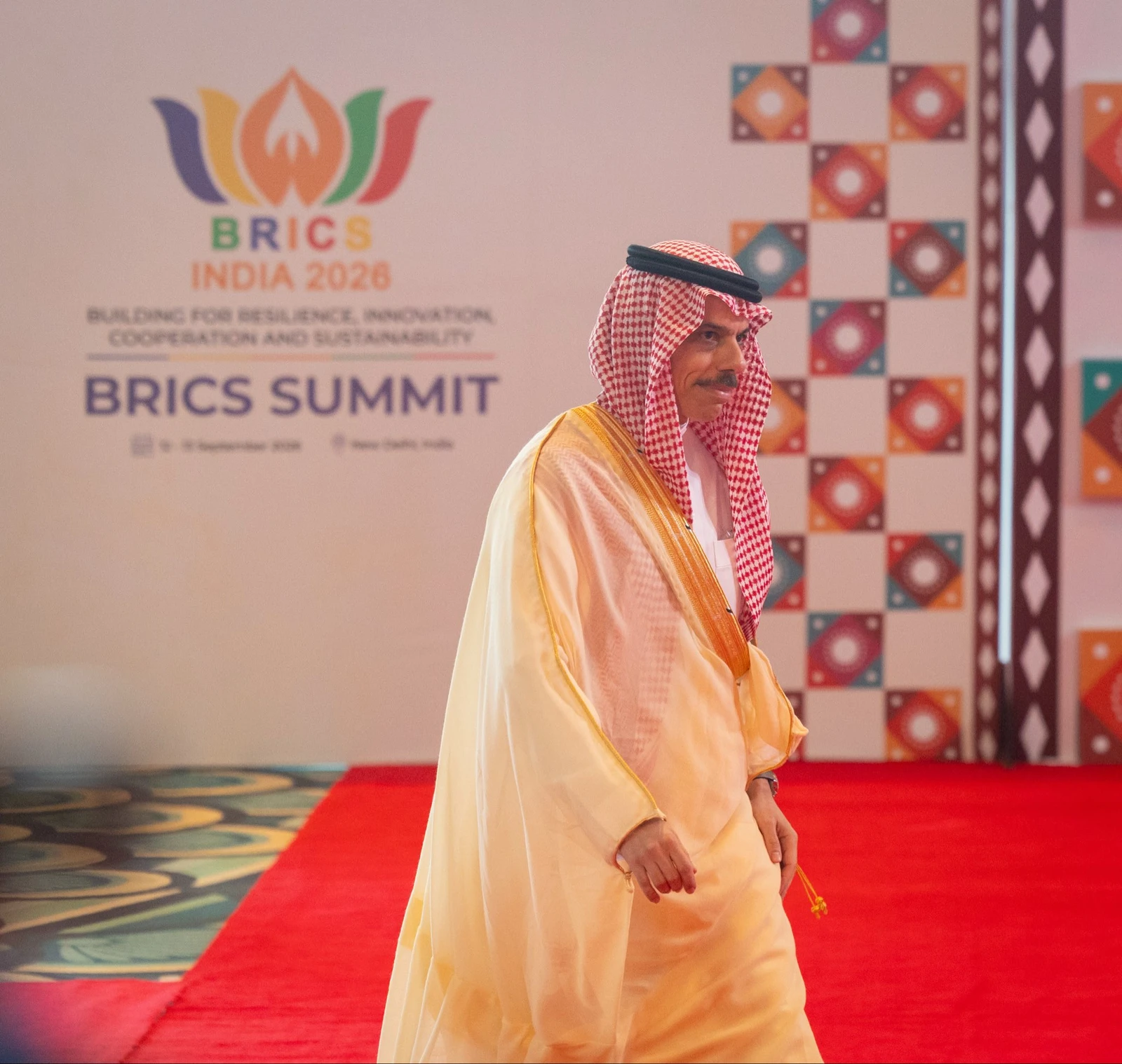
NEW DELHI: Saudi Foreign Minister Prince Faisal bin Farhan arrived in New Delhi on Saturday to represent Crown Prince and Prime Minister Mohammed bin Salman at the 2026 BRICS Summit.
Prince Faisal was scheduled to take part in discussions on key international issues and ways to strengthen multilateral cooperation among BRICS members, partner countries and invited nations, the Saudi Press Agency reported.
Saudi Arabia participation in the summit, being held under the theme “Building Resilience, Innovation, Cooperation, and Sustainability,” was as an invited country. The BRICS group comprises Brazil, China, Egypt, Ethiopia, India, Indonesia, Iran, Russia, South Africa and the UAE. The Kingdom has yet to formally accept full membership but used the 18th BRICS Leaders’ Summit as an opportunity to deepen economic and diplomatic ties with major emerging markets.
The two-day event, held at Bharat Mandapam in New Delhi on Sept. 12-13 under India’s 2026 BRICS chairship, has brought together leaders from the bloc’s member states alongside participating countries and partner nations.
Saudi Arabia was invited to join BRICS during the group’s expansion in 2023, alongside Egypt, Ethiopia, Iran and the UAE. However, Riyadh has not yet formally accepted full membership, leaving its status distinct from the bloc’s confirmed members.
The summit provided a platform on which the Kingdom could engage with some of its most important economic partners, however, particularly China and India, while strengthening relationships with other key emerging economies.
The economic opportunity was potentially significant, but Saudi economist Talat Hafiz told Arab News that the value of deeper engagement should ultimately be judged by what it delivered for the Kingdom’s economy rather than by the size of the BRICS bloc itself.
“From an economic perspective, the value of deeper Saudi engagement with BRICS should not be judged simply by the bloc’s considerable economic and trade weight. The more relevant question is what tangible economic benefits Saudi Arabia can actually test and realize on the ground, particularly in support of Vision 2030 and beyond,” Hafiz said.
One of the clearest opportunities was expanding Saudi Arabia’s non-oil exports into BRICS markets.
“BRICS provides access to some of the world’s largest and fastest-growing markets. The opportunity for Saudi Arabia is to increase exports of petrochemicals, mining products, manufactured goods, food products and services, while gradually diversifying the composition of its exports,” Hafiz said.
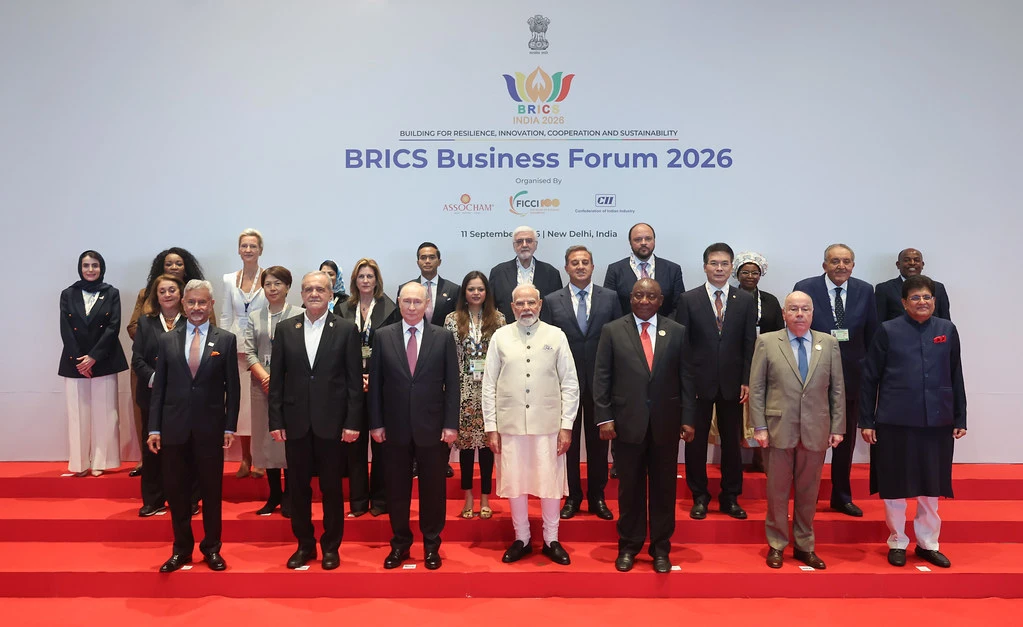
The scale of the grouping was highlighted by Indian Prime Minister Narendra Modi at the BRICS Business Forum in New Delhi, where he said BRICS countries, together with partner countries, represented around 50 percent of the world’s population, 40 percent of global GDP and more than a quarter of international trade flows.
Modi also said the combined GDP of BRICS countries had grown by around 4.5 times since the group was established in 2006, compared with global economic growth of about 2.5 over the same period.
That opportunity aligned with the Kingdom’s broader economic transformation agenda, which sought to reduce reliance on oil revenues while building competitive industries, increasing non-oil exports and developing new sources of private-sector growth.
India, which hosted the summit, was particularly relevant.
Saudi Arabia and India had developed increasingly broad economic ties, extending beyond energy into investment, infrastructure, technology, food security and tourism. The BRICS summit gave the two countries another setting in which to advance those discussions while connecting Saudi businesses with companies and investors from other emerging markets.
Modi said India’s BRICS presidency had focused on strengthening supply chains and expanding cooperation in areas including energy and technology, while also developing infrastructure such as roads, railways, ports and airports.
For Saudi Arabia, pursuing major logistics, industrial and infrastructure projects under Vision 2030, such cooperation could provide opportunities for companies and investors involved in supply chains, transportation and strategic industries.
The summit also provided an opportunity for Saudi Arabia to attract more productive foreign investment.
“The greater opportunity is not simply attracting more capital, but attracting long-term, productive investment from BRICS countries into Saudi manufacturing, logistics, mining, technology, tourism, healthcare, food security and other Vision 2030 sectors and beyond,” Hafiz said.
Technology transfer represented another potential area of benefit.
Deeper engagement with BRICS economies could facilitate partnerships with companies from China, India, Brazil and other emerging markets in areas including artificial intelligence, digital technologies, advanced manufacturing, renewable energy, electric vehicles, pharmaceuticals and mining.
For Saudi Arabia, such partnerships could complement its efforts to build domestic industrial and technological capabilities and attract international companies to establish operations in the Kingdom.
India’s experience in digital payments also offered a potential area for cooperation. Modi said the country’s Unified Payments Interface accounted for 50 percent of instant payments globally and said India was ready to share its experience with BRICS countries.
That was relevant to discussions around cross-border payments, an area that could eventually support easier and less costly transactions between Saudi companies and emerging markets.
The Kingdom’s geographic position also gave it a potential role in connecting BRICS economies with markets across the Middle East, Africa and Europe.
“Saudi Arabia’s geographic position gives it the possibility of becoming a bridge between BRICS economies and markets in the Middle East, Africa and Europe,” Hafiz said.
“Greater BRICS engagement could therefore support the Kingdom’s ambition to become a global logistics and distribution center.”
Financial cooperation represented another potential area of benefit.
BRICS countries discussed ways to facilitate cross-border payments and increase the use of national currencies in trade. Such initiatives could eventually have reduced transaction costs and made trade between Saudi companies and emerging markets easier.
For Saudi businesses, greater interoperability between payment systems could provide an additional channel for conducting cross-border transactions. However, Hafiz cautioned that the Kingdom would need to assess whether any new financial mechanisms created genuine additional value.
“Cooperation on payment systems, local-currency settlements and financial infrastructure could eventually reduce transaction costs and facilitate trade between Saudi companies and BRICS markets,” he said.
The emphasis on reducing trade barriers could also have been relevant to Saudi exporters.
Modi called on the BRICS Business Council to prepare a report identifying the top 10 trade barriers among BRICS countries and to support startups seeking to expand into member-state markets. He also called for the creation of 1,000 new partnerships among BRICS companies.
For Saudi businesses, such initiatives could potentially make it easier to enter emerging markets and develop partnerships with companies across the expanded BRICS network.
Infrastructure and development financing offered another potential channel of cooperation, although Hafiz stressed that the Kingdom needed to distinguish between genuinely additional financing opportunities and funding that was already available through domestic or international markets.
“BRICS-related financial institutions could provide an additional channel for financing infrastructure and cross-border projects,” Hafiz said.
“For Saudi Arabia, however, the important question would be whether such mechanisms offer additional economic value, rather than simply providing financing that is already readily available from domestic or international sources.”
Another area where Saudi Arabia could benefit from deeper engagement around BRICS was infrastructure resilience.
During a visit by BRICS media and journalists to the Coalition for Disaster Resilient Infrastructure in New Delhi, Amit Prothi, the organization’s director-general, told Arab News that Saudi Arabia’s rapid infrastructure development under Vision 2030 created opportunities for the Kingdom to draw on international expertise while also sharing its own experience.
“Saudi Arabia is bringing in very good expertise to advise it on building those new cities,” Prothi said.
He said the Kingdom already had access to world-class expertise as it developed new cities, tourism destinations and critical infrastructure, but could benefit from international knowledge-sharing to identify resilience considerations that could otherwise be overlooked.
For Saudi Arabia, this was particularly relevant as the Kingdom undertook large-scale projects in an environment increasingly affected by extreme heat and other climate-related risks.
Prothi said the exchange could work both ways, with Saudi experts learning from international experience while the Kingdom shared practices developed through its own infrastructure and construction sector.
“These are excellent practices to bring to other countries,” he said, referring in particular to measures developed in the Gulf to protect workers from extreme heat.
The example highlighted a broader benefit of Saudi Arabia’s engagement with international platforms connected to BRICS: Cooperation was not limited to trade, investment or finance, but could also give the Kingdom access to expertise and networks relevant to some of the most ambitious infrastructure projects under Vision 2030. At the same time, Saudi Arabia’s experience could provide lessons for other countries facing increasingly challenging climate conditions.
Maritime trade was another area of relevance for the Kingdom.
Modi stressed that global trade growth was closely linked to the security of maritime corridors, the continuity of supply routes and the safety of seafarers, reaffirming India’s support for freedom of navigation.
For Saudi Arabia, whose position on the Red Sea and Arabian Gulf placed it at the intersection of major international shipping routes, the stability of maritime corridors was particularly important to its ambitions to become a global logistics and distribution hub.
That question of incremental value was particularly important because Saudi Arabia already maintained extensive economic relationships with China, India, the US, the European Union and the Gulf Cooperation Council. The Kingdom therefore did not need BRICS simply to gain access to these markets. Instead, the potential benefit lay in creating new channels for trade, investment, technology partnerships and market access that went beyond existing bilateral relationships.
“Saudi Arabia should not assess the potential benefits of BRICS in isolation. They should be measured against the economic and trade relationships the Kingdom already has — or could further develop — with other major economic groupings and markets,” Hafiz said.
“In other words, the relevant question is not simply ‘What can BRICS offer Saudi Arabia?’ but also: ‘What additional economic value can deeper BRICS engagement deliver beyond what Saudi Arabia can already achieve through its existing bilateral relationships and partnerships with other major economic blocs?’”
The geopolitical dimension also played a role.
BRICS has expanded considerably since it was established, with its members spanning Asia, Africa, the Middle East and Latin America. The bloc increasingly presented itself as a platform for the Global South and for greater representation of emerging economies in international institutions.
For Saudi Arabia, engaging with such a diverse group provided another avenue for maintaining relationships with multiple major powers at the same time. That included China, India and Russia, as well as regional partners such as the UAE and Iran, both of which were BRICS members.
The 2026 summit illustrated the complexity of that diplomatic balancing act.
BRICS members negotiated differences over the Middle East, particularly concerning Iran and the UAE. The bloc ultimately adopted a joint declaration on Sept. 12 calling for maximum restraint and emphasizing dialogue and diplomacy in addressing escalating conflicts in the region.
Saudi Arabia’s participation therefore came at a time when BRICS was attempting to expand its economic influence while managing significant differences among its members.
For Riyadh, the summit provided an opportunity to pursue practical economic interests while maintaining flexibility over its future relationship with the grouping.
Hafiz said the ultimate test of deeper engagement would be whether it produced measurable gains for the Saudi economy over the following three to five years.
Those gains could include growth in non-oil exports to BRICS markets, new foreign direct investment from BRICS economies, joint ventures, technology transfer, local-content development, new manufacturing and supply-chain projects, growth in tourism and services exports, lower trade and payment costs, and the expansion of Saudi companies into emerging markets.
“The size of BRICS creates a potentially significant opportunity, but its economic value to Saudi Arabia should ultimately be determined by the additional, measurable benefits it can generate for trade, investment, technology, diversification and competitiveness — relative to the alternatives already available to the Kingdom,” Hafiz said.
Saudi Arabia’s participation in the New Delhi summit thus gave the Kingdom a platform to pursue economic opportunities with some of the world’s largest emerging markets while retaining the flexibility to determine whether formal BRICS membership would ultimately provide additional value.