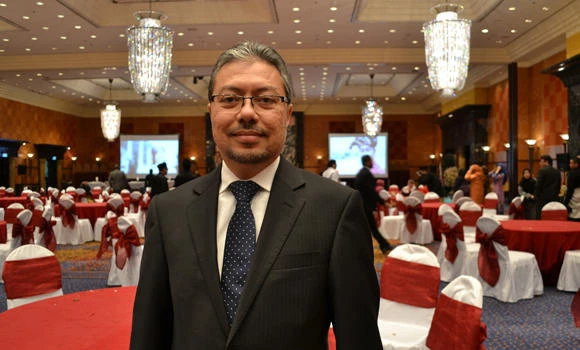
Malaysia’s Tabung Haji recently joined hands with the Jeddah-based Islamic Development Bank to provide Haj consultancy services to interested countries and organizations, a senior official said.
Syed Saleh Mufadhal, senior general manager for Haj, said his organization has set up a consultancy company in association with the Islamic Corporation for the Development of the Private Sector (ICD), an IDB subsidiary, for the purpose. Tabung Haji has a 50 percent stake in the company.
“Our organization marks its golden jubilee this year,” he told Arab News. Tabung Haji mobilizes funds from Malaysians intending to perform Haj and invests the money in stocks, properties, transport, plantations and other viable projects. Its total assets have reached 45 billion ringgits (about $14 billion).
“We launched this joint venture with IDB last year and have conducted a study on the management of Haj in some countries and their requirements,” Mufadhal said, adding that many countries and organizations have shown their interest in making use of Tabung Haji’s long-standing expertise in Haj affairs.
“We have a full-fledged computer system for Haj management. It covers all Haj matters from registration and selection of pilgrims, to their training, health care, hotel accommodation and transportation,” he pointed out. A number of foreign Haj missions wanted to meet Tabung Haji officials during this Haj season.
Tabung Haji (also known as Haj Fund) is a government agency under the prime minister’s department. It is the only licensed authority to manage Haj affairs in Malaysia. There are about 8.5 million investors in Tabung Haji and it pays them an annual dividend of about six percent. Once people have enough money in the fund, they can go for Haj.
Speaking about Haj services, Mufadhal said: “We give prospective Hajis three levels of training. In the first level, pilgrims are taught the basics for 17 weeks and classes are conducted on weekends. The second level involves intensive courses with tests. In the third, Hajis are given practical training using models of the Holy Kaaba, Jamrat and other Haj sites.”
All prospective Hajis meet at the state level to get training on how to wear ihram (two pieces of white cloth for men and a lose garment of any color for women) and how to perform the various Haj rituals. “We provide them with all the necessary services from the moment they embark on their pilgrimage journey until they return to Malaysia. They need not worry about anything. This helps our Hajis concentrate their full attention on worship and Haj rituals,” he said.
This year 22,300 Malaysians are to perform Haj, he said adding that about 13,000 of them have already arrived. He said the organization’s financial strength has allowed it to rent buildings in Makkah and Madinah on long lease and at cheaper prices. “We have published a number of Haj books including a check list of what to do, a book for women pilgrims, and an e-book which could be downloaded onto smart phones. We have set up a call center in Makkah to answer queries of Hajis around the clock and clear their doubts.”
Malaysia offers Haj expertise