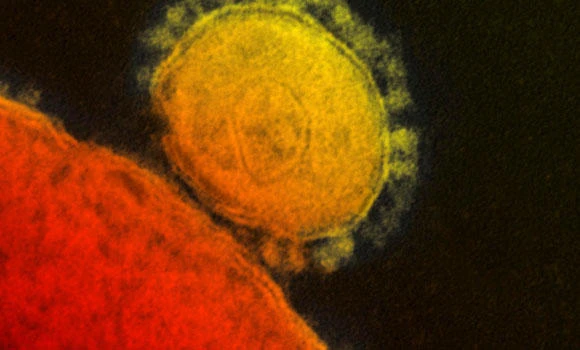
The Middle East Respiratory Syndrome Coronavirus (MERS-CoV) has claimed two more lives in the country, bringing the death toll to 412.
The victims were a 44-year-old expatriate man from Shaqra and a 48-year-old Saudi woman from Riyadh. Both were non-medical personnel and had preexisting illnesses, the Health Ministry indicated on its website on Thursday.
There were also two people infected, a 55-year-old expatriate from Jeddah who had exposure to an animal, and a 59-year-old man Saudi from Riyadh who is suspected to have had contact with an infected person. Both are non-medical personnel and are in a stable condition.
There have now been 948 cases of MERS in the country since 2012, with 512 people having recovered fully. A further 22 are currently under treatment at public hospitals, while two are in home isolation.
In the wake of the rising number of cases in the country, the ministry has advised people with chronic illnesses to take precautions if they must have contact with camels.
Abdullah Asiri, undersecretary for preventative health at the ministry, said here recently that those who suffer from chronic illnesses such as kidney disease, diabetes and other respiratory ailments are more vulnerable to the virus.
He said that there is no doubt that the virus resides in camels because 90 percent of samples taken from these animals show that they have antibodies. There have been similar results in other Gulf states and Egypt.
Asiri said that the presence of antibodies in camels does not mean that all animals are harmful. However, it is difficult for doctors to determine which camels would pass on the virus to humans.
The virus can be transmitted over a 1-meter distance. A person who comes into contact with infected camels can transmit the virus to family members without showing symptoms of the disease.
Younger camels are most able to transmit the disease to humans. Most viruses come from animals, mutate on their own, and are then transmitted to humans.
The ministry has ordered health professionals to consider patients to have MERS if they have respiratory symptoms consistent with being infected. This is until laboratory results prove otherwise.
Tests normally take between 6 to 8 hours, during which a patient with a respiratory infection must be isolated within the hospital in a sterile environment and with no access to visitors.
MERS claims 2 more lives