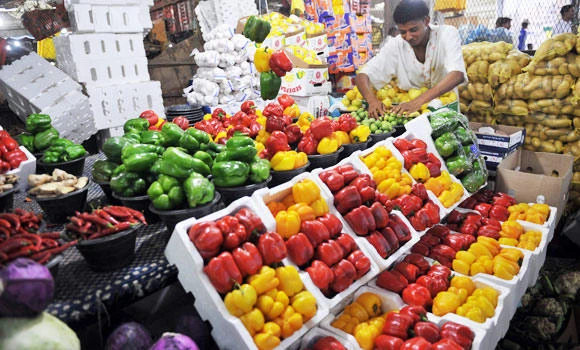
MERS coronavirus has contributed to the increase in the prices of vegetables in the local market as a result of unofficial and misleading medical advice by health experts that has been circulated among Saudis and expats.
The fear of contracting MERS has raised the prices of vegetables and food products thought to have a positive impact on health by more than 25 percent, according to experts.
The MERS phobia has led Saudis and expats to depend on wrong advice given by people claiming to be experts in the field. The wrong information spread via social media like Twitter and Facebook focuses on bogus concoctions made from garlic, onion and other vegetables thought to increase immunity.
The misleading alerts on MERS are rampant due to the absence of medical solutions to the deadly virus. However, the Ministry of Health has stepped up efforts to contain the spread of the virus by seeking the assistance of foreign medical companies to formulate new medicines.
The ministry has also launched an awareness campaign about MERS, its causes, prevention and treatment based on proven scientific research.
Farooq Al-Khateeb, economist and professor at the King Abdul Aziz University, feared the crisis will increase food and vegetable prices threefold, especially ahead of Ramadan.
Speaking to Arab News, he said: “The demand for medicines has risen as a result of the MERS phobia among Saudis and expats. People are looking for different ways to protect themselves against MERS. This demand has played a big role in increasing the prices of vegetables by 25 percent in the two weeks that MERS first appeared in Jeddah.”
The MERS death toll in Saudi Arabia has climbed to 81 as cases of infection by the coronavirus mount in the country. The Ministry of Health said it has registered 272 cases of infection across the Kingdom since the discovery of the Middle East Respiratory Syndrome in September 2012.
The virus is considered a deadlier but a less-transmissible cousin of the SARS virus that erupted in Asia in 2003 and infected 8,273 people, nine percent of whom died.
Experts are still struggling to understand MERS, for which there is no known vaccine. A recent study said the virus has been “extraordinarily common” in camels for at least 20 years, and it may have been passed directly from the animals to humans.
Misleading info raises vegetable prices