Haj has always been one of the significant activities for Muslims all over the world.
It is among the five pillars of Islam, which makes it a religious duty that should be fulfilled by every Muslim.
Haj has evolved as time went by thanks to various factors that affected it, especially technology.
Technology is mankind’s proof of progress and innovation.
Some say that it is meant to make life easier and more convenient while others think that it is harmful and is the main cause of today’s global problems but in the case of Haj, it has undeniably made the practice easier, more convenient, and more accessible to Muslims around the world.
Communication was one of the beneficiaries of modern technology through media, one of technology’s greatest contributions to Haj.
Since the Kaaba is located in Makkah, Muslims residing in different parts of the world used to have a hard time participating in the event due to long distances.
Now, with the help of technology through broadcast media Haj can be witnessed by Muslims in different countries through television, radio, newspapers or online media.
Long distance communication between the pilgrims and their loved ones is also made possible by technology through mobile networks.
This year, the Saudi Telecom Company (STC), with its partners, is set to cater the communication needs of the pilgrims by offering various limited-offer services, including the ‘SAWA Visit’ bundle.
Moreover, reports said STC has been improving all its communication outlets at holy sites in the Kingdom, including Makkah, to accommodate the large volume of outgoing and incoming calls during Haj.
First time pilgrims need not worry in performing Haj thanks to modern day gadgets, especially smart phones.
Muslims who own smartphones can install applications that will help them know what to do during Haj through electronic guidebooks made by fellow Muslims from around the world.
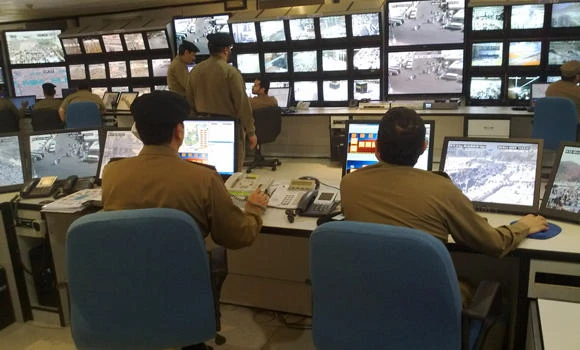
Security and safety was also enhanced by technology through engineering. It improved the Haj experience of pilgrims by fortifying the antique structures in Makkah, including the mosques and hotels.
In, 2006, Luluat Alkheir a small hotel in Makkah collapsed killing 76 Asian pilgrims.
Other accidents involving old and antique structures followed, but this year the Ministry of Haj put safety and comfort of Hajis in their top priority to ensure that no more accidents will occur during Haj.
In that connection, the Civil Defense Forces (CDF), recently conducted checks and analyzes to the structures that will be used by the pilgrims during the holy event including the Grand Mosque, roads, and tunnels among others.
The Saudi government also made an effort to simulate accidents in order to improve the reaction time of safety patrols in case something bad happens.
Advanced crowd control techniques and gadgets also helped prevent accidents such as stampedes that happened in 1990, 2004, and 2006, which claimed the lives a total of 2,040 pilgrims.
Moreover other facilities like additional escalators, fixed stairways, and reinforced roof area of the Grand Mosque among others was made possible by technology.
Without modern technology, sick and elderly pilgrims will have a hard time during Haj.
Hot temperature and dehydration are two of the most common problems of pilgrims but was remedied by installing top-class air-conditioning units in tandem with water dispensers, and heat-resistant tiles to help pilgrims complete their journey.
In the transportation front, modern technology undoubtedly has made it easier to transport pilgrims internationally and locally.
The presence of railways, and airplanes made the journey to Makkah faster and more convenient as opposed to riding camels or walking to the holy place like what the first pilgrims experienced.
Pedestrian routes and tunnels have also helped in providing ease of access to pilgrims.
Also this year, one of the greatest breakthroughs in Haj happened in the form of the Haj electronic registration system.
Mohammad Eli Mua, president of the Union of Muslim Associations, told Arab News that he appreciates this new method by the Saudi government.
“The electronic registration for Hajis is a good form of crowd control technique. That way, the Kingdom can prevent accidents such as stampedes from happening especially during the stone throwing ritual,” he said.
Needless to say, technology really played a great role in improving mankind’s way of life and practices, including Haj but some argued that it may have reduced the essence of performing the holy event.
Past Haj records stated that some Hajis upload their photos and routine in their social networking accounts during the holy activity that garnered criticisms from fellow Muslims around the world saying that “pilgrims should be fully focused in performing Haj.”
A blog from an analyst added such acts are taboo, especially inside the holy city and strongly advised pilgrims who will embark on Haj this year that “they should refrain from doing other things and just focus on the pilgrimage and its true essence.”
A number of people concurred and expressed their sentiments to Arab News.
“Technology may have bad effects in performing Haj but I think that majority will agree that most of it are good,” Mua said.
“I also think if it wasn’t for technology, more lives will be claimed every Haj due to the failure to maintain and fortify the facilities in Makkah or Muslims in different parts of the world may not be given the chance to visit the holy sites themselves,” he added.
Sulaiman, a Saudi national, said technology is an in-animate thing and therefore, cannot be bad nor good in its own way.
“It is the people who will decide if they should use technology for good or for bad deeds. In the case of Haj, I can confidently say that more people used technology to improve its practice,” he said.
Modern technology keeps pilgrims safe