- Experts stress human judgment, practical learning and adaptability
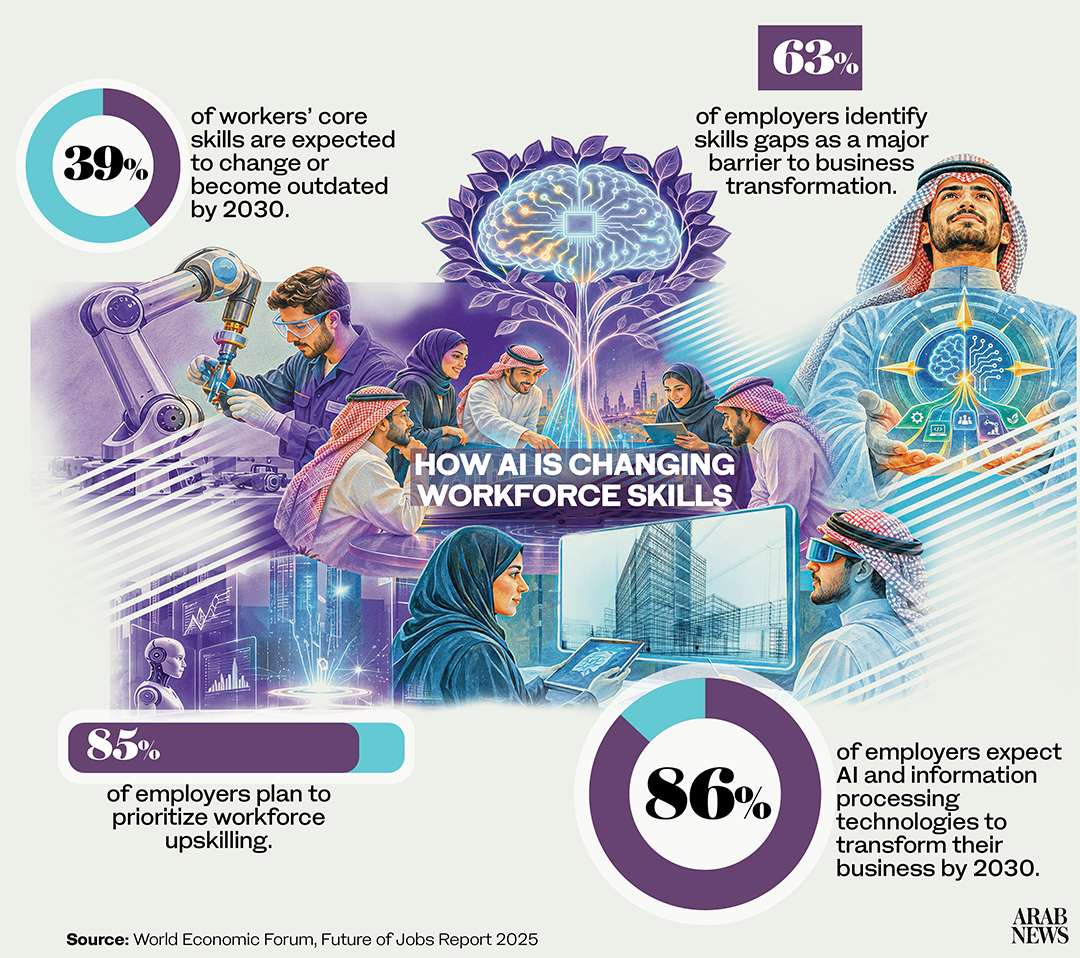
RIYADH: Artificial intelligence and automation are reshaping the global labor market, prompting a fundamental reassessment of the skills required by workers and the way professional and vocational training is delivered.
Experts who spoke to Arab News said AI is transforming executive education and vocational training, shifting the emphasis from knowledge transfer to professional judgment, critical thinking and the ability to evaluate and challenge machine-generated outputs. Problem-solving, decision-making and leadership are also gaining importance as essential human capabilities.
They agreed that the future of professional education lies in shorter, stackable modular programs and continuous learning, rather than relying solely on traditional, long-term qualifications.
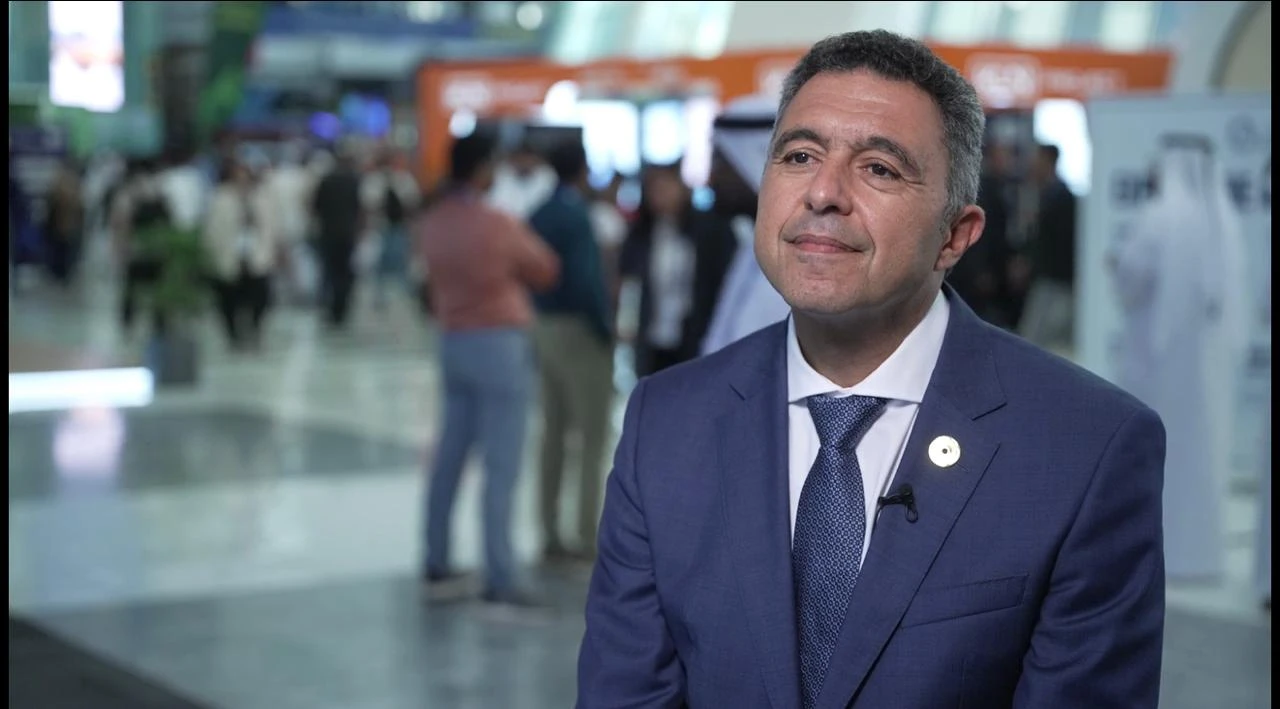
Abdalrhman Alquaary, artificial intelligence director at WSM for Information Technology Co., said AI cannot replace human judgment.
Executive education should prioritize problem framing, critical evaluation and deep domain expertise, because you cannot judge what you do not understand, he added.
He emphasized that curricula should teach principles rather than tools, explaining: Tools change every few months; the science behind them does not.

Dr. Mona Alkahtani, vice president of learning and development at Health Holding Co., said her focus today is less on how people gather information and more on how they think about it.
Someone still has to ask the right question, check where the answer came from, and notice when it is wrong, she noted.
The tools help, but the decision stays with the person, she added.

Feras Nagadi, country manager for Saudi Arabia at Workday, said: “As Saudi Arabia shifts toward skills-based workforce development, platforms like Workday unify people, skills, and business data on one system.”
Using AI, organizations can move beyond static job roles to dynamically map, assess, and update workforce capabilities, he added.

Dr. Saleh Almohaimeed, chairman of the board of the Leadership Studies Foundation, said: “Our Leadership Studies center is moving away from teaching knowledge consumption and processing toward developing metacognition, human-centric influence, and strategic judgment.”
Instead of training leaders to generate outputs, its modern curricula focus on how to direct, evaluate and contextualize them, he noted.
He explained that the center’s new model focuses on Action Learning Projects and live organizational transformation challenges.
Dr. Raed Alhamdani, general manager of Positive Interaction for Training and Consulting, said: “As routine analysis, information retrieval, and reporting become increasingly automated, we are shifting from knowledge transfer toward higher-value capabilities such as critical thinking, professional judgment, problem-solving, decision-making, leadership, and responsible AI use.”
Professional programs must prepare learners to work effectively with AI rather than compete with it, he added.
The experts share a common premise: As AI automates routine cognitive tasks, the value of executive education lies less in producing outputs and more in cultivating sound judgment, critical evaluation and the ability to question machine-generated results.
“Our focus is on translating these developments into practical competencies and programs that address real workplace needs,” Alhamdani said.
Alkahtani offered a different perspective on the skills gap, saying: I don’t see AI as creating a new gap. The gap has always been between what people learn in a program and what they can apply at work.
A public sector employee has to be able to explain how a decision was made, not just what the tool suggested, she explained.
Executive programs must adopt a skills-first approach that combines technical expertise with strategic leadership, Nagadi said.

While AI and digital literacy are essential, human-centered capabilities, such as strategic decision-making, complex problem-solving and change management, are equally vital, he stressed.
Almohaimeed said his role is evolving from that of a traditional administrator of educational programs to an architect of human-AI synergy, quality and institutional agility.
Alhamdani said AI has transformed his role from managing training delivery to overseeing an evolving learning ecosystem.
It supports curriculum development, personalization, content creation and assessment, while human oversight remains essential, he added.
Alkahtani said her role has shifted from selecting programs to helping leaders use AI effectively in their respective fields.
We are not trying to turn leaders into technical experts. We want them to be able to lead teams that use these tools, she said.
Institutions should train educators, establish clear rules for responsible AI use and redesign assessments to measure capabilities that AI cannot replicate, using live cases, oral defenses and workplace projects, Alquaary recommended.
Nagadi said trusted AI systems are shifting training evaluation away from basic completion metrics toward measurable business outcomes.
Grounded in transparent data, AI pinpoints capability gaps, evaluates skill development, and connects learning directly to organizational goals, he noted.
Alhamdani stressed that evaluation must go beyond attendance and participant satisfaction.
He said: “We increasingly measure competency development, practical application, workplace performance, and behavioral change.”
The core measure hasn’t changed: Did the program change how people work, and did that show in their teams’ results? Alkahtani said.
We don’t measure how much someone uses AI. We measure whether their work is better and faster because of how they use it, she emphasized.
Alquaary stressed that the question is no longer what learners know, but how effectively they think and make decisions with AI.
This requires evaluating the process, not only the final output: can learners question AI, identify its errors and justify their choices?, he asked.
Quality should be measured by what changes after the program, Alquaary said.
The experts agree that the true measure of training effectiveness is not course completion or participant satisfaction, but demonstrable improvements in behavior, workplace performance and organizational results.
On the future of diplomas and professional master’s programs, Almohaimeed said education is undergoing a structural shift toward continuous, experiential and AI-native learning ecosystems.
“We are moving from degree-centric to modular stackable credentials,” he added.
Alhamdani said diplomas and professional master’s programs will remain relevant, but their value will increasingly depend on practical application, industry alignment and continuous updating.
The future is moving toward flexible, competency-based programs that combine professional expertise, human capabilities, and AI literacy, he affirmed.
Alkahtani predicted that programs will change shape, becoming more modular, shorter and tied to real problems in the sector.
The future isn’t traditional education versus AI. It’s the two working together, she noted.
Alquaary said diplomas will not disappear, but will no longer serve as one-time qualifications for an entire career.
The future lies in shorter, stackable programs and continuous learning, he affirmed.
He advised institutions to focus on their respective fields rather than the tools, work closely with employers and offer what AI cannot: Mentorship, real-world experience and professional networks.
As AI automates routine tasks, the most impactful leaders will be those who combine data-driven insights with strong business acumen and empathetic leadership, Nagadi emphasized.
Ultimately, the experts agree that the era of relying on a single qualification for an entire career is giving way to a more flexible model of modular, stackable and continuous learning — one in which human judgment remains indispensable.