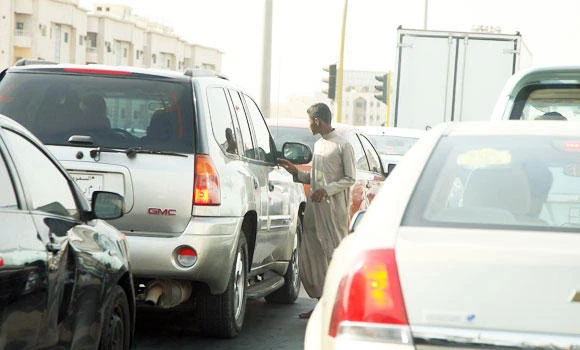
The percentage of foreign beggars in the Kingdom has dropped to 70 percent from 85 percent earlier, according to the Ministry of Social Affairs.
Khalid Al-Thubaiti, the ministry’s spokesman said the drop in the number of beggars was the result of extensive campaigns carried out by the ministry to counter begging during holiday seasons in the last two years.
“The ministry instructed its officials to coordinate with the anti-begging offices to monitor the movement of beggars from both sexes during Ramadan month,” Al-Thubaiti said, pointing out that any beggar found eligible is transferred for registration in the social security system. But foreign beggars, he said, face deportation to their original countries we they are illegally staying in the Kingdom.
He pointed out that the anti-begging office in Riyadh had constituted 28 teams to work round-the-clock to spot beggars during Eid Al-Adha.
Speaking on the procedures taken if the beggar was a Saudi, he said: “If the beggar is Saudi and is deemed capable of work, he is referred to the Labor Office. If he is an orphan, he will be taken to an orphanage and if he is a handicap, he will escorted to a center, and elderly Saudis will be transfered to an elder’s shelter.”
However, if a person repeats the felony, he will be referred to the General Prosecution and Investigation Commission (GPIC), he said, adding that the ministry has asked the social security branches to look into needy cases and submit reports on them.
“All efforts will be made to find those eligible for receiving aid from the social security allocations, be it in cities, villages or remote areas where the necessary financial help cannot reach them,” explained Al-Thubaiti.
He said the ministry had issued strict directives to the anti-begging offices to coordinate with the various anti-begging committees to spot beggars during holidays and seasonal events, so as to study their conditions and submit reports on the findings.
A study that was published on the website of King Abdulaziz City for Science and Technology said begging was on the rise in Saudi Arabia. The possible reason for this, the study said, was the increasing number of individuals infiltrating into the Kingdom through the borders and overstaying after Haj and Umrah.
The study warned against the negative effect of such increase on the social, economic and security fronts. It said that majority of beggars are Yemenis followed by Egyptians, and most of them are illiterate and with low income levels.
A study carried out by a research team from the Ministry of Islamic Affairs, Endowments, Call and Guidance, found that a majority of the beggars caught were non-Saudis, and Jeddah ranked first in numbers, followed by Makkah and Riyadh.
Number of foreign beggars drops