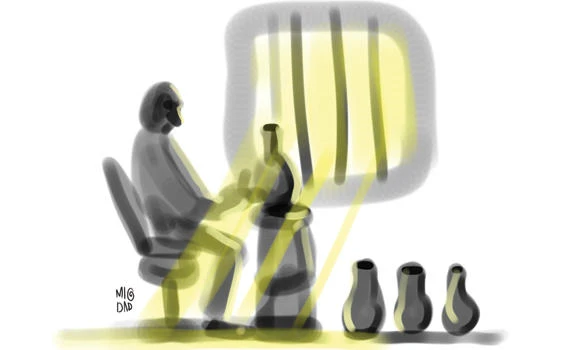
RIYADH: A tripartite agreement among the National Handicraft Program, Prisons Department and the Technical and Vocational Training Corp. (TVTC) was recently signed in the presence of Prince Sultan bin Salman, president of the Saudi Commission for Tourism and National Heritage (SCTNH), to provide training in handicrafts for prisoners.
The agreement was inked on behalf of their organizations by TVTC Deputy Gov. Rashid Al-Zahrani, Director General of Prisons Maj. Gen. Ibrahim Al-Hamzi and General Supervisor of the National Program for Handicraft Jasser Al-Herbish.
According to the memorandum of understanding, the three organizations will implement a comprehensive program to train prisoners on specialized skills according to their aptitudes to fit into the local job market.
According to a statement from the prisons, participation of the private sector will be sought to teach prisoners various skills for them to adapt to the local employment market.
Prison authorities will also request social service organizations and charitable societies to encourage the skilled prisoners who are released from their sentences by purchasing their handicrafts to enable them to earn their livelihood.
Prisoners will be taught to make a variety of handicraft to suit the local market. At the end of their term, prisoners are given an allowance to take away and invest in various projects that they choose.
At the end of the signing ceremony, Al-Hamzi presented a memento to Prince Sultan in appreciation of his services to the local community.
According to Brig. Musfer Abdullah Al-Swat, director of Makkah prisons, the main focus in prison reform in the Kingdom is vocational training and rehabilitation.
Al-Swat said that the evaluation of prisoners is mostly based on their behavior and that rehabilitating inmates according to their skills is one of the goals of prison authorities.
He also noted that the idea came from the late Prince Sultan who proposed imparting vocational training to prison inmates during his visit to prisons in Riyadh.
Among the many skills and talents of the inmates, female prisoners excel in crafts and embroidery.
Three correctional institutions for the treatment, training and social rehabilitation of young offenders are being established in Riyadh, Jeddah and Taif to accommodate 12,000 inmates.
These modern prison facilities include 96 separate units with high security measures. Units with medium security measures will accommodate 5,120 prisoners and will also provide various social activities for the inmates.
The three correctional institutions will feature study classes for primary, middle and secondary educational levels. A number of classes will be equipped with computers and specific equipment for those who wish to continue with higher studies.
Security will be maintained using the latest security systems in prisons, with cameras, an alarm system and fire prevention equipment, as well as social and work programs to keep inmates busy and focused on the labor market.
Prisoners to be trained in handicrafts