At least 24 dengue fever cases — 14 from south and 10 from the eastern parts of Jeddah — have been reported in the past couple of weeks.
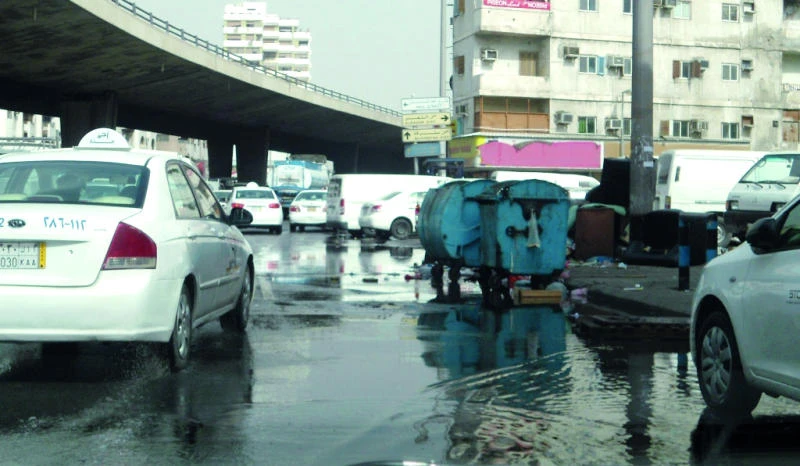
The recent showers coupled with the ongoing sewage pipeline laying work, stagnation of water and leakage of sewage and groundwater in the southern part of Jeddah are turning out to be breeding grounds for mosquitoes, which could lead to further spread of dengue fever in the city.
Dr. Abdullah Al Sahafi, assistant director of public health in the Ministry of Health, confirming the incidence of dengue fever cases, said the ministry has formed eight teams to visit and check the situation in south Jeddah neighborhoods.
He said that there has been an increase in dengue cases this month and emergency medical teams had been deployed to deal exclusively with dengue in six centers of the city.
Dr. Sami Badawood, director of ministry of health in Jeddah, said, “The Health Ministry’s role is to detect incidence of the fever and provide medical care to the affected. We also advise the municipality on preventive measures.”
There have been complaints that stagnant water was not being pumped out by municipal authorities and that there were several low-lying areas where water has been stagnant for days together leading to spread of mosquitoes.
The Jeddah Municipality, however, has denied allegations of negligence, saying it had allocated SR364 million to combat dengue fever the previous year. It had carried out spraying and fogging operations at least 225,000 times in the city.
In a statement, the municipality said it has been working on fogging and spraying drive in the city following identification of 23,687 potential spots for mosquito breeding in different areas of the city. It had carried out spraying operations in the toilets of 800 schoolsa and 480 mosques to prevent mosquito breeding due to stagnation of water in the toilets.
The municipality said that it has also carried out spraying operations in 76 nurseries, 18 farms, 360 public parks, 67 cement block factories and 4,328 buildings that were under construction in the city to prevent mosquito breeding.
The municipality, it said, was using state-of-the-art technology with GPS and satellite technology to detect mosquito breeding locations and to identify the breed of mosquito to establish whether it was dengue related.
Rains accentuate dengue fever fears in Jeddah