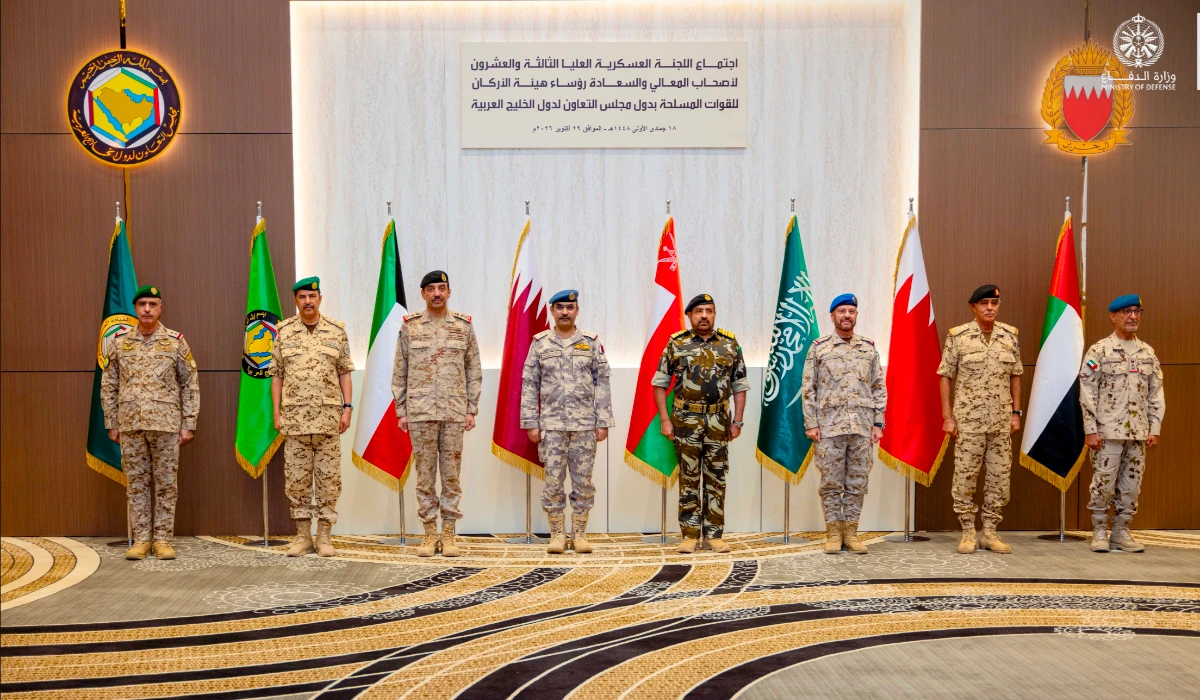
- The meeting comes at a time of heightened concern over regional security, with Gulf states continuing to monitor threats to maritime navigation, critical infrastructure and regional stability
RIYADH: Saudi Arabia participated in a high-level Gulf military meeting in Bahrain on Thursday as Gulf Cooperation Council member states stepped up consultations on regional security and defense coordination amid continued threats posed by Yemen’s Houthi militia and wider instability in the region.
Chief of the General Staff Gen. Fayyad Al-Ruwaili led the Kingdom’s delegation to the 23rd meeting of the Supreme Military Committee of GGC chiefs of staff, held in Bahrain.
The meeting discussed regional developments, ways to strengthen defense coordination, and a number of issues of mutual interest aimed at enhancing the security and stability of GCC member states, according to Saudi Arabia’s Ministry of Defense.
Military leaders also reviewed measures to deepen cooperation among GCC armed forces and improve defense coordination across the bloc, the Bahrain News Agency reported.
The Supreme Military Committee is one of the GCC’s principal defense bodies, bringing together the chiefs of staff of Bahrain, Kuwait, Oman, Qatar, Saudi Arabia and the UAE to coordinate military policies and advance joint security initiatives.
The meeting comes at a time of heightened concern over regional security, with Gulf states continuing to monitor threats to maritime navigation, critical infrastructure and regional stability.
The unprecedented acts of aggression require full solidarity, close coordination and joint cooperation to confront threats to the security and stability of GCC countries.
Lt. Gen. Theyab bin Saqr Al-Nuaimi, Bahrain’s chief of staff
The Houthis have remained a central security concern for Gulf countries after years of missile, drone and maritime attacks linked to the conflict in Yemen.
Recent regional tensions have reinforced calls for closer military coordination and enhanced defense preparedness among GCC states.
Speaking at the meeting, Bahrain’s Chief of Staff Lt. Gen. Theyab bin Saqr Al-Nuaimi said current circumstances, and what he described as unprecedented acts of aggression, required “full solidarity, close coordination and joint cooperation” to confront threats to the security and stability of GCC countries.
Defense cooperation has been a cornerstone of the GCC since its establishment on May 25, 1981, when the six Gulf states formed the bloc to promote coordination across a range of fields, including security.
The GCC’s collective defense framework was further strengthened through the creation of the Peninsula Shield Force in 1984 and the approval of the Joint Defense Agreement in 2000, both key milestones in the bloc’s efforts to build a unified approach to regional security.
In recent years, Gulf countries have placed renewed emphasis on defense integration, interoperability and joint military planning. The issue gained additional momentum following the AlUla Declaration in 2021, which restored GCC unity and paved the way for deeper cooperation across political, economic and security spheres.
The Bahrain meeting forms part of ongoing GCC efforts to strengthen collective defense capabilities and ensure member states remain aligned in addressing evolving regional threats, while safeguarding stability across the Gulf.