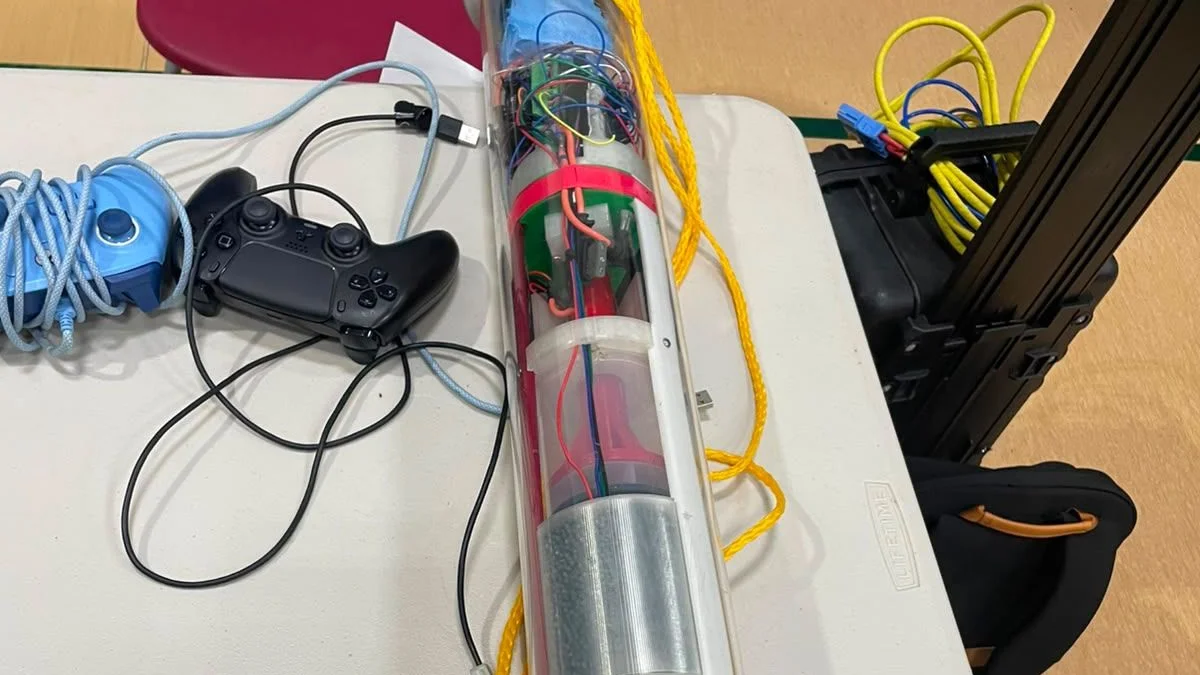
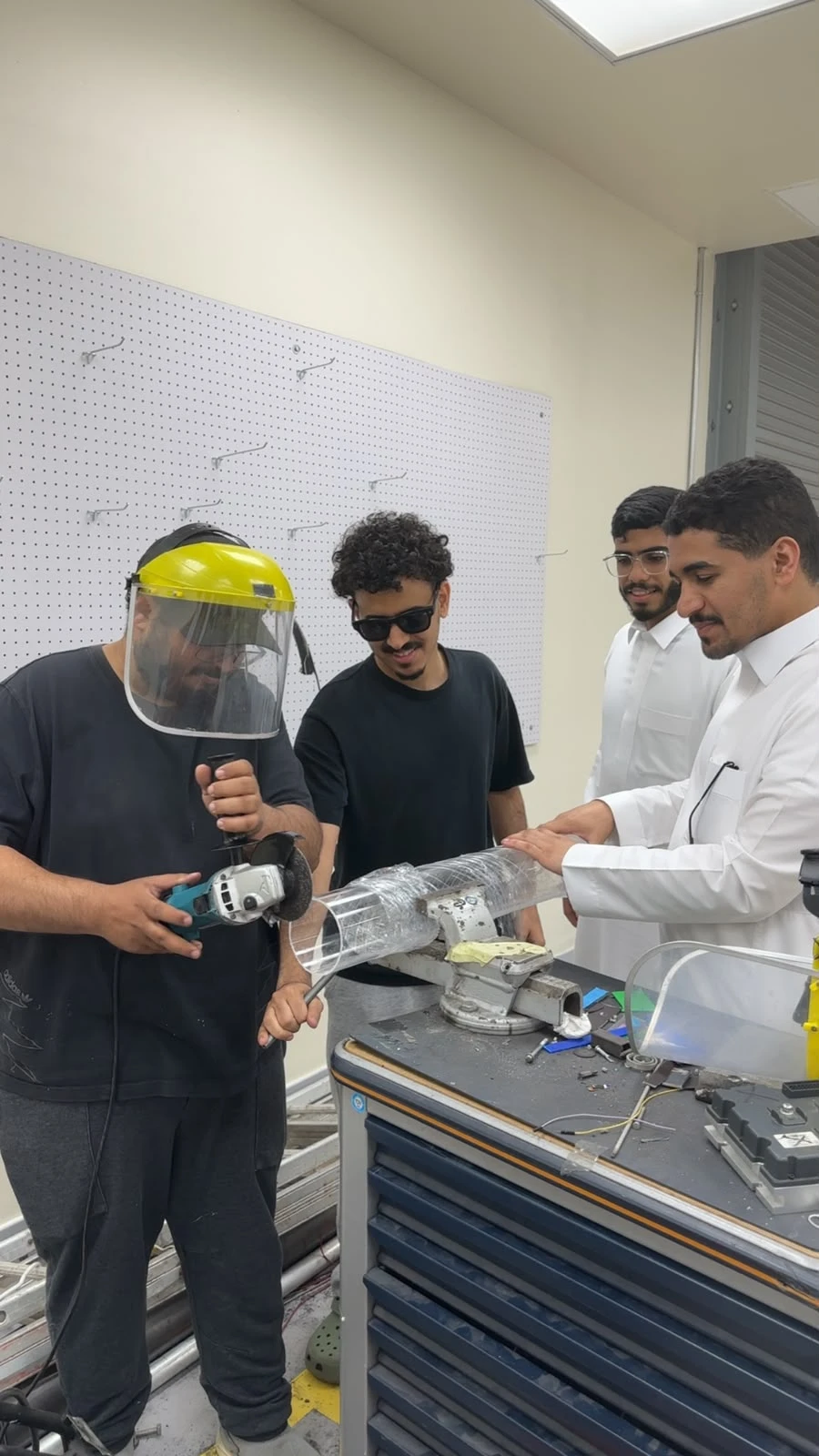
RIYADH: Five King Abdulaziz University students have built a float that uses a simple, low-cost mechanism to sink and rise through the sea on its own, recording depth, pressure and temperature.
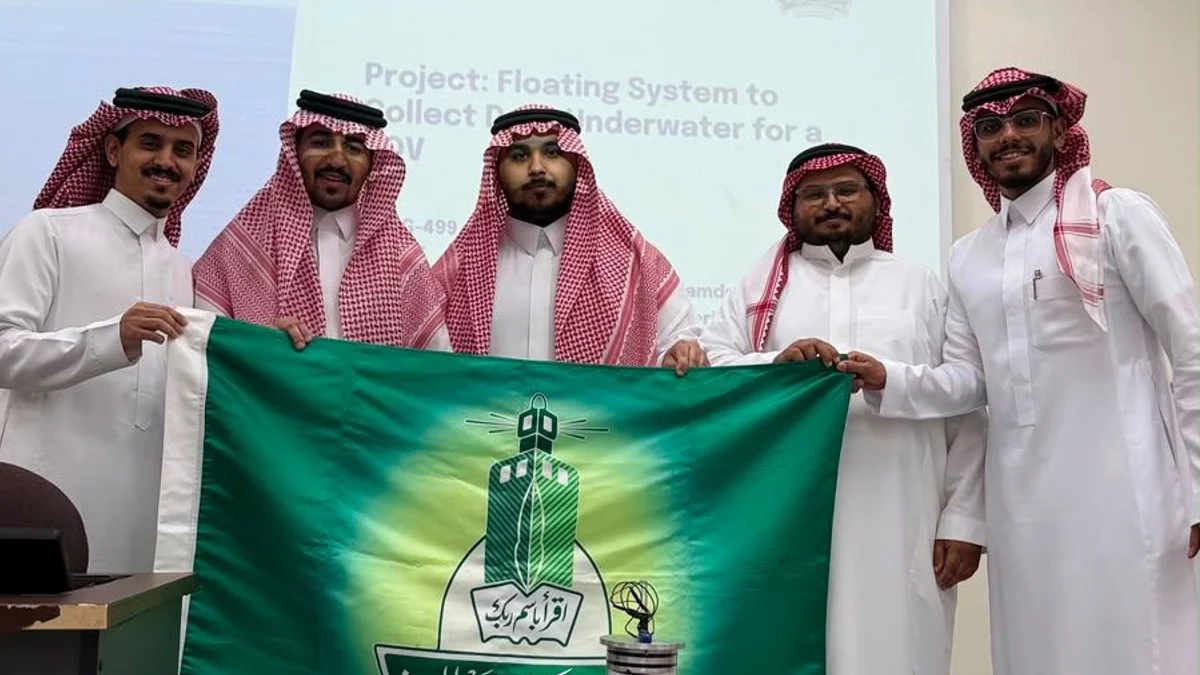
The five are Bandar Khalid Al-Zahrani, Youssef Al-Otaibi, Abdulsalam Al-Faifi, Ziyad Al-Shamrani and Ali Al-Saiari. They spent six to seven months taking the project from an idea through planning and early design to the finished float.
Al-Zahrani, a 24-year-old mechanical engineering student at the university’s faculty of engineering, spoke to Arab News on behalf of the team. He said the goal was to make collecting data from different depths easier, using a compact float that handles its own vertical movement. Such a system, he said, could serve ocean and marine scientists, organizations that monitor the environment and collect sea data, and research teams developing underwater robots and exploration tools.
“If the device is developed further in the future and its operational capabilities increased, its use could extend to the energy, oil and gas sectors for monitoring the marine environment, government bodies concerned with surveying and major coastal development projects,” he said.
Al-Zahrani added that the team developed the idea in line with Crown Prince Mohammed bin Salman’s vision to build up Saudi Arabia’s maritime industry.
At the heart of the float is a syringe. “The device relies on a buoyancy control mechanism that uses a syringe connected to a motor and a mechanical drive, so the amount of water inside the system can be changed to control its movement up and down,” Al-Zahrani said.
In other words, the float sinks or rises by changing how much water it holds, so no propellers need to keep running for it to take readings at different depths.
To find out how much the float outperforms already available systems, he said, it will need to be tested and compared on cost, data accuracy, energy use and performance in different operating conditions.
Al-Zahrani said he chose mechanical engineering because it blends theory with practice and gives him the skills to build systems, understand how they behave and turn them into answers to real-world problems. But he is quick to stress that the project was a team effort, with each member leaving a personal stamp on the work.
“The work could not have seen the light of day without the strong efforts of a team I am proud of, and they deserve all thanks and appreciation,” he said.
The float made its first public appearance at this year’s MATE ROV World Championship for underwater robotics, which draws university teams from around the world. The students competed in the PIONEER category as part of Red Sea Rovers, the team representing KAU, under the supervision of Prof. Nidal Abu-Hamdeh and Prof. Ammar Malibari. The team ranked seventh globally in the finals.