Saudi Arabia and the United States are cooperating to fight dangerous diseases locally and abroad, including Ebola and the Middle East Respiratory Syndrome Coronavirus (MERS-CoV), senior American government officials said here.
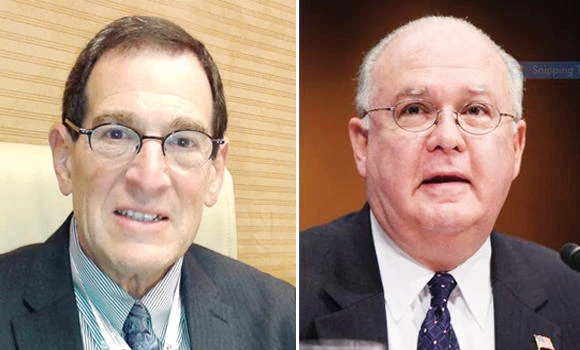
“It’s not only committed to expanding its own capabilities but also assuming a leadership role in encouraging other nations to do the same,” US Ambassador Joseph W. Westphal said during his address Monday, the opening day of the three-day Saudi-American Health Forum held at the Ritz Carlton in Riyadh.
Among those present were the US’ chief health diplomat Jimmy Kolker, assistant secretary for global affairs at the US Department of Health and Human Services; Riyadh Gov. Prince Faisal bin Bandar; and Abdullah Al-Araj, acting minister of health and minister of civil service.
Kolker, who was a moderator during the opening plenary dealing with new outbreaks of diseases in the world, said the US and Saudi Arabia are collaborating on tackling MERS-CoV and Ebola in the Kingdom and across the globe.
He said this also means helping other countries fulfill their obligations under international health regulations. “The United States and the Kingdom are partners in a multinational initiative called the ‘Global Health Security Agenda,’” he told Arab News on Tuesday, on the sidelines of the forum.
Westphal said that the US and Saudi Arabia have a long history of excellent public and private sector collaboration and commerce on health-related issues. “President Barack Obama recently said that we need to start thinking about risks to global health as a security threat— in addition to being humanitarian and economic threats,” he said.
“We have to bring the same level of commitment and focus to these challenges as we do to more traditional security issues. With this principle in view, President Obama launched the Global Health Security Agenda in February last year,” he said.
He said Saudi Arabia is a strong voice in support of “our collaborative effort” to improve public health security across the globe. “While the Global Health Security Agenda is a relatively new joint project, US-Saudi cooperation is not new,” he said.
“The good news now is that our nations have begun to answer the call. Together, our countries have made commitments both to strengthen our own security and to collaborate with each other to strengthen the security of all nations’ public health systems,” he said.
Westphal added that the US government — through the Department of Health and Human Services, the National Institutes of Health, and the Food and Drug Administration — has maintained close public health partnership with Saudi Arabia for more than 30 years.
He said that “while infectious disease outbreaks grab headlines and motivate us to work together, non-communicable diseases and basic health care delivery are equally, if not more important.”
“Both the Kingdom and the United States face major challenges in how we will deal with the exponential increase in non-communicable diseases, such as heart disease, wdiabetes and cancer,” he said.
Working together to conduct scientific and medical research, he said, “we can help each other and the rest of the world slow the spread of these terrible diseases, which are afflicting both our people and our economies.”
“And make no mistake; health is an economic threat as much as a security and human one.” He said that the estimated cost of treatment and lost economic output due to non-communicable diseases in the US alone is well over $1 trillion, and rising.
He added that in the next 10 years, it is estimated that the cost of these diseases to the economy will be over $4 trillion. “The staggering health and economic costs of these diseases must motivate us to cooperate more closely with our global partners, including Saudi Arabia, to curb these serious health threats,” he said.
Saudi-US health efforts ‘make a mark globally’